






Central Asian Embroidered Throw
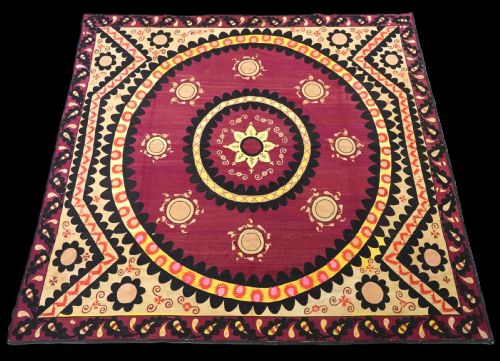
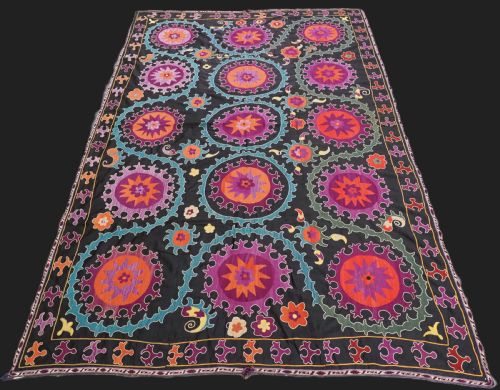
A central asian embroidered throw brings striking textile tradition into a room, offering rich regional needlework from past centuries.
Central Asian Embroidered Throw
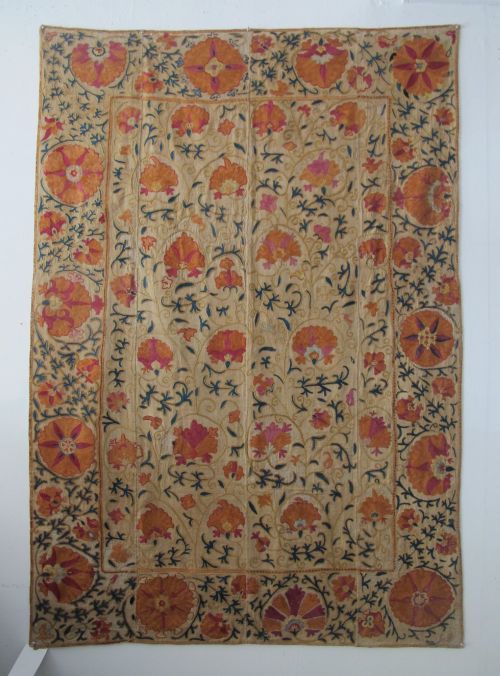
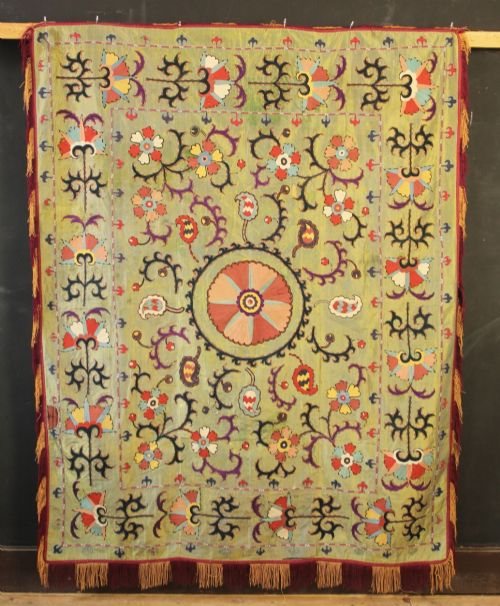
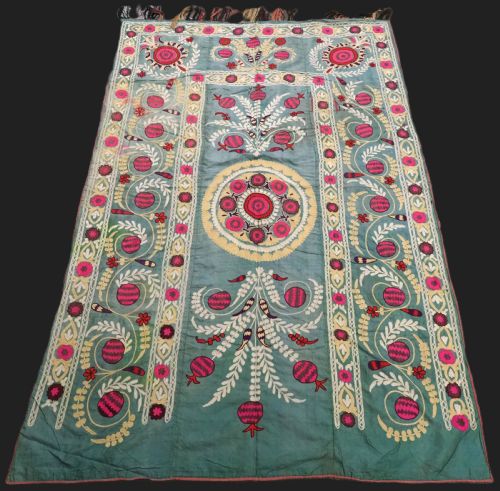
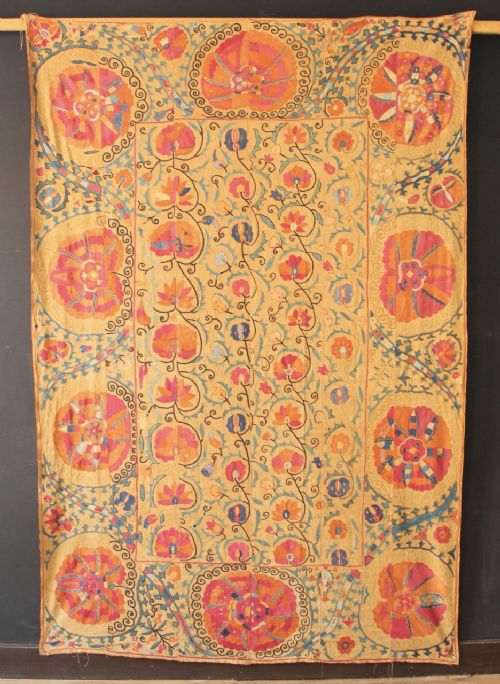
When searching for a central asian embroidered throw, collectors encounter traditional suzani bed covers, wall hangings and tribal textiles originating from nineteenth and early twentieth century Uzbekistan and neighbouring regions. These pieces include smaller nim suzani examples alongside large medallion variants and fully embroidered palak designs.
The inventory on this page spans origins such as Bokhara, Tashkent, Samarkand and Shahrisabz, reflecting distinct regional patterns and tribal traditions. Pieces range from nineteenth century examples down to early twentieth century works.
Makers utilised diverse formats, from bed covers and bed spreads to large wall hangings, created for domestic use or ceremonial display within Central Asian households.
What Varies in Quality
Quality rests in the density of the needlework and the fullness of the embroidery coverage, distinguishing fully worked palak pieces from simpler border designs. The choice of ground fabric, whether fine silk and cotton adras or sturdy wool, also shapes the structural character.
Vibrancy of dye colours and the precision of traditional floral or medallion layouts dictate the visual impact and overall execution of each individual textile.
Central Asian Embroidered Throw Retail Price Guide 2026
Typical asking prices for central asian embroidered throw among the pieces listed under this phrase on Sellingantiques today, from the lower quarter to the upper quarter. They describe what is for sale here now, not the wider market.
The listings here include nineteenth and early twentieth century pieces featuring silk embroidery on cotton, wool, and adras grounds.
The Central Asian Embroidered Throw Glossary
- Suzani
- An embroidered tribal textile or wall hanging from Central Asia. These pieces typically feature silk thread on cotton or wool grounds.
- Nim suzani
- A half-size or smaller variant of the traditional suzani hanging. Such pieces offer compact dimensions suitable for diverse domestic spaces.
- Palak
- A fully embroidered suzani design type featuring a central star motif. This style covers the entire ground fabric in dense needlework.
- Adras
- A traditional hand-woven fabric combining silk and cotton fibres. It serves as a soft yet durable ground for intricate embroidery.
- Lakai
- A Central Asian tribal group known for distinctive geometric and bold embroidered designs. Their works often appear on red wool or cotton grounds.
Central Asian Embroidered Throw: Frequently Asked Questions
How were these textiles used?
Central Asian families utilised these embroidered covers primarily as decorative bed spreads, wall hangings or soft furnishings within the home. They also formed an important part of traditional wedding ceremonies and dowries.
Today, collectors typically display them as wall hangings or drape them over furniture to introduce rich regional colour and history to interiors.
How do I care for an antique textile?
Protect antique embroidered textiles by keeping them away from direct sunlight, which can fade natural silk threads and dyed cotton grounds. Gentle vacuuming through a mesh screen helps remove dust without damaging fragile stitches.
Avoid hanging heavy pieces by a single point to prevent strain on the fabric, and consult a specialist conservator for any cleaning needs.
How can I tell regions apart?
Regional differences appear in the choice of ground fabric, colour palette and specific needlework motifs used across different towns and tribes. For instance, Tashkent pieces often showcase large full-work palak designs, while Lakai works frequently feature bold elements on red wool or cotton.
Examining the density of the silk embroidery and the underlying textile provides strong clues to the specific origin within Central Asia.