









Vintage Suzani Bedspread
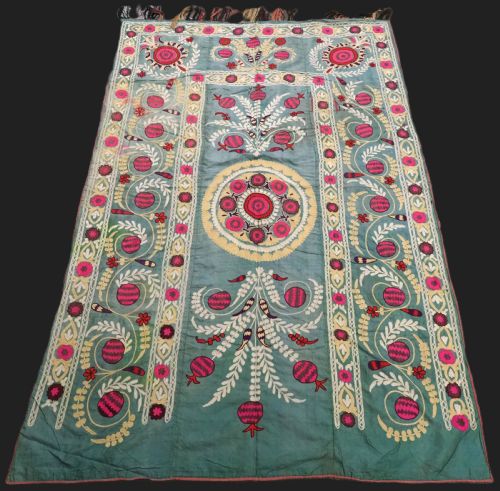
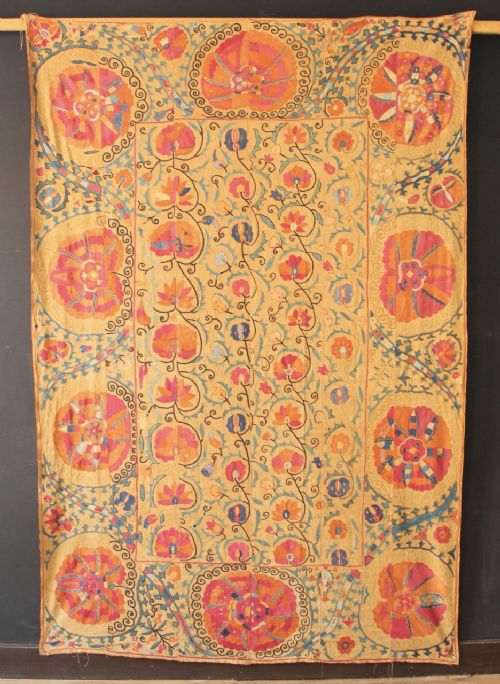
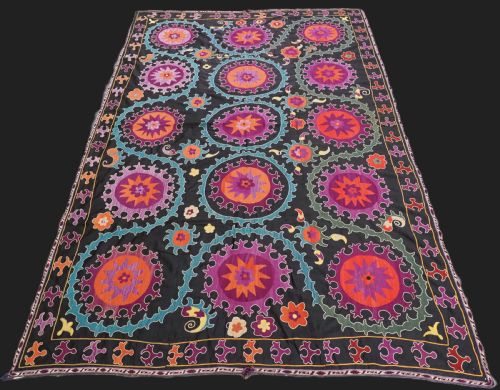
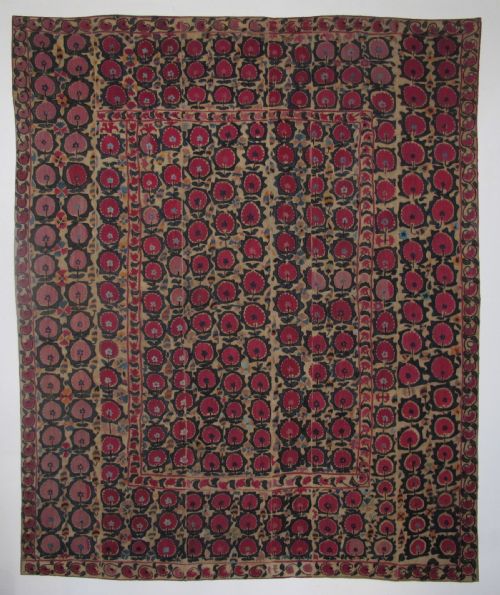
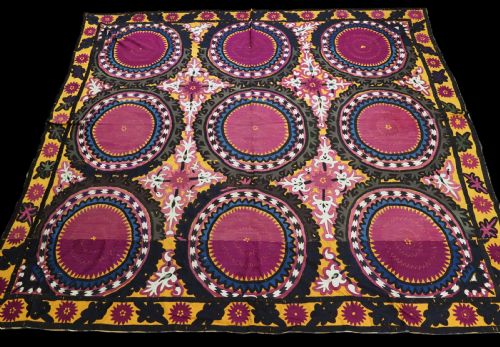
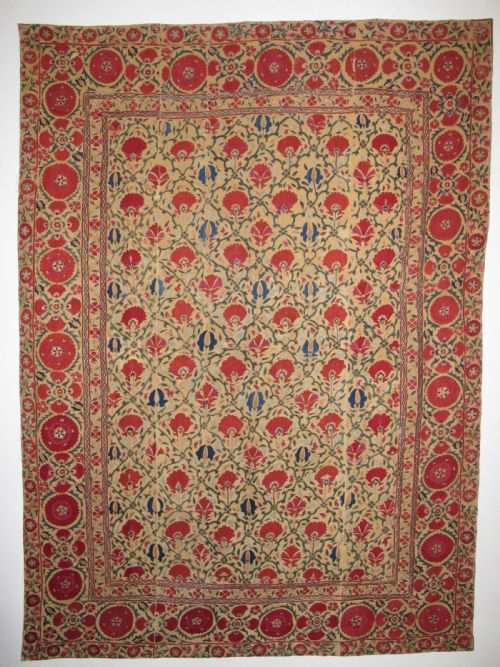
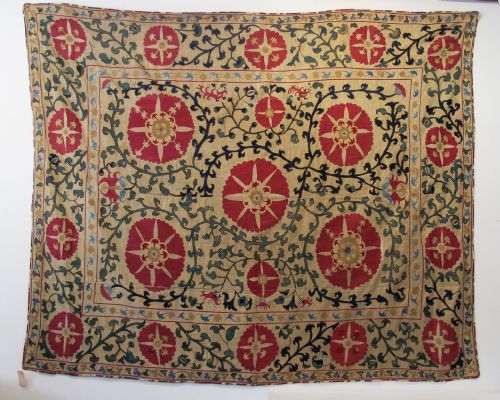
A vintage suzani bedspread brings bold Central Asian needlework into a room, offering rich silk embroidery worked across traditional cotton or adras grounds.
Vintage Suzani Bedspread
A vintage suzani bedspread represents traditional Central Asian textile art, originating primarily from regions such as Uzbekistan with distinct styles like Bukhara, Samarkand, and Ura Tube. These decorative textiles and wall hangings serve as striking focal points in modern interiors, functioning both as covers and tapestries.
The pieces on this page span from the early nineteenth century through the early twentieth century, reflecting classic Central Asian folk art traditions. Buyers encounter large medallion variants, full work examples, and specific regional types like the Ru-i-Jo bed cover or Nim suzani.
Makers utilised familiar formats ranging from compact decorative panels to large formats exceeding two metres in length. Each textile carries the distinct aesthetic of its origin, whether associated with the Lakai tribe or urban centres like Tashkent and Shahrisabz.
Materials and construction
Artisans created these textiles by applying fine silk thread embroidery onto woven foundations of cotton, silk, or mixed adras grounds. The needlework forms intricate floral, medallion, and geometric motifs that cover significant portions of the base fabric.
Ground fabrics vary between red silk-cotton blends, black cotton, and pure silk, providing contrasting backdrops for the vibrant embroidered designs. Embroiderers executed these detailed works by hand, resulting in dense stitch work known locally as full work or regional variants.
Vintage Suzani Bedspread Retail Price Guide 2026
Typical asking prices for vintage suzani bedspread among the pieces listed under this phrase on Sellingantiques today, from the lower quarter to the upper quarter. They describe what is for sale here now, not the wider market.
The listings on this site span the nineteenth and early twentieth centuries, featuring cotton, silk, and adras grounds from regions like Bukhara, Samarkand, and Tashkent.
Assessing quality and execution
Quality in these textiles rests upon the density of the silk embroidery and the precision of the needlework. Full work examples with minimal exposed ground fabric typically represent a higher grade of craftsmanship than sparser designs.
The vibrancy and condition of the silk threads, alongside the structural integrity of the cotton or adras ground fabric, determine the overall execution. Regional distinction and the complexity of the medallion or traditional design also influence the character of the piece.
The Vintage Suzani Bedspread Glossary
- Suzani
- An embroidered tribal or urban textile from Central Asia, traditionally worked in silk on a cotton or silk ground.
- Adras
- A traditional Central Asian fabric woven with a silk warp and a cotton weft, frequently used as a ground for embroidery.
- Nim suzani
- A half-size or smaller embroidered hanging or cover, distinct from the larger full-scale bed covers.
- Ru-i-jo
- A specific traditional Central Asian bed cover format utilised in domestic settings.
- Full work
- A descriptive term for a suzani where the embroidery covers almost the entire ground fabric with dense stitching.
Vintage Suzani Bedspread: Frequently Asked Questions
How were suzani bedspreads used?
These textiles served primarily as ceremonial bed covers in traditional Central Asian households, marking important life events such as weddings.
Today, collectors use them as decorative wall hangings, throws, or dramatic bedspreads to introduce texture and colour to contemporary interiors.
How do I care for a silk embroidered suzani?
Silk embroidery and older ground fabrics require gentle handling to preserve the delicate threads and natural dyes.
Keep these textiles away from direct sunlight and consult a specialist textile conservator for any cleaning needs.
How do I identify different regional styles?
Regional styles appear through distinct colour palettes, specific medallion layouts, and traditional motifs associated with towns like Bukhara, Samarkand, or Tashkent.
Tribal pieces, such as those attributed to the Lakai, often feature quirkier geometric interpretations and distinct colour combinations.