






Traditional Embroidered Throw
A traditional embroidered throw brings rich needlework and history into a room, spanning Central Asian and South Asian textile traditions.
Traditional Embroidered Throw
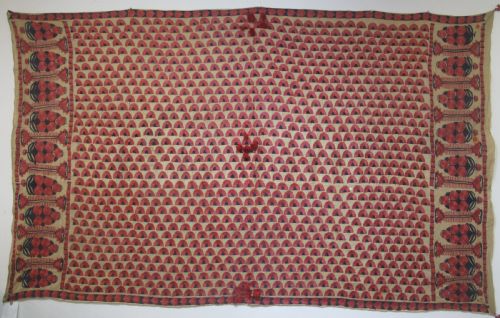
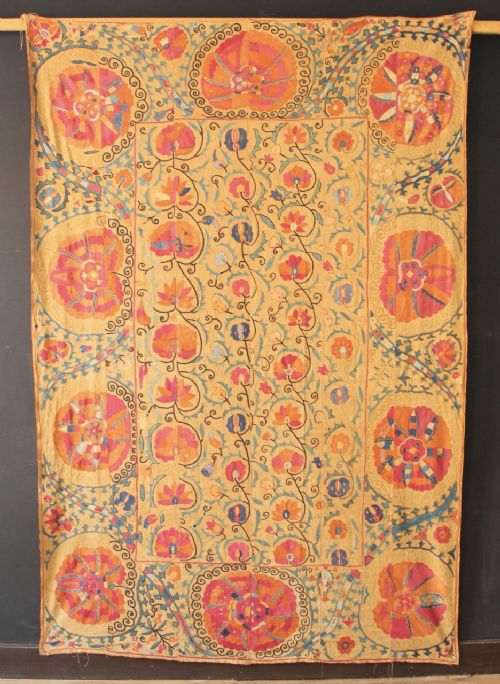
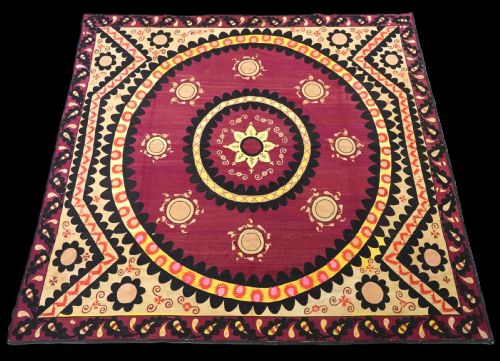
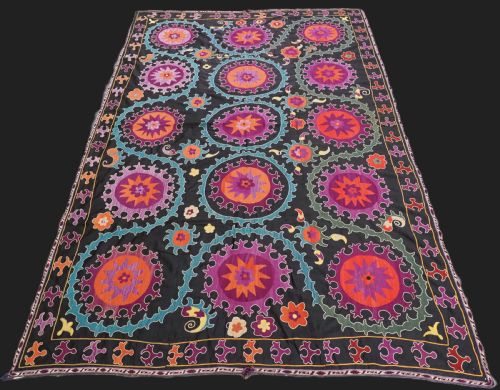
A traditional embroidered throw encompasses decorative wall hangings, bedcovers, and shawls created across Central Asia, India, and Britain. The most common form on this page is the Central Asian suzani, alongside regional Indian and Kashmiri shawls and British linen coverlets.
These pieces range from the eighteenth century through to the early twentieth century, showing diverse regional patterns such as large medallions, floral motifs, and full-work embroidery. Originating primarily from workshops and households in regions like Bukhara, Tashkent, and Sindh, they serve both decorative and functional roles in interior spaces.
Materials and construction
Makers utilised natural foundation grounds including cotton, linen, wool, velvet, and adras silk-cotton blends. These fabrics provide sturdy bases for extensive needlework.
Silk thread and metallic thread form the primary embroidery media, creating dense surface patterns through meticulous hand stitching. The interplay of silk threads on contrasting grounds defines the visual depth of each piece.
Traditional Embroidered Throw Retail Price Guide 2026
Typical asking prices for traditional embroidered throw among the pieces listed under this phrase on Sellingantiques today, from the lower quarter to the upper quarter. They describe what is for sale here now, not the wider market.
Listings span periods from the eighteenth century up to the 1930s, featuring cotton, silk, wool, linen, and adras grounds.
Quality variations
The density of the needlework separates standard examples from exceptional pieces, particularly seen in full-work suzanis where the ground cloth is heavily covered in silk thread. Finer needlework demands greater time and skill from the maker.
The choice and preservation of ground materials and thread colours dictate overall visual impact. Strong dyes and intact silk or metallic embroidery retain their character over generations.
The Traditional Embroidered Throw Glossary
- Suzani
- An embroidered tribal textile from Central Asia, traditionally made as part of a bride's dowry. These large panels typically display floral and medallion designs worked in silk on cotton or silk grounds.
- Nim Suzani
- A smaller scale variant of the standard suzani panel. These half-sized hangings or covers offer versatility for interior display.
- Adras
- A traditional Central Asian fabric woven from a mixture of silk and cotton. It provides a textured, durable ground for intricate embroidery.
- Palak
- A specific suzani design style characterised by dense, full-work embroidery that often covers the entire background. The term denotes heavy needlework coverage.
- Dochala
- A traditional double-woven or paired shawl style originating from Kashmir. These wedding shawls feature exceptionally fine needlework.
Traditional Embroidered Throw: Frequently Asked Questions
How were suzanis used originally?
Suzanis functioned primarily as dowry items, wall hangings, bedcovers, and decorative drapery within Central Asian households.
Families displayed them on special occasions or used them to wrap household belongings.
Where do most of these textiles originate?
The majority originate from Central Asian regions including Uzbekistan, specifically cities and areas like Bukhara, Tashkent, and Lakai communities.
Others stem from South Asian traditions in India, Kashmir, and Pakistan.
How should I care for a textile?
Protect antique embroidery from direct sunlight to prevent silk threads from fading or weakening over time.
Mount wall hangings carefully to distribute weight evenly across the cotton or linen ground fabric.
What materials make up the ground cloth?
Foundations typically consist of hand-woven cotton, wool, linen, velvet, or adras silk-cotton mixtures.
These natural fibres support the heavy weight of silk and metallic thread embroidery.