


Caucasian Rug Face
A caucasian rug face brings the graphic tribal geometry of nineteenth-century nomadic weaving straight onto your floor or wall.
Caucasian Rug Face
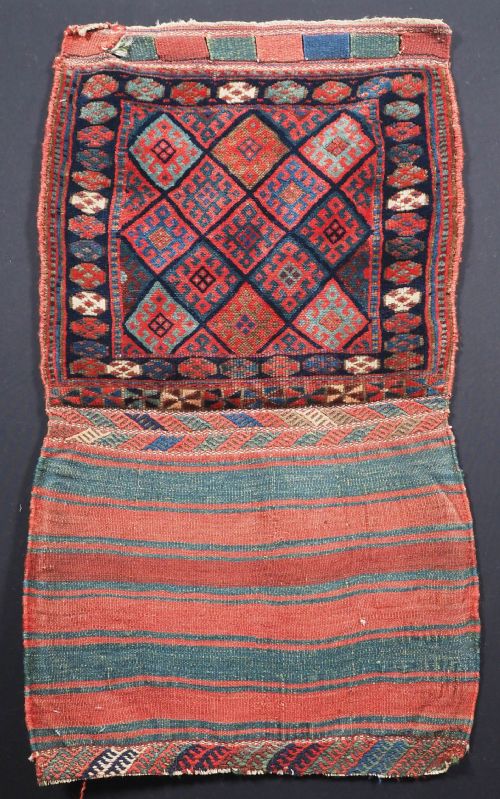
When you search for a caucasian rug face, you encounter fragments and fronts of nomadic containers, primarily saddlebags and khorjins produced by tribal groups across the Caucasus and surrounding regions. These textile items represent the surviving decorative panels of larger utility pieces once used for transport and storage on horseback.
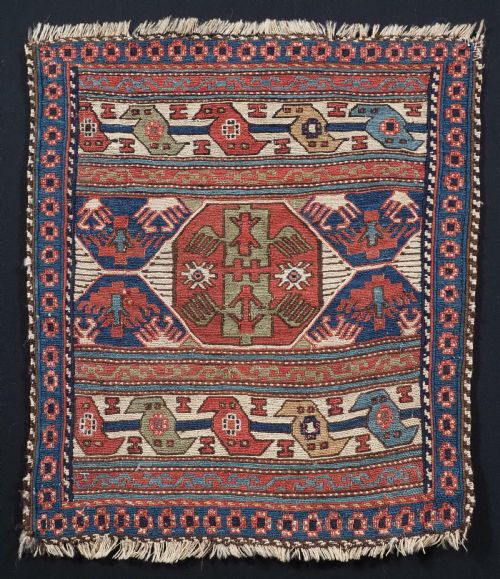
The pieces you meet most often on this page take the form of Shahsavan soumak bag faces and Jaf Kurd panels dating from the mid-nineteenth century up to the early twentieth century. Alongside these, you find Yomud mafrash panels and smaller cushion conversions created from hand-woven tribal textiles.
Tribal and nomadic styles dominate the selection, showing the distinct geometric layouts and symbolic motifs favoured by weavers in areas such as Moghan and Azerbaijan. Each caucasian rug face preserves a concentrated portion of a larger weaving tradition, structured for portability and durability.
What varies in quality
The refinement of the drawing determines the visual impact, distinguishing straightforward tribal weaves from pieces displaying highly articulate bird and dragon motifs. Sharply delineated geometry and balanced proportions separate standard utility items from masterworks of nomadic textile art.
The integrity of the natural dye palette dictates the depth of the surface, with complex colour variation creating a rich visual rhythm. Skilful handling of vegetable dyes ensures the textile retains vibrancy and contrast as the wool patinates over decades.
Several Shahsavan soumak bag faces feature spirited depictions of birds and dragons woven directly into the daily baggage of nomadic camps.
The Caucasian Rug Face Glossary
- Soumak
- A flatweave technique where pattern wefts wrap around the warp threads before passing to the next, creating a textured surface that resembles embroidery. This method allows for sharp diagonal lines and intricate graphic details.
- Khorjin
- A traditional double saddlebag used by nomads for transport, which is frequently separated over time into individual bag faces. These panels preserve the primary decorative field of the original transport gear.
- Mafrash
- A rectangular storage bag or chest face produced by nomadic tribes for bedding and household goods. They typically feature bold horizontal band designs or medallion systems.
- Shahsevan
- A confederation of nomadic and semi-nomadic tribes known for producing finely executed flatweaves and soumak bag faces. Their work often incorporates stylised animal and bird motifs.
Caucasian Rug Face: Frequently Asked Questions
What is a caucasian rug face?
A caucasian rug face is the decorative front panel of a nineteenth-century nomadic storage bag or saddlebag.
These panels were salvaged when the utilitarian backings wore out, preserving the finest tribal geometry.
How were these bags used?
Nomadic tribes utilised these textiles as saddlebags and pack containers for transporting belongings across the Caucasus.
They served both practical storage functions and decorative purposes within portable tribal dwellings.
How do I date a bag face?
Dating relies on analysing the wool quality, dye composition, and structural characteristics typical of nineteenth-century weaving.
Natural vegetable dyes and hand-spun wool point to production periods before synthetic aniline dyes became widespread.
How should I display a bag face?
Many collectors mount these textile panels directly onto hessian-backed frames for safe hanging on walls.
Alternatively, smaller pieces are sometimes converted into decorative cushions for placement on furniture.