




19th Century Khorjin
These 19th century khorjin are traditional woven saddle bags created by tribal weavers using durable wool and natural dyes.
19th Century Khorjin
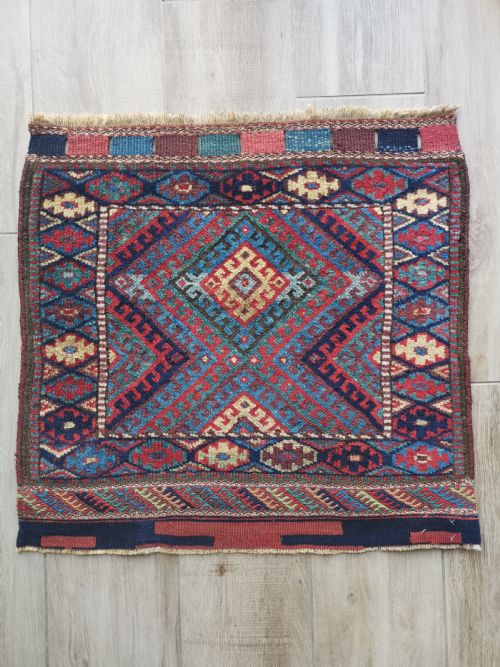
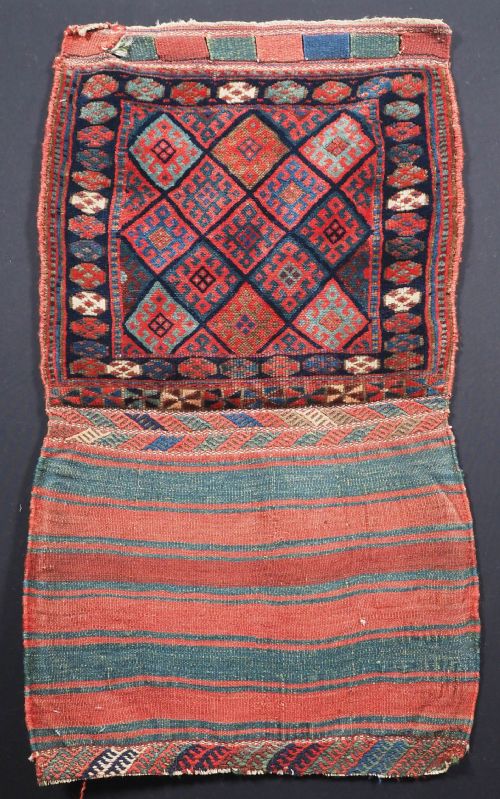
A 19th century khorjin represents functional tribal nomadic weaving, designed to be carried across animals during migration and trade. These textiles include complete double saddle bags, individual bag faces, and pieces adapted into cushions.
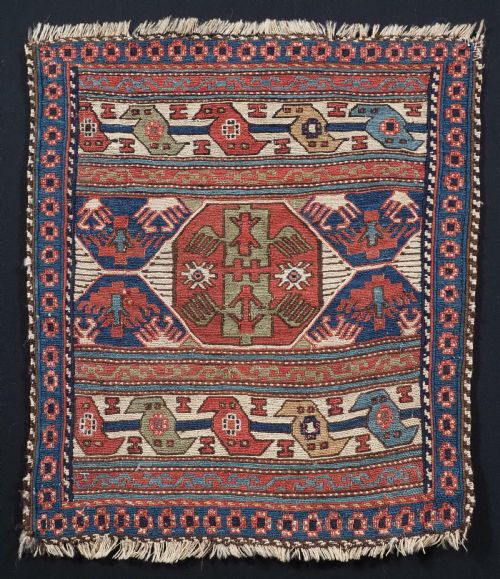
The selections on this page span several distinct tribal traditions from the nineteenth century, including Shahsavan, Afshar, Jaf Kurd, Khamseh, and Belouch groups. Pieces frequently showcase regional motifs such as boteh designs, birds, and dragons woven in diverse structural formats.
How they were made
Weavers relied primarily on hand-spun wool and natural dyes, occasionally incorporating goat hair, cotton, leather, and metal elements for structural strength and detail. These organic materials created rich, varied surfaces that developed distinctive patinas over decades of use.
Construction techniques varied according to tribal origin, utilising flatweave kilim structures, soumak wrapping methods, and pile knotting. Plain weave backs often supported intricate decorative faces designed to withstand practical transportation demands.
The listings on this site span the nineteenth century, featuring wool, cotton, and natural dyes across Kurdish, Persian, and Caucasian tribal styles.
What varies in quality
Quality rests in the handling of natural dyes and the crispness of tribal motifs, where deeply saturated colour and precise execution elevate a textile. The fineness of the hand-spun wool and the tightness of the weave also dictate structural integrity.
Completeness alters the character of a piece, distinguishing intact pairs or full sets from single bag faces or fragments. The survival of original plain weave backs and fastening mechanisms contributes significantly to historical completeness.
The 19th Century Khorjin Glossary
- Khorjin
- A traditional Middle Eastern double saddle bag used by nomadic tribes for carrying possessions during migration. These textiles are woven in various techniques including pile and flatweave.
- Soumak
- A flatweave technique where supplementary pattern wefts are wrapped around the warp threads before being beaten down. This method creates a sturdy textile with a textured, braided surface.
- Boteh
- An ancient teardrop or almond-shaped motif representing a floral or cypress spray. It appears frequently in traditional Persian and tribal weaving.
- Kilim
- A tapestry-woven carpet or flatweave lacking a pile. These structures form lightweight textiles utilised for storage and horse covers.
19th Century Khorjin: Frequently Asked Questions
What is a khorjin?
A khorjin is a traditional tribal saddle bag woven in pairs to carry belongings across pack animals. Nomadic groups used them extensively for daily storage and transport.
These textiles feature durable wool construction and distinctive geometric or pictorial designs unique to specific tribal groups of the nineteenth century.
How were khorjin used?
Nomads draped these double bags over horses, camels, or donkeys to transport household goods during seasonal migrations. They functioned as portable storage chests within tents once camps were established.
Over time, many surviving bags have been separated into individual faces or converted into decorative cushions for domestic interiors.
How do I clean a textile?
Gentle surface vacuuming with low suction helps remove loose dust without damaging fragile hand-spun wool fibres. Professional textile conservators should handle any wet cleaning to prevent dye bleeding.
Keeping these pieces away from direct sunlight preserves the natural dyes and prevents the wool from becoming brittle.
How do I identify tribal origins?
Distinctive design repertoires, structural methods, and colour palettes help attribute pieces to specific groups such as the Shahsavan, Afshar, or Belouch. Soumak wrapping and specific bird or dragon motifs often point towards northwestern Persian workshops.
Comparing the weave density and material composition provides further clues regarding the geographic and cultural source of the textile.