
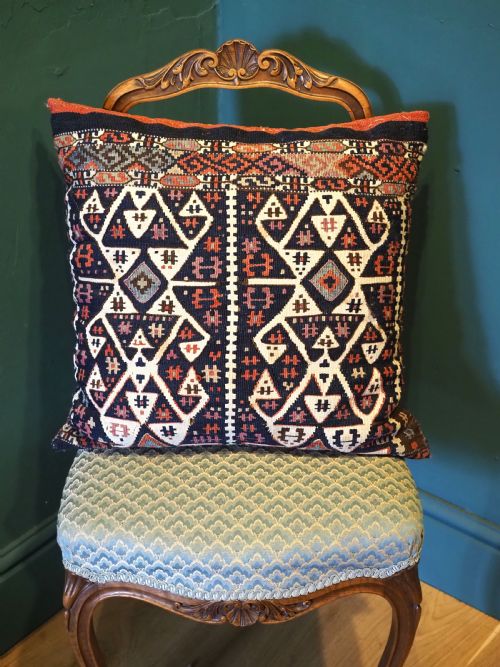


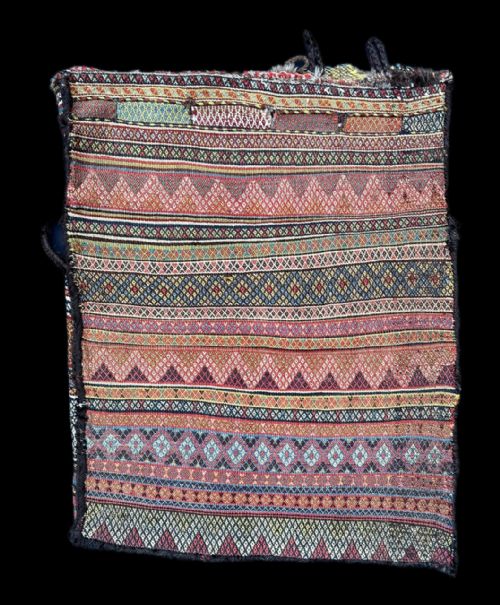

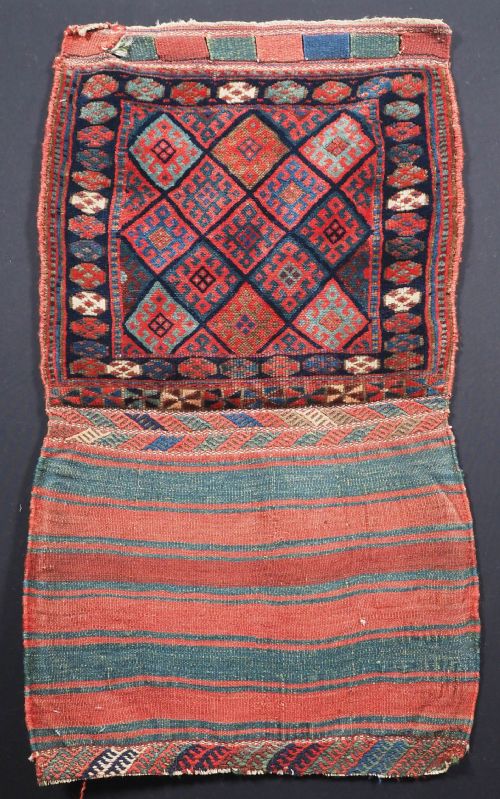


Flatweave Wool Saddlebag
These flatweave wool saddlebag examples are utilitarian nomadic textiles woven for practical transport, offering robust folk patterns that ground a modern interior.
Flatweave Wool Saddlebag
A flatweave wool saddlebag represents the portable storage woven by tribal groups across Persia, the Caucasus, and Anatolia. These pieces served a daily purpose as animal transport panniers before surviving as decorative textile fragments.
Buyers browsing this selection frequently encounter pieces attributed to nomadic groups such as the Shahsavan, Jaf Kurd, and Afshar. Forms range from complete pairs and single bag faces to cushions and panels.
The objects date primarily from the late nineteenth century, spanning decades such as eighteen eighty and nineteen hundred. Many retain original plain weave backs or structural metal and leather elements.
Evaluating quality and authenticity
Quality rests in the tightness of the weave, the clarity of the tribal motifs, and the depth achieved by natural dyes. Superior examples display precise geometric execution and minimal structural intervention over time.
The presence of complete original elements, such as matching pairs or intact plain weave backs, distinguishes exceptional survivors from isolated fragments. Preserved edges and robust hand-spun wool structures indicate superior early craftsmanship.
Materials recorded across the inventory include hand-spun wool, natural dyes, cotton, leather, and metal.
The Flatweave Wool Saddlebag Glossary
- Flatweave
- A textile constructed without pile by interlacing warp and weft threads. This technique creates a thin, durable fabric characteristic of nomadic storage bags.
- Soumak
- A brocade-like weaving technique where weft threads wrap around warp threads to produce a textured surface. This method appears frequently on Shahsavan storage pieces.
- Khorjin
- The traditional Persian term for a double-sided saddlebag used for transport. These items formed an essential part of nomadic household goods.
- Kilim
- A tapestry-woven carpet or bag face lacking a pile. These pieces showcase sharp geometric patterns formed by interlocking wefts.
- Warp
- The vertical foundation threads stretched tightly on a loom before weaving begins. Weft threads pass horizontally through these structural cords.
Flatweave Wool Saddlebag: Frequently Asked Questions
How were saddlebags used?
Nomadic groups slung these double-sided bags over pack animals to transport belongings during seasonal migrations. They served as durable storage containers inside tribal tents once camp was established.
Over decades of use, the functional panels separated, leaving individual bag faces and cushions that now serve primarily as decorative wall hangings or floor accents.
How do I clean an antique bag?
Gentle surface vacuuming with low suction protects the delicate hand-spun wool fibres from damage. Avoid aggressive shaking or mechanical beating that stresses old foundation threads.
Professional textile conservation cleaning is necessary for deeper soil removal. Water saturation can destabilise natural dyes and shrink cotton or wool components.
Are these bags authentic?
Authenticity relies on identifying period-appropriate materials such as hand-spun wool and natural dyes. Construction methods like soumak wrapping and traditional flatweave techniques align with nineteenth-century nomadic output.
Regional attributions, including Shahsavan or Afshar origins, reveal specific tribal palettes and structural traits that distinguish genuine historical pieces from modern reproductions.
How should I display a textile?
Mounting a flat textile on a padded board distributes weight evenly across the structure. This method prevents distortion along the warp and weft threads.
Keep pieces away from direct sunlight to prevent fading of natural dyes. Displaying them in rooms with stable humidity protects the organic wool and leather materials.