


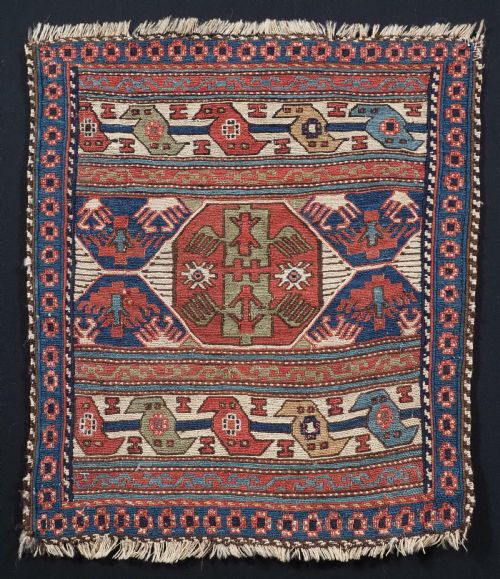
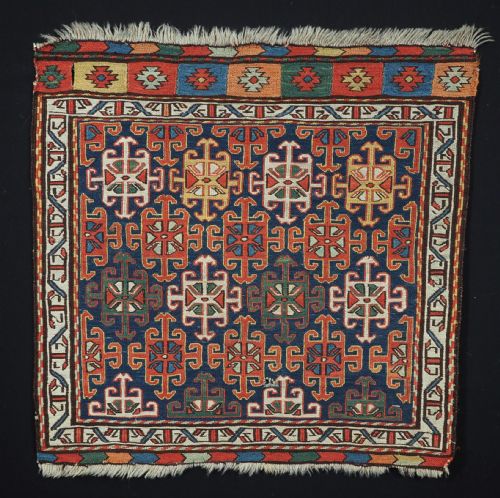


Shahsavan Woven Bag
A shahsavan woven bag brings nomadic tribal artistry into the home, offering striking geometric patterns and rich historical textile work.
Shahsavan Woven Bag
The objects on this page largely date from the decades between eighteen fifty and eighteen ninety. You will find complete pairs, individual Soumak bag faces, and kilim panels displaying traditional tribal motifs such as birds and dragons.
Tribal weavers created these storage containers for practical nomadic life, utilising regional designs associated with Caucasian and Persian tribal traditions. Each shahsavan woven bag reflects the distinctive weaving heritage of Moghan and the broader northwest Persian region.
Materials and construction methods
Weavers constructed a shahsavan woven bag using hand-spun wool dyed with natural and vegetable dyes. This combination of materials produces the rich, varied palette characteristic of nineteenth-century tribal work.
Techniques centre primarily on Soumak flatweaving, a wrap-threads method that creates a durable structure and a textured surface. Additional construction often incorporates leather and metal elements to reinforce the pieces for functional use.
Listings span the nineteenth century, focusing on the decades between eighteen fifty and eighteen ninety with wool and natural dyes.
Assessing quality in tribal weaving
Quality in a shahsavan woven bag depends upon the tightness of the Soumak weave and the clarity of the design motifs. Finer pieces display crisp geometric lines and intricate depictions of birds or dragons.
The condition of the hand-spun wool and the vibrancy of the natural dyes significantly influence the visual impact. Complete sets and intact pairs retain a higher degree of their original utility and form compared to isolated panels.
The Shahsavan Woven Bag Glossary
- Soumak
- A flatweave technique where coloured weft threads are wrapped over the warp threads before being returned, creating a braided surface texture on the face of the textile.
- Khorjin
- The traditional term for a double-sided saddlebag used by nomadic peoples for transporting household possessions.
- Mafrash
- A large rectangular storage bag or chest panel utilised within nomadic tents for bedding and clothing.
- Kilim
- A flat tapestry-woven textile produced without a pile, forming the backing or structure of many tribal bags.
- Natural Dyes
- Colourants derived from plants, roots, and insects that produce the organic, mellow hues found in nineteenth-century wool.
Shahsavan Woven Bag: Frequently Asked Questions
What is a shahsavan woven bag used for?
Nomadic communities utilised these textiles primarily for storage and transport during seasonal migrations. Families packed bedding, clothing, and household goods into these durable containers.
Today, collectors display them as wall hangings or incorporate them into interior spaces as decorative textile art. Their robust construction allows them to function as distinctive floor accents or preserved historical artefacts.
How do I date a shahsavan woven bag?
Dating relies on examining the materials, particularly the wool preparation and the use of natural or vegetable dyes. Nineteenth-century examples display specific chemical and organic dye combinations characteristic of that era.
Structural details, such as the presence of hand-spun wool and traditional Soumak technique, help confirm the period of origin between eighteen fifty and eighteen ninety. Comparing design motifs with established tribal patterns further refines the timeline.
Are these bags complete or fragments?
The inventory includes both complete pieces and individual components. You will find intact saddlebags and storage chests alongside single bag faces and isolated panels.
Complete pairs and whole storage bags represent rarer survivals from the period. Single bag faces nevertheless offer full display of the intricate tribal iconography.
Where were these bags made?
These textiles originate from the Moghan region in northwest Persia and the broader Caucasian borderlands. Shahsavan nomadic tribes inhabited these areas, blending Persian and Caucasian artistic traditions.
The resulting designs bridge multiple tribal styles, reflecting the movement and cultural exchange across these mountainous regions.