





Geometric Soumak Textile
A geometric soumak textile brings bold nomadic pattern into a room through flat-woven wool worked with distinctive supplementary weft wrapping.
Geometric Soumak Textile
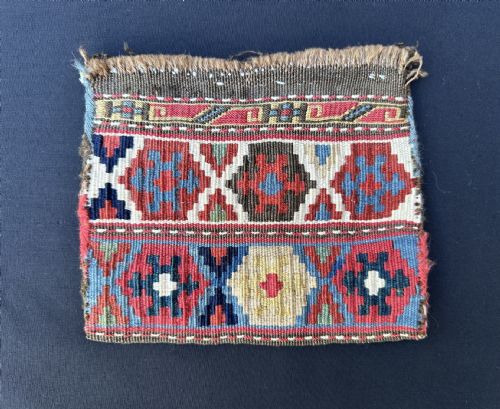
A geometric soumak textile represents the nomadic weaving traditions of the Caucasus, Persia, and Anatolia, typically encountered as storage bags, saddle bags, panels, and fragments. These pieces originate largely from tribal groups such as the Shahsavan, Afshar, Qashqa'i, and Kurdish weavers working across the nineteenth century.
The objects span practical household containers like salt bags, vanity bags, and khorjin saddle bags alongside larger mafrash storage panels. Most examples date from the 1850s through to the early twentieth century, reflecting the material culture of nomadic life.
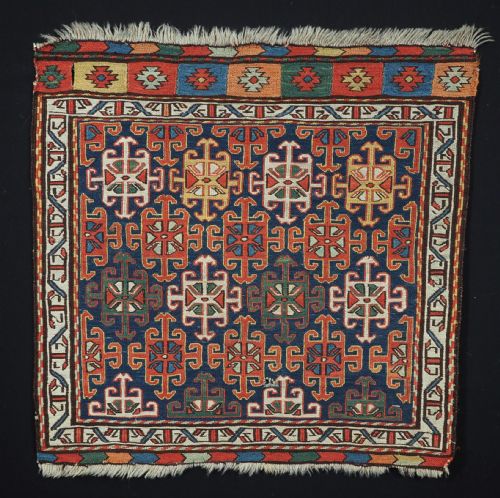
Buyers seeking a geometric soumak textile will most commonly find nineteenth-century Shahsavan work from the Moghan region of Azerbaijan. These items showcase crisp medallion and polygon motifs executed in traditional flat-weave structures.
How they were made
These textiles employ hand-spun wool for the foundational warps and wefts, supplemented occasionally by cotton details. Natural dyes provide the rich palette underpinning the intricate tribal designs.
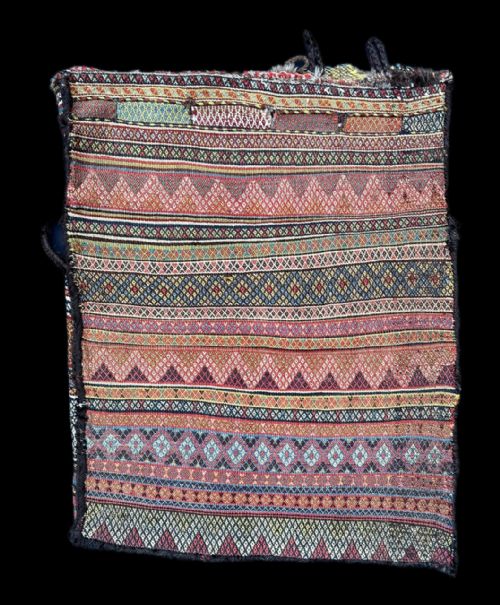
The defining technique is soumak work, a flat-weaving method where coloured pattern wefts wrap around the warp threads in a continuous wrapping motion. This creates a textured surface with distinctive ribbed lines on the front and loose floats on the reverse.
Nomads wove their worldly goods into portable storage bags, turning household chores into mobile art.
What varies in quality
The refinement of the soumak wrapping determines the crispness of the geometric design, with tightly packed wefts producing sharp lines and enduring structure. Softer handling often indicates superior wool selection and expert dye preparation.
Design complexity and the integrity of the tribal iconography distinguish finer examples from standard work. Well-balanced proportions within panels and bags reflect the weaver's mastery of traditional Caucasian and Persian motifs.
The Geometric Soumak Textile Glossary
- Soumak
- A flat-weave technique involving coloured weft threads wrapped horizontally over and around vertical warp threads. This method creates a durable fabric with a pronounced textured face.
- Khorjin
- A traditional pair of saddle bags used by nomadic groups for transport and domestic storage. They are frequently separated or repurposed as individual wall hangings or cushions.
- Mafrash
- A large rectangular storage container or bedding bag woven in panels by nomadic tribes. Surviving pieces are often displayed as flat panels.
- Juval
- A large face bag or storage sack produced by tribal weavers for household organisation. These items display prominent primary medallions.
Geometric Soumak Textile: Frequently Asked Questions
What is a soumak weave?
A soumak weave is a flat-woven textile technique where coloured weft threads wrap around vertical warp threads. This creates a textured, ribbed surface without the pile found in traditional carpets.
The technique yields a robust fabric that held up well to daily nomadic use while allowing for intricate geometric patterns.
How were these bags used?
Nomadic families utilised these textiles to store salt, personal items, bedding, and household goods during seasonal migrations. Saddle bags transported belongings across rugged terrain.
Over time, many complete bags and panels transitioned from utility items into decorative furnishings.
How do I date an antique textile?
Dating relies on material analysis, dye characteristics, and structural evidence within the weave. Nineteenth-century examples typically display hand-spun wool and early natural colour palettes.
Stylistic conventions and tribal attributions further help narrow the period of origin between the 1850s and the early 1900s.
How should I care for a textile?
Protect the wool textile from direct sunlight to prevent natural dye fading. Gentle vacuuming through a mesh screen helps remove dust without damaging the flat-weave structure.
Keep the piece away from damp environments and avoid hanging heavy bags by isolated anchor points.