



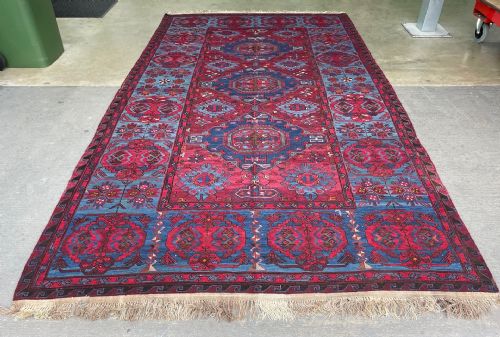
Caucasian Flatweave Carpet
These woven floor coverings and decorative textiles bring tribal geometry and rich wool into a room.
Caucasian Flatweave Carpet
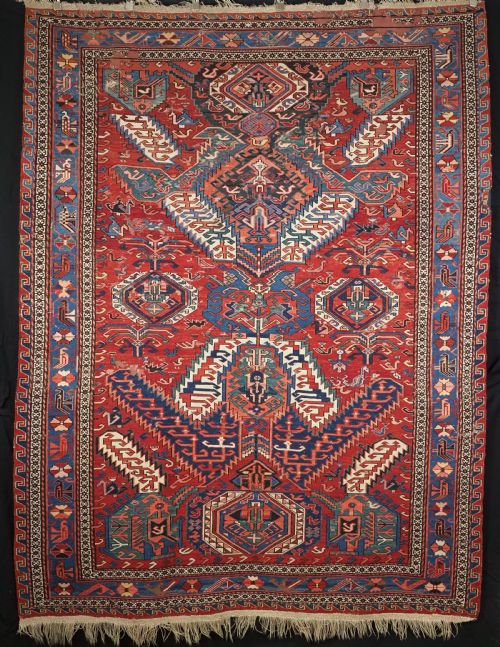
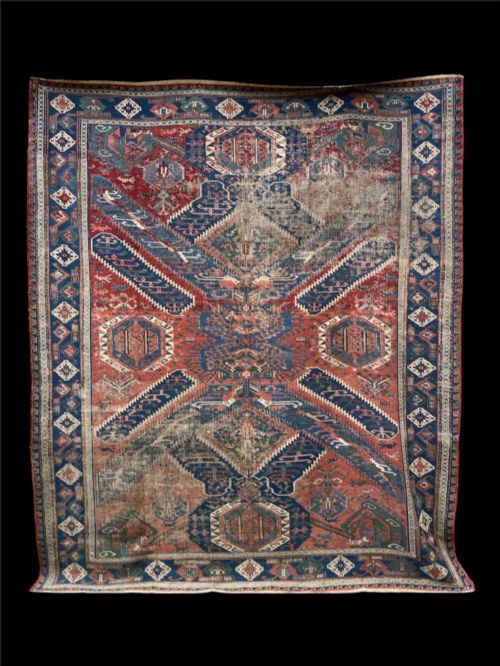
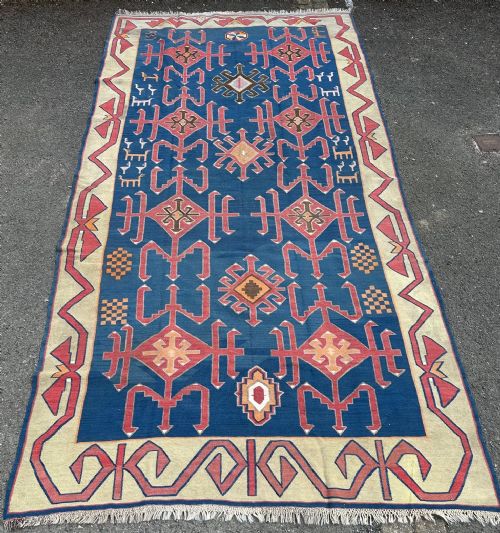
A caucasian flatweave carpet brings together tribal geometry and village weaving traditions from regions such as Shirvan, Karabagh, and Daghestan. Buyers searching for a caucasian flatweave carpet encounter slit-woven kilims, brocaded soumaks, and utilitarian storage bag panels dating from the nineteenth century into the early twentieth century.
The forms range from long runners and large carpets down to individual bag faces and assembled fragments. Specific tribal groups like the Shahsavan, Avar, and Kurds produced distinct formats, often featuring medallions, banded designs, or animal and dragon motifs.
Materials and construction
Weavers relied on hand-spun wool and cotton, utilising vegetable and natural dyes to achieve soft, earthy colour palettes. The structure relies on flat-weaving techniques where no pile is knotted into the foundation.
Soumak techniques incorporate a wrapping method across the warp threads to create a textured, durable surface that resembles embroidery. Slit-weave kilims leave small vertical gaps where different colour blocks meet, producing crisp geometric outlines.
Several nomadic storage bags have transitioned from carrying household bedding across the mountains to resting quietly on modern floors.
Distinctions in craftsmanship
Quality rests on the fineness of the weave, the clarity of the geometric drawing, and the integrity of the natural dyes. Tightly packed structures and balanced compositions separate sophisticated village or tribal work from simpler utility pieces.
The Caucasian Flatweave Carpet Glossary
- Kilim
- A flat-woven carpet or rug made without a pile by tightly interweaving warp and weft threads. This technique creates a lightweight textile with identical patterns visible on both sides.
- Soumak
- A brocading technique where coloured weft threads are wrapped over and under warp threads to produce a durable, ribbed face. It adds structural weight and distinct texture to the textile.
- Mafrash
- A large storage bag or hamper panel made by nomadic tribes to transport household belongings. These panels are frequently separated and repurposed as flatweave rugs.
- Warp
- The stationary vertical threads stretched onto a loom that form the foundational skeleton of the carpet. Weft threads are passed through these structural lines to build the design.
Caucasian Flatweave Carpet: Frequently Asked Questions
How do I clean a flatweave carpet?
Gentle surface brushing and regular light vacuuming without a beater bar remove loose dust and grit from the wool structure. Professional textile cleaning is necessary for deeper care.
Water and harsh chemical detergents damage natural dyes and weaken hand-spun wool fibres. Keep these carpets away from excessive moisture and direct sunlight.
What is the difference between a kilim and a soumak?
A kilim is purely flat-woven using interlocking weft threads that leave small slits between colour changes. This produces a smooth, thin textile.
Soumak involves wrapping weft threads around the warp to build a textured, ribbed surface. This wrapping method adds considerable weight and durability to the finished textile.
Where were these carpets made?
Weavers produced these textiles across the Caucasus region, encompassing modern-day Azerbaijan, Daghestan, and surrounding mountainous areas. Specific tribes and regions such as Shirvan, Kuba, and the Shahsavan created distinct local styles.
Nomadic and village communities utilised local sheep's wool and plant dyes to craft these floor coverings and storage bags.
How can I date an antique flatweave?
Dating relies on examining the wool quality, dye composition, and structural characteristics. Nineteenth-century examples often feature softer natural dye palettes and finely spun materials.
Later pieces from the early twentieth century shift toward different chemical or blended dye mixtures and varied tribal structures. Comparing known regional patterns helps narrow down the decade of creation.