


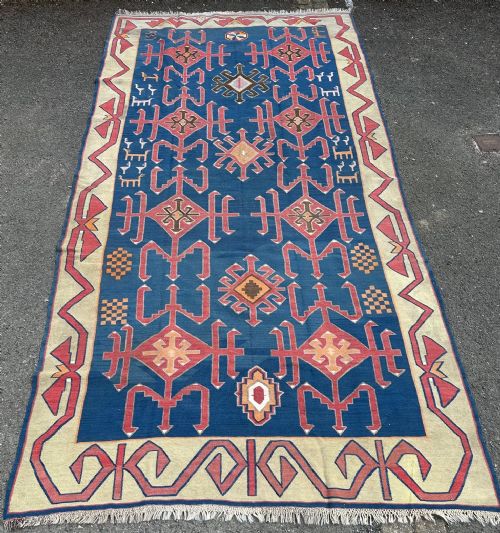


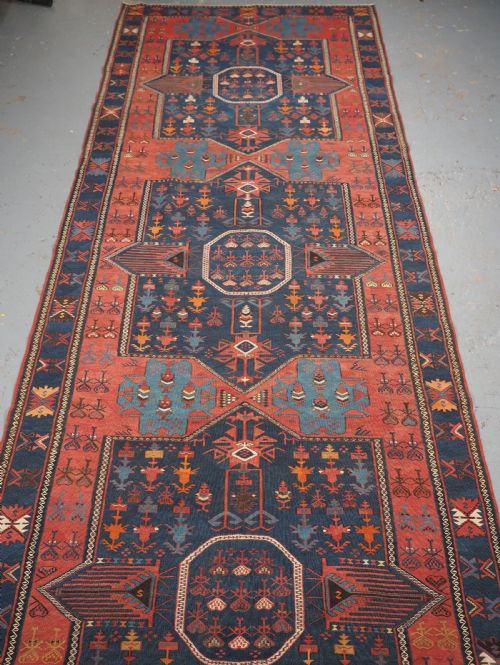
Blue Wool Kilim Runner
These blue wool kilim runner examples are flat-woven tribal textiles offering geometric design and hard-wearing floors.
Blue Wool Kilim Runner
A blue wool kilim runner is a flat-woven textile produced by tribal groups across Persia, Anatolia, the Caucasus, and Central Asia. These narrow floor coverings arrive from regional weaving traditions spanning the late nineteenth century to the mid-twentieth century.
The format is typically elongated for corridors and hallways, woven without a pile using slit-tapestry techniques. Examples on this page include narrow formats associated with Persian and Caucasian workshops alongside broader tribal pieces.
What varies in quality
Quality rests upon the tightness of the weave, the fineness of the hand-spun wool, and the complexity of the tribal design. Tighter tension in the flat-weave structure yields a sharper geometric pattern and a more resilient surface.
The depth and subtlety of natural dyes determine the visual harmony of the piece, separating standard utility pieces from finely articulated tribal examples.
Several runners were woven in multiple narrow strips and stitched together because nomadic looms had limited width.
The Blue Wool Kilim Runner Glossary
- Kilim
- A flat-woven carpet or rug made without a pile. These textiles rely on tightly packed horizontal weft threads passing over vertical warp threads to form geometric patterns.
- Runner
- A long, narrow carpet format designed for hallways, corridors, and stairs. This shape appears frequently in regional tribal weaving traditions.
- Sofreh
- A flat-woven spread or cloth traditionally used for dining, kneading dough, or serving food. These functional textiles share weaving techniques with standard kilims.
- Soumak
- A brocade-like flat-weave technique where extra weft threads wrap around the warp threads for added texture and durability. This method produces a sturdier structure than standard tapestry weaving.
- Warp
- The stationary vertical threads stretched across a loom before weaving begins. The weft threads pass under and over these foundation lines.
Blue Wool Kilim Runner: Frequently Asked Questions
How do I clean a kilim runner?
Vacuum gently without a rotating brush roll to remove embedded dust and grit. Professional specialist cleaning is recommended for antique wool textiles.
Avoid saturation with water and harsh chemical detergents. Spot clean minor marks with diluted wool-safe soap and cool water.
Are these runners durable for hallways?
The dense flat-weave construction lacks a raised pile, making these textiles resilient against heavy foot traffic. Wool fibres naturally resist dirt and compression.
Utilising a quality underlay prevents slipping and cushions the textile against hard stone or wooden floors.
How do I tell regional styles apart?
Caucasian pieces tend to display crisp, sharp geometric polygons and structured borders. Persian and Anatolian tribal examples frequently incorporate softer vegetal dyes and medallion layouts.
Structure clues such as multi-strip assembly point towards specific nomadic groups like the Uzbek or Baluch.
What is the difference between kilim and pile rugs?
Kilims are woven flat using interlocked weft threads without knotted tufts. This creates a lightweight textile that is reversible and thin.
Pile rugs feature individual knots tied to the warp foundation, creating a fuzzy, elevated surface texture.