
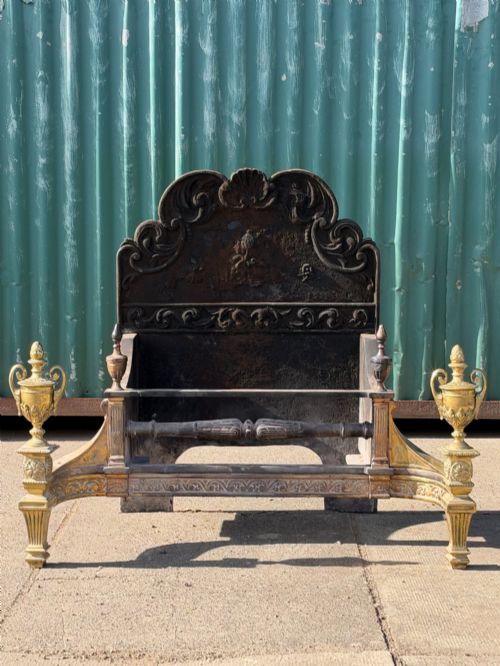
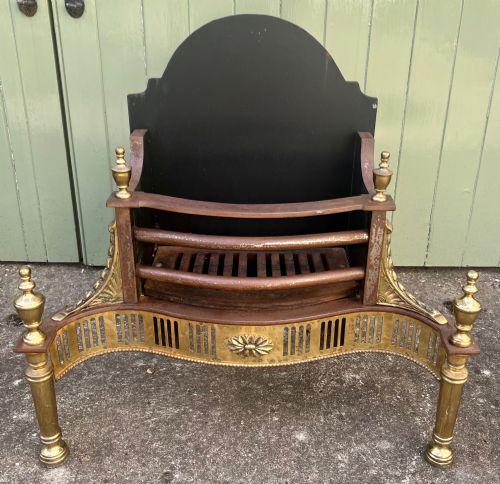
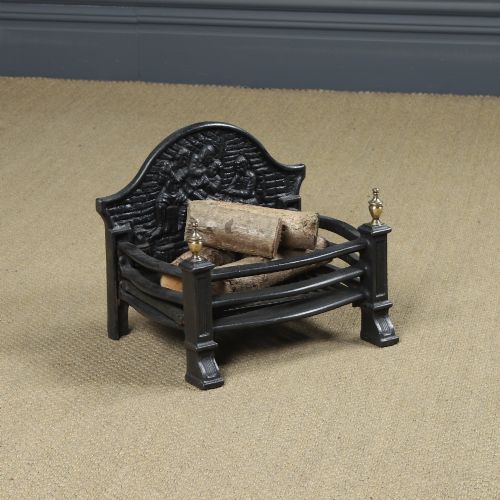
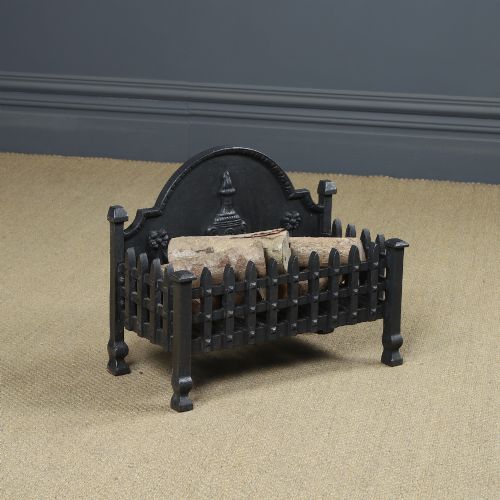


Cast Iron Dog Grate
A cast iron dog grate warms a hearth with heavy metal structure and period detail, anchoring the fireplace in traditional rooms.
Cast Iron Dog Grate
A cast iron dog grate provides the basket and hearth framework for an open fire, often paired with andirons or fire dogs. These pieces anchor a room's fireplace, combining structural ironwork with decorative fronts for burning wood or coal.
The versions met most frequently on this page span from the Georgian period through the Victorian era and into the early twentieth century. Many examples incorporate brass elements or firebacks alongside the main iron basket.
Makers and designers drew on various historical aesthetics, producing pieces in Gothic Revival, Neoclassical, and Arts and Crafts styles. They function both as practical hearth furniture and as decorative focal points within period interiors.
Judging quality
Quality rests in the weight of the metal and the crispness of the casting detail. Finer pieces display sharply rendered ornamental motifs and substantial iron thickness rather than plain, thin utility castings.
The integration of brass details and the presence of matching fire dogs or firebacks elevate a piece. Balanced proportions and sound structural joinery separate standard grates from exceptional examples.
Some grates come equipped with mulling andirons, ready to warm spiced ale beside the flames.
The Cast Iron Dog Grate Glossary
- Dog grate
- A metal basket designed to hold logs or coal within an open fireplace, often supported by fire dogs. These items sit directly on the hearth floor.
- Andirons
- Supporting metal pillars placed on either side of the hearth, frequently accompanying a fire grate. They hold up the burning logs and often match the style of the grate.
- Fireback
- A heavy cast iron plate placed against the rear wall of a fireplace. It protects the brickwork and radiates heat back into the room.
- Fire basket
- An open metal container for holding fuel inside a fireplace. It allows air to circulate around the wood or coal to improve burning.
- Gothic Revival
- An architectural and decorative style drawing on medieval forms. Pieces in this manner feature pointed arches and ecclesiastical motifs.
Cast Iron Dog Grate: Frequently Asked Questions
How do I measure for a dog grate?
Measure the width, depth, and height of your fireplace opening carefully before selecting a basket. Ensure adequate clearance around the ironwork for safe operation.
Account for any protruding fire dogs or andirons when checking the hearth dimensions to guarantee a proper fit.
Can these grates burn real wood?
Most of these iron and steel grates were built to handle solid fuels like wood or coal in period hearths. Inspect the thickness of the metal and any internal firebrick before lighting a fire.
Consult a specialist to verify that your specific antique grate is structurally sound for burning fuel today.
How do I clean cast iron?
Remove ash and soot using a soft brush and avoid harsh chemical cleaners that strip the metal finish. Lightly oiling the iron helps prevent surface rust over time.
Keep the fireplace dry and clean regularly to maintain the dark patina of the cast iron components.
What is the difference between a dog grate and a basket?
A dog grate typically includes integrated or matching fire dogs that support the basket structure. A standard fire basket may sit on its own four legs without separate andirons.
Both serve the same primary function of containing fuel within the open hearth.