
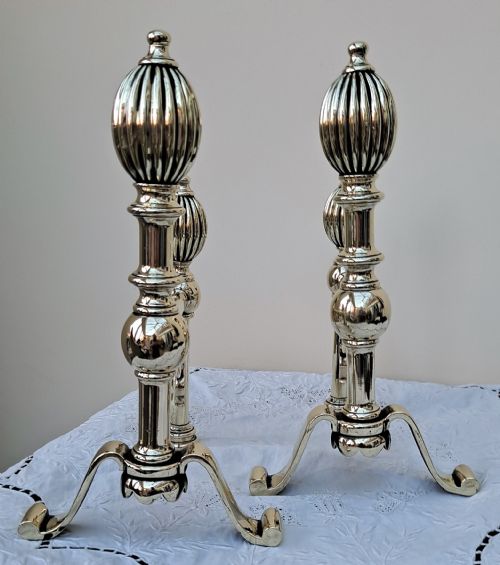
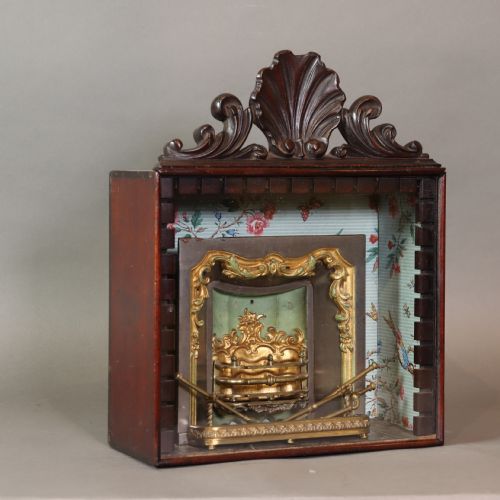


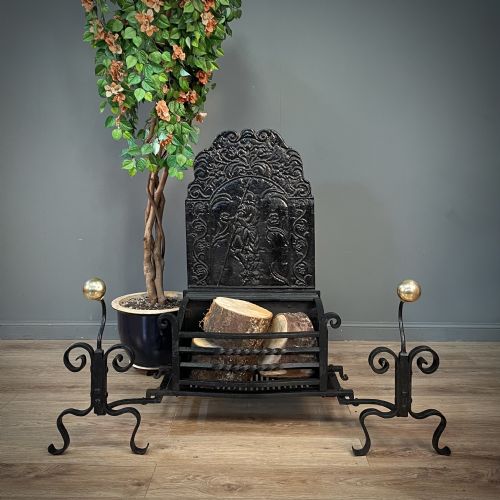

Brass Fire Grate
A brass fire grate brings warmth and formal structure to a hearth, combining sturdy iron frameworks with bright brass highlights across periods from the Georgian era onwards.
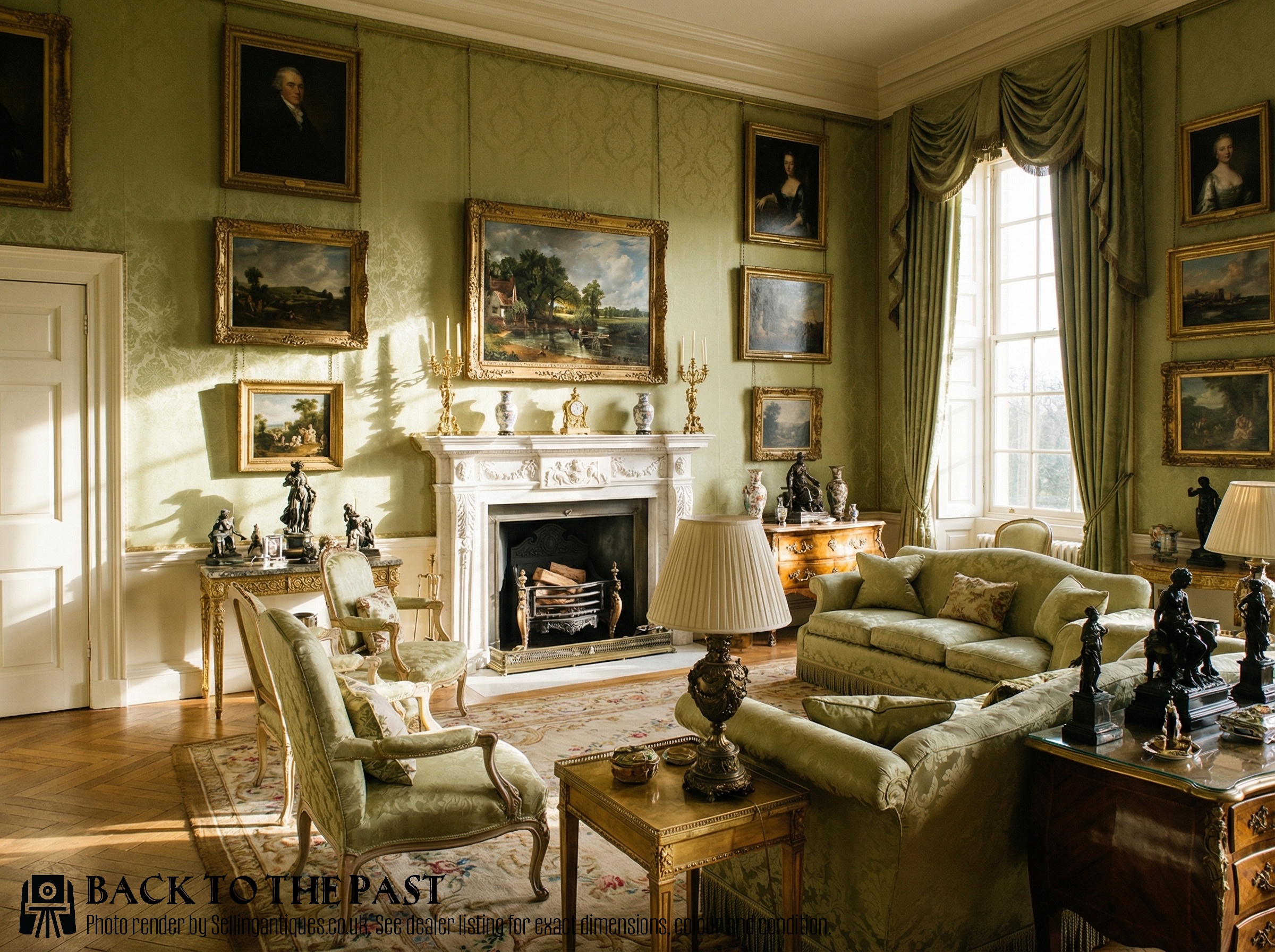
Brass Fire Grate
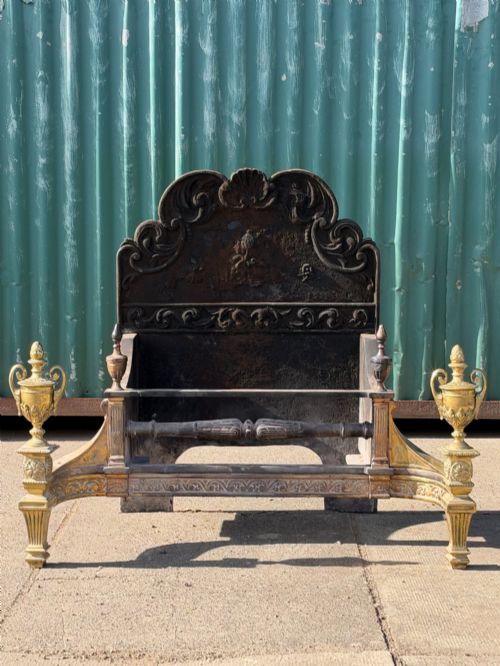
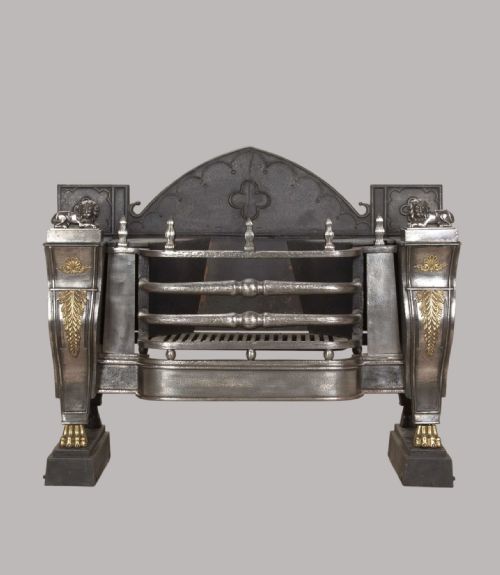
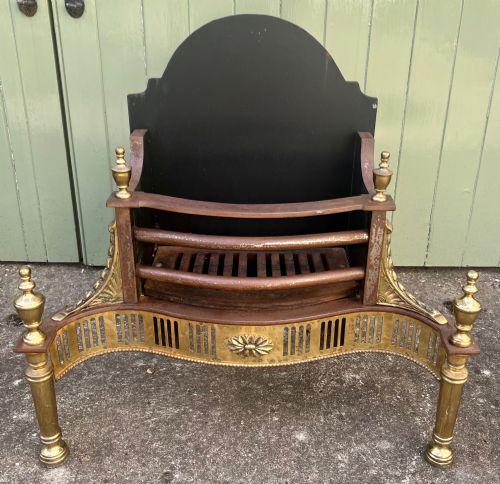
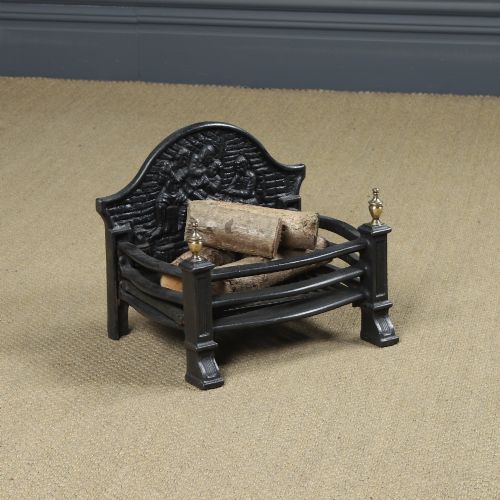
A brass fire grate is a functional hearth furnishing designed to hold burning fuel safely while reflecting light into the room. When searching for a brass fire grate, buyers encounter open fire baskets, hob grates and companion andirons dating from the Georgian, Regency and Victorian periods.
The selection ranges from neoclassical designs with clean lines to elaborate French Rococo and Gothic Revival pieces. Most examples pair a heavy cast iron or steel interior basket with decorative brass mounts, finials and front bars.
Smaller variations and miniatures also appear, alongside related fireplace accessories such as fenders and fire dogs. These items serve as both practical hearth furniture and focal points of period interior design.
How they were made
Makers constructed these pieces using a combination of heavy casting and forging techniques, pairing cast iron fire baskets with wrought iron supports. This foundational ironwork provided the necessary strength and heat resistance required for daily hearth use.
Brass was utilised for decorative elements including front bars, finials, and classical appliques, often secured with iron fixings. Gilt bronze and parcel gilt finishes also appear on French and high-status English models to enhance visual warmth.
Brass Fire Grate Retail Price Guide 2026
Typical asking prices for brass fire grate among the pieces listed under this phrase on Sellingantiques today, from the lower quarter to the upper quarter. They describe what is for sale here now, not the wider market.
Keep an eye out for winged griffins and parcel-gilt cherubs guarding the hearth from unexpected drafts.
What varies in quality
Quality rests in the crispness of the metal casting and the architectural coherence of the design, whether executed in a severe Regency style or an ornate Adam manner. Heavier gauge ironwork and substantial cast brass components indicate a superior manufacture built to withstand high temperatures.
Finishing details distinguish standard utilitarian grates from high-status commissions, seen in finely chased brass ornaments, integrated cast backs, and balanced proportions. The integration of matching fire dogs or fenders further elevates the cohesion of the ensemble.
Thomas Jeckyll·Barnard Bishop and Barnards·Robert Adam
The Brass Fire Grate Glossary
- Hob grate
- A type of fireplace grate featuring raised side plates or hobs designed for keeping kettles warm. These units are frequently found in Regency and Georgian interiors.
- Andiron
- A horizontal metal support raised on legs, used to hold logs in an open fireplace. Pairs of andirons often flank or integrate directly with a central fire basket.
- Fire basket
- An open metal container designed to hold coal or wood safely within a hearth. They combine iron grates with decorative brass fronts and backs.
- Chenet
- The French term for an andiron, often cast in bronze or brass with ornamental figures or finials. They appear in continental styles like French Rococo.
- Adam style
- A neoclassical design style popularised in the eighteenth century and revived later, characterised by symmetrical urns, swags and delicate brass mounts.
Brass Fire Grate: Frequently Asked Questions
How do I choose the right size fire grate?
Measure the width, depth and height of your fireplace opening carefully before selecting a basket. Ensure there is adequate clearance around the iron frame for proper ventilation and safety.
Consider whether your hearth is meant for active coal burning or purely decorative display. Many antique grates require professional measurement to fit existing chimney dimensions correctly.
Can I use an antique grate for a real fire?
Many cast iron and wrought iron grates are structurally sound enough for solid fuel use, provided they have been inspected for internal stress. Iron can crack under repeated extreme heat if previously compromised.
Consult a specialist or chimney sweep before lighting any historic hearth. Some delicate neoclassical or miniature pieces are intended solely for visual display.
What is the difference between a grate and andirons?
A grate is a self-contained basket or box that holds fuel above the hearth floor. Andirons are paired supports placed on either side of the hearth to hold logs.
Many period arrangements pair a central basket with matching brass fire dogs or andirons for stability. Some designs integrate the andirons directly into the frame of the fire basket.