


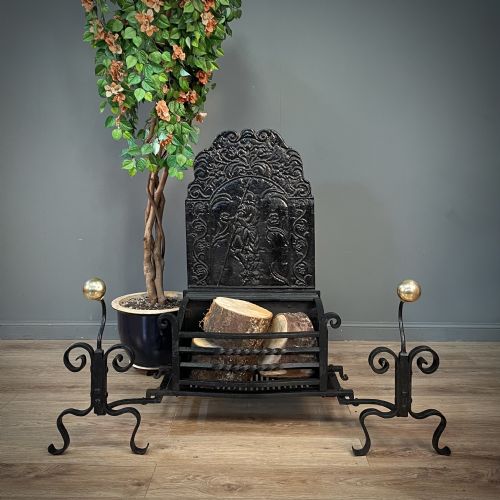

Brass Dog Grate
These brass dog grate pieces are hearth furnishings built to hold fuel and warm a room, combining brass with cast or wrought iron.
Brass Dog Grate
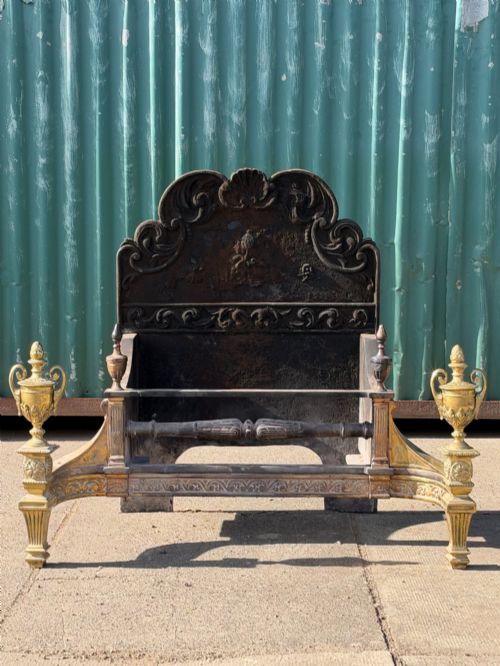
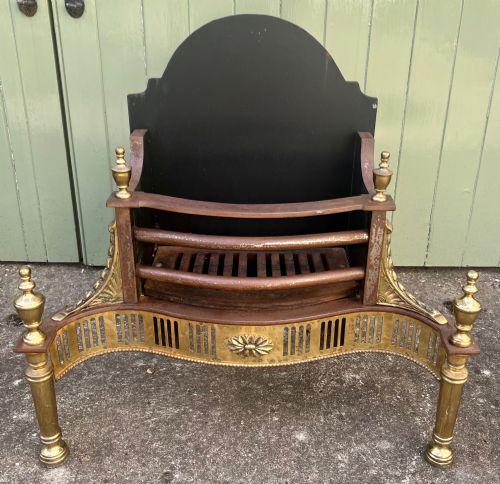
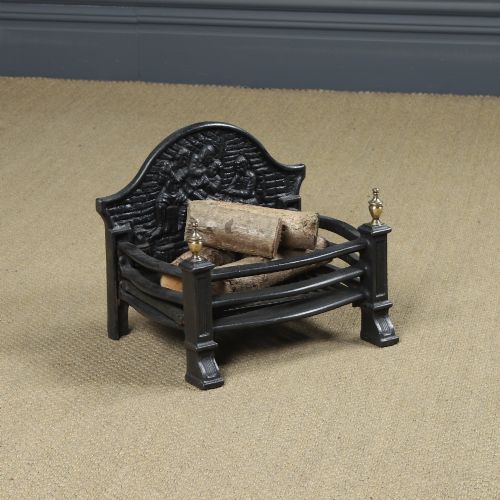
A brass dog grate provides a structured hearth arrangement for burning wood or coal within an open fireplace. Buyers searching for a brass dog grate will encounter various forms, including fire baskets, fire dogs, and complete grates.
The pieces listed here span multiple periods, ranging from Georgian and Victorian eras through to the early twentieth century. Styles vary widely, encompassing Adam Style, Gothic Revival, Regency, French Rococo, Arts and Crafts, and Jacobean Revival designs.
Origin and period heavily influence the character of each piece. English examples sit alongside French bronze chenet and andiron variations, reflecting distinct stylistic preferences across Europe during the nineteenth and early twentieth centuries.
Materials and construction methods
Construction relies upon a combination of brass and ferrous metals like cast iron and wrought iron. Makers utilised cast iron and wrought iron for the structural baskets and backs that endure high hearth temperatures.
Brass, bronze, gilt bronze, and ormolu appear primarily on decorative elements, andirons, and fire dogs. Metalworkers cast, forged, and occasionally parcel gilded these components to achieve neoclassical, gothic, or rococo ornamentation.
Some French fire grates feature gilded cherubs keeping watch over the hearth coals.
Determinants of quality
Quality rests upon the weight and integration of the metalwork. Substantial cast iron frames paired with cleanly finished brass or ormolu mounts demonstrate superior craftsmanship compared to lighter, purely decorative assemblies.
The refinement of the decorative style dictates the upper tier of these pieces. Items exhibiting crisp Neoclassical Adam detailing, French parcel gilt cherub motifs, or intricate Gothic Revival casting represent the more accomplished end of the range.
The Brass Dog Grate Glossary
- Dog grate
- A small fire grate raised on short legs or integrated with firedogs to hold fuel in a hearth. These units sit directly within the fireplace opening.
- Andiron
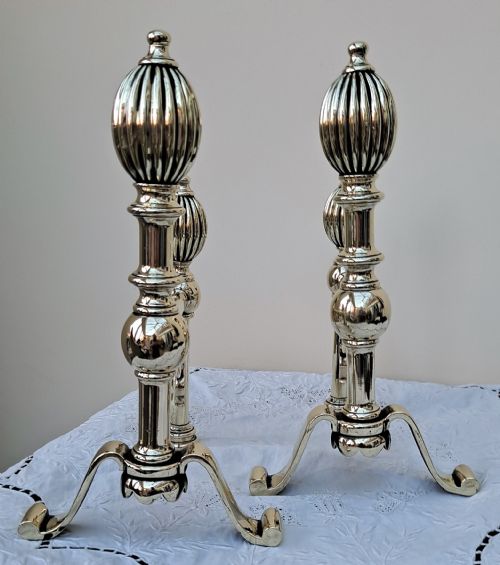
- A horizontal iron bar supported by vertical legs, used to hold logs in a fireplace. Pairs of these often accompany fire baskets.
- Chenet
- The French term for an andiron. These decorative supports frequently feature gilt bronze or ormolu finishing.
- Ormolu
- Gilt bronze ornamentation applied to decorative metalwork. This technique involves coating bronze in a gold amalgam.
- Fire basket
- An open container made of iron or steel designed to hold coal or wood. Many examples incorporate brass detailing and a supportive back plate.
Brass Dog Grate: Frequently Asked Questions
What is a brass dog grate?
A brass dog grate is a hearth accessory designed to hold firewood or coal inside an open fireplace. It combines iron structural elements with brass decorative components.
These pieces function as both practical fuel holders and ornamental hearth centerpieces. They appear in styles ranging from plain utilitarian forms to ornate period designs.
How do I measure for a fire grate?
Measuring requires checking the width, depth, and height of the interior fireplace opening. The grate must fit comfortably with adequate clearance around the sides and back.
Consider the position of any attached andirons or fire dogs when taking dimensions. Proper clearance ensures safe operation and efficient heat distribution in the room.
Can I burn real wood in these grates?
Many of these pieces are built from cast iron, wrought iron, and brass to handle traditional hearth fires. Iron baskets and fire dogs provide the structural strength needed for burning wood or coal.
Checking the condition of the iron frame helps determine suitability for active fires. Some decorative or heavily gilt pieces are better suited for display within a period fireplace.
How do I clean brass and iron?
Cleaning involves removing soot and ash from the iron components using appropriate brushes or mild treatments. Preserving the dark finish on cast iron is standard practice for historic hearthware.
Brass parts respond well to gentle polishing designed for metal surfaces. Avoid harsh abrasives that might damage applied ormolu or parcel gilt details.
What is the difference between an andiron and a fire grate?
An andiron is a pair of decorative supports placed on either side of the hearth to hold logs. A fire grate incorporates a basket or container to hold the fuel securely above the hearth floor.
Some configurations combine both elements into a single assembly. Listings often pair andirons with separate or integrated grates for complete fireplace setups.