


Period Fire Basket
A period fire basket anchors a hearth with the honest weight of cast and wrought iron.
Period Fire Basket
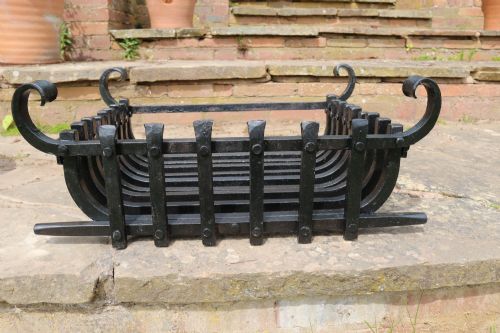
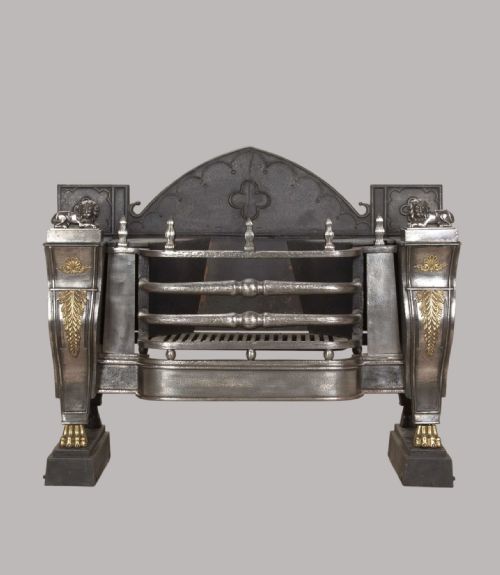
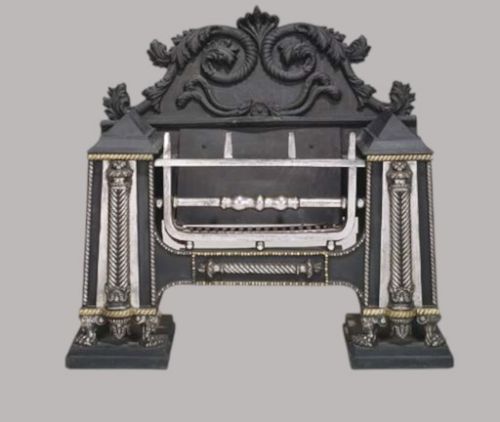
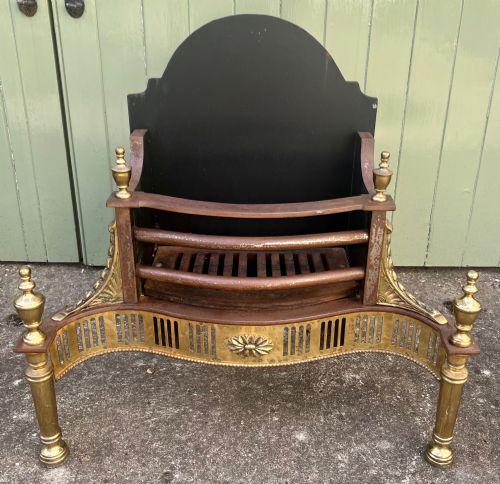
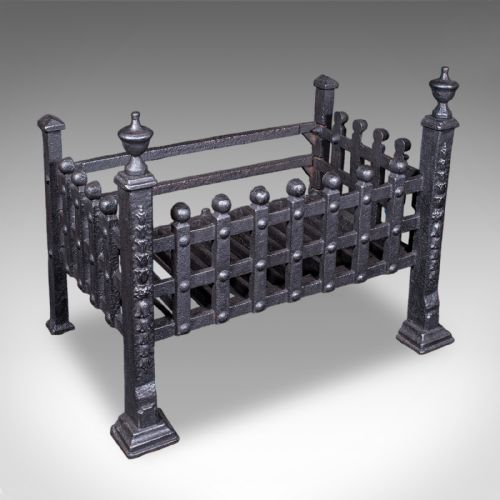
A period fire basket provides an open hearth to burn coal or wood safely within a fireplace. These utilitarian hearth furnishings take several forms, including hob grates, register grates, and freestanding log baskets.
The versions most commonly met on this page span the Georgian, Regency, Victorian, and Arts and Crafts eras. Makers designed these iron and brass grates to fit standard hearth openings while adding architectural presence to a room.
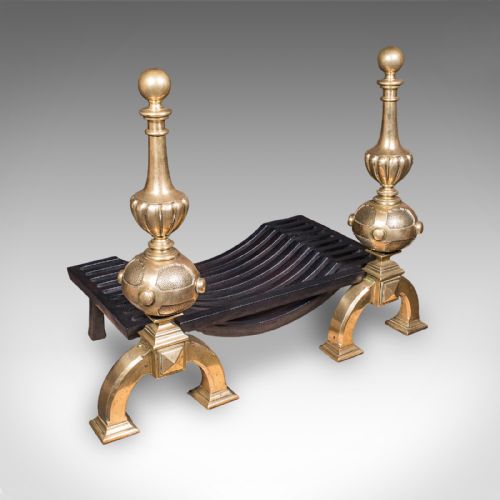
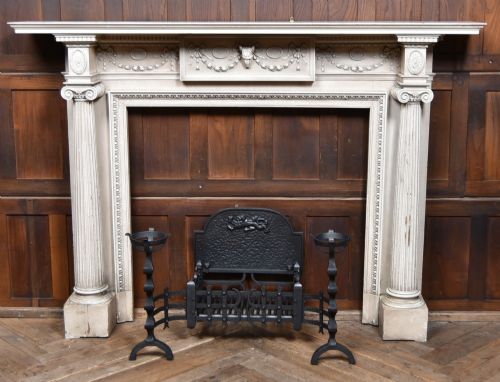
Many examples arrive accompanied by matching andirons, firebacks, or fenders to complete the fireplace setup. These items serve as functional heating apparatuses that double as decorative centrepieces for period rooms.
Materials and construction
Cast iron and wrought iron form the structural backbone of these hearth pieces, providing the necessary strength to contain burning fuel. Foundries cast the heavy backs and fire grates, whilst smiths shaped the decorative bars and legs from wrought iron.
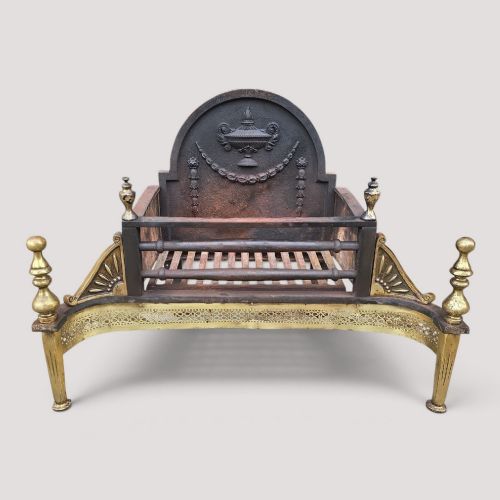
Brass details appear on classical Regency and Adam style grates, providing polished contrast against the dark iron surfaces. Firebrick lines the inner walls of certain baskets to protect the metal from direct heat and reflect warmth into the room.
Mulling andirons included in sets remind us that hearths once warmed spiced wine just as readily as cold toes.
What distinguishes finer examples
Quality in a fire basket rests on the crispness of the iron casting and the precision of the smith's handwork on the wrought bars. Finer grates exhibit balanced classical proportions, such as well-rendered Neoclassical or Adam style ornamentation, rather than coarse, generic moulding.
The weight of the metal and the integrity of the joints dictate the durability of the piece under intense hearth temperatures. Superior examples retain their original firebacks, brass furnishings, and balanced proportions without distortion or heavy pitting from prolonged heat exposure.
The Period Fire Basket Glossary
- Hob grate
- A fireplace grate featuring raised side platforms, or hobs, historically used for keeping kettles warm. These units became popular during the Georgian period.
- Andirons
- A pair of horizontal metal supports placed in a fireplace to hold logs above the hearth floor for better airflow. They often accompany fire baskets.
- Fireback
- A heavy cast iron plate placed at the back of a fireplace to radiate heat forward and protect the masonry wall. They frequently feature moulded classical or heraldic designs.
- Register grate
- An enclosed fireplace insert equipped with a movable plate or damper to control the draught up the chimney. They emerged during the late eighteenth century.
- Fender
- A low metal guard placed on the hearth in front of a fire basket to contain sparks and rolling embers. They are typically made from brass or iron to match the grate.
Period Fire Basket: Frequently Asked Questions
How do I choose the right size fire basket?
Measure the width, depth, and height of your fireplace opening carefully before selecting a grate. Leave adequate clearance around the basket for airflow and safety against the masonry.
Compare your dimensions with the proportions of the basket to ensure it sits comfortably within the hearth recess without crowding the space.
Can I burn real wood in a period fire basket?
Many period fire baskets are built to handle solid fuel like coal or logs, provided the ironwork remains sound and thick. Check the interior condition for deep corrosion or cracked metal before lighting a fire.
Lighter decorative grates or those lined with fragile firebrick may require more conservative use or seasoned wood rather than heavy coal loads.
How do I clean a cast iron fire grate?
Remove ash and debris regularly using a soft brush to prevent moisture from reacting with the soot and corroding the metal. A light application of grate polish helps maintain a dark, protective finish.
Avoid using water or harsh chemical cleaners, as dampness promotes rust on untreated iron surfaces.
What is the difference between a hob grate and a standard basket?
A hob grate incorporates solid side platforms flanking the central fuel basket, whereas a standard fire basket is an open metal container for logs or coal. Hob grates offer a distinct architectural silhouette typical of late Georgian interiors.
Standard baskets focus purely on containing the fuel fire and often pair with separate andirons or firebacks.