



Brass Hearth Grate
These brass hearth grate examples bring period warmth and focal presence to a room, combining functional metalwork with decorative style.
Brass Hearth Grate
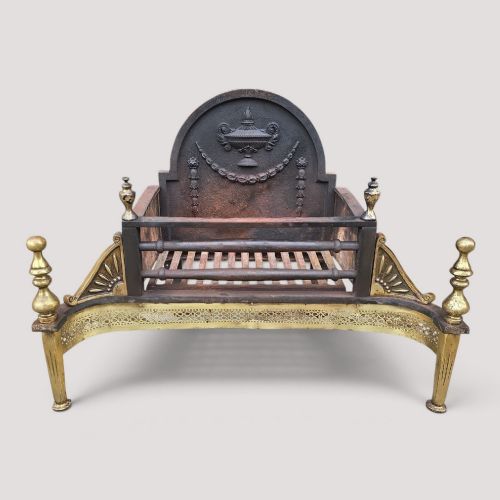
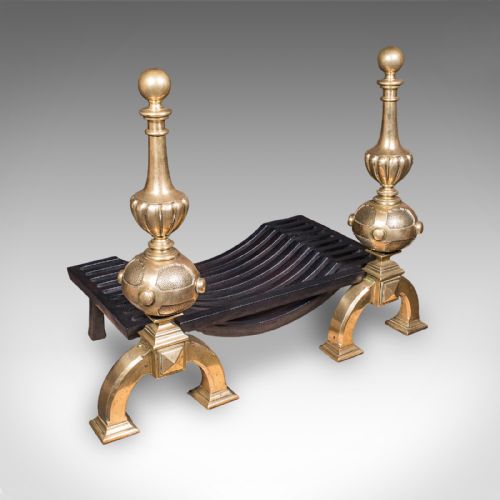
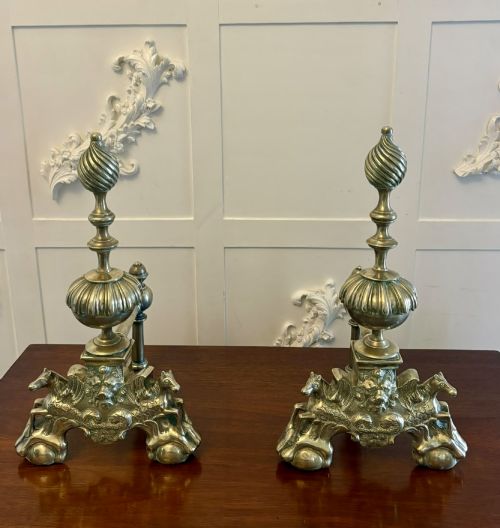
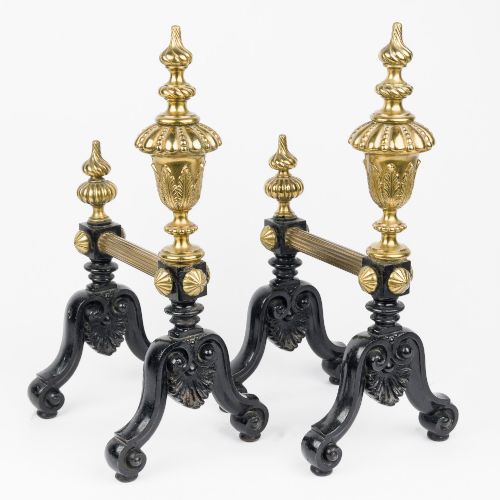
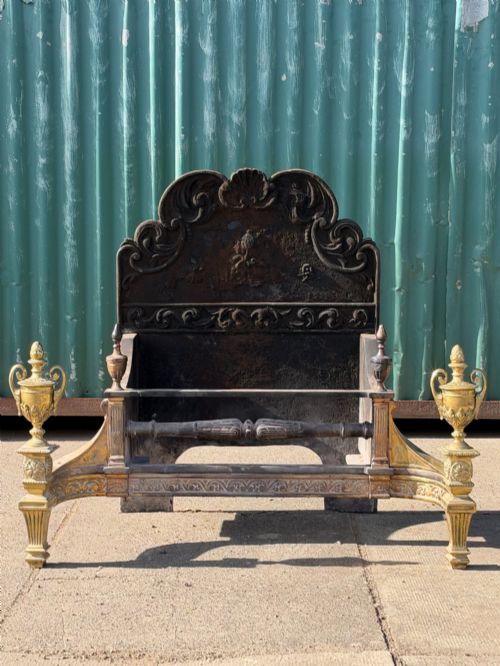
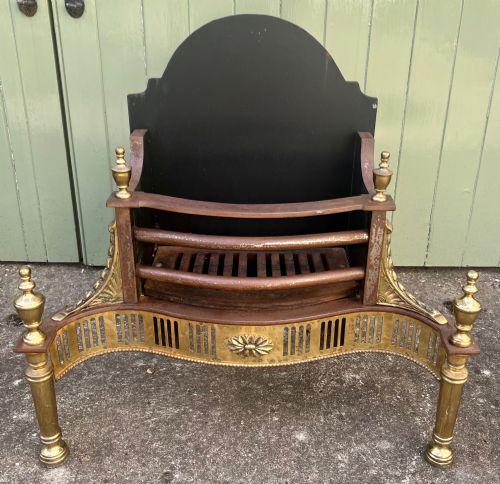
A brass hearth grate forms the decorative and structural centre of a traditional fireplace, holding fuel securely while reflecting the firelight. When searching for a brass hearth grate, buyers encounter a mix of full-scale fire baskets, smaller fire dogs, and occasional salesman samples.
The pieces on offer span the Georgian, Regency, and Victorian periods, alongside later twentieth-century interpretations in Adam and Gothic Revival styles. Cast iron and wrought iron frequently combine with bright brass elements to provide both structural rigidity and decorative contrast.
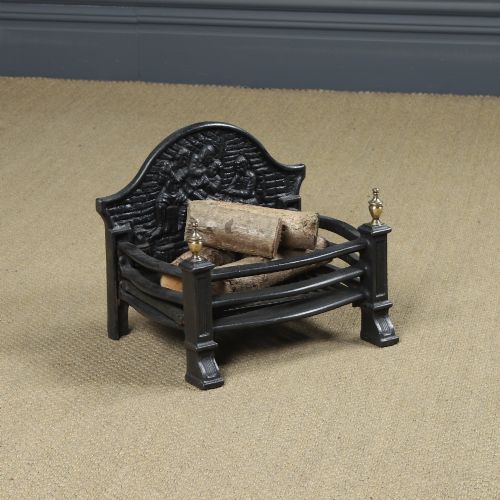
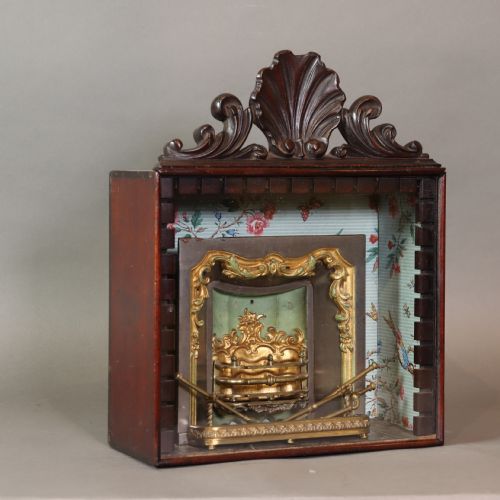
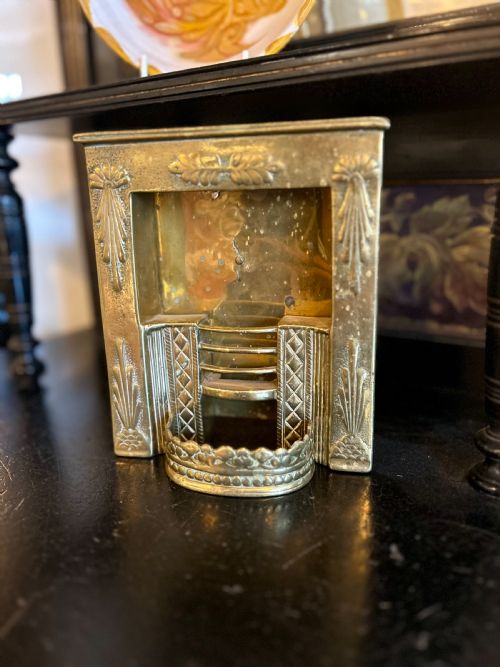
Most examples function as open fire baskets or fire grates designed for hearths, though miniature salesman samples and architectural models also appear within the selection. These smaller items replicate the proportions of larger grates without the functional capacity for burning fuel.
Distinctions in quality and execution
The standard of a piece depends largely on the crispness of the casting and the weight of the metal used in its construction. Finer examples display cleanly rendered neoclassical motifs or Gothic tracery, whereas simpler items rely on plain bars and minimal brass mounts.
Proportion and decorative integration also separate standard examples from finer works, particularly where brass mounts join cast iron frames. The presence of hand-finished details and thoughtful material combinations elevates the visual impact of the hearth.
Listings feature materials spanning cast iron, wrought iron, and paper, alongside brass, bronze, and copper.
The Brass Hearth Grate Glossary
- Andirons
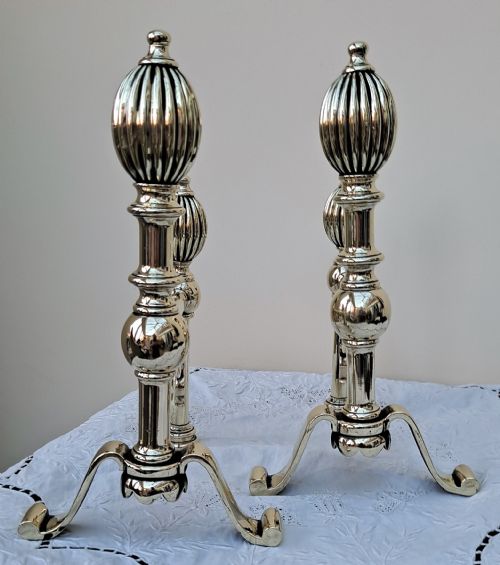
- Supports placed on either side of a hearth to hold logs, often featuring decorative brass fronts matching the grate. They are also known as fire dogs.
- Fire basket
- An open metal container designed to hold coal or wood within a fireplace, typically combining iron frames with brass detailing. Many examples incorporate a solid iron back to reflect heat into the room.
- Adam style
- A neoclassical design vocabulary characterised by symmetrical urns, husks, and delicate linear patterns popular in eighteenth-century British architecture. Grates from later periods frequently emulate these refined proportions.
- Salesman sample
- A miniature version of a larger household item utilised by travelling merchants to demonstrate designs to prospective clients. These scaled-down pieces exhibit the exact detailing of full-size hearth furniture.
Brass Hearth Grate: Frequently Asked Questions
What is a brass hearth grate?
A brass hearth grate is an open metal basket or frame designed to hold fuel in a fireplace, featuring brass decorative elements alongside iron structural parts.
These pieces combine utility with period style, serving as the visual anchor of a traditional chimney setup.
How do I date a brass hearth grate?
Dating relies on stylistic clues such as neoclassical Adam motifs, Regency lines, or Victorian proportions, alongside the casting methods visible in the iron and brass.
Examining the construction of the metal components helps distinguish eighteenth-century forms from later nineteenth-century revivals.
Can I burn wood in these grates?
Many historic grates were built to handle solid fuel, though miniature salesman samples and fragile decorative models are strictly for display.
Check the internal iron framing and backplates to determine whether a specific basket is robust enough for actual fires.
What is the difference between a grate and andirons?
A grate provides a self-contained basket for holding fuel, whereas andirons are paired supports used to hold logs directly on the hearth floor.
Some period fireplace setups combine a central fire basket with matching andirons placed to either side.