


Vintage Fireplace Basket
A vintage fireplace basket brings functional warmth and character to a hearth, offering a sturdy vessel for logs, coal, or kindling.
Vintage Fireplace Basket
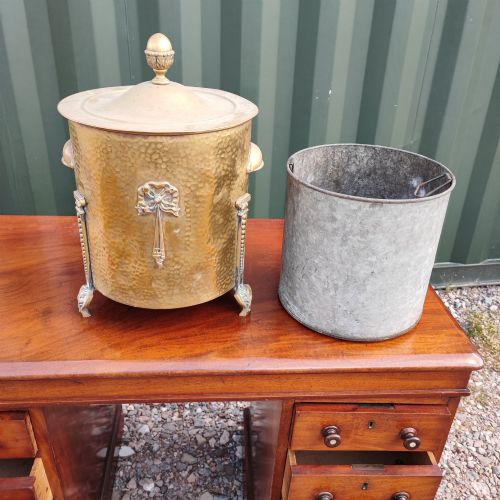
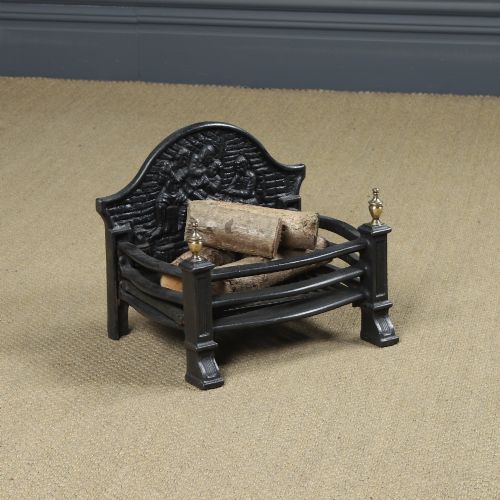
When searching for a vintage fireplace basket, buyers encounter an array of hearth accessories designed to hold solid fuel near an open fire. These items encompass open fire grates, log bins, coal buckets, and coal scuttles spanning the nineteenth and early twentieth centuries. Pieces range from straightforward utilitarian carriers to decorative items showcasing distinct period aesthetics.
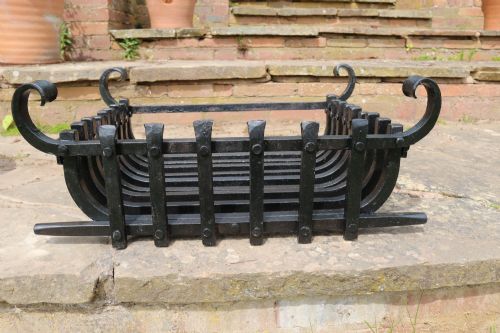
The selections available on this page lean heavily toward nineteenth-century origins and subsequent early twentieth-century revivals. Examples frequently merge iron, cast iron, and wrought metal frameworks with polished copper or brass bodies. Forms vary from simple woven pine baskets and coopered oak barrels to heavy blacksmith-made iron log carriers and elaborate fire grates.
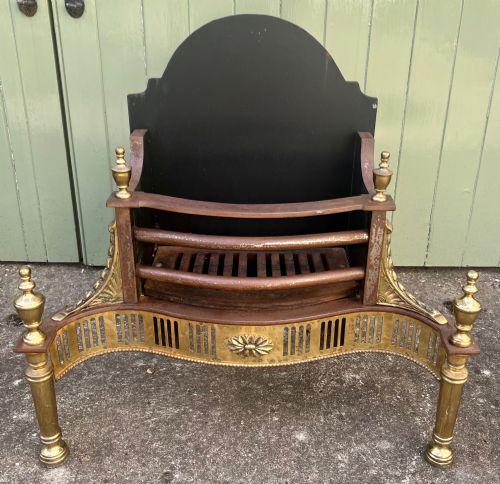
Stylistic influences across these listings draw upon Georgian, Victorian, Edwardian, and Arts and Crafts traditions. One might find a neo-Gothic cast iron grate alongside an Adam style brass and cast iron fire basket or an Art Deco dinanderie copper cauldron. This variety allows collectors to match hearth accessories directly to specific architectural periods.
Materials and Construction Methods
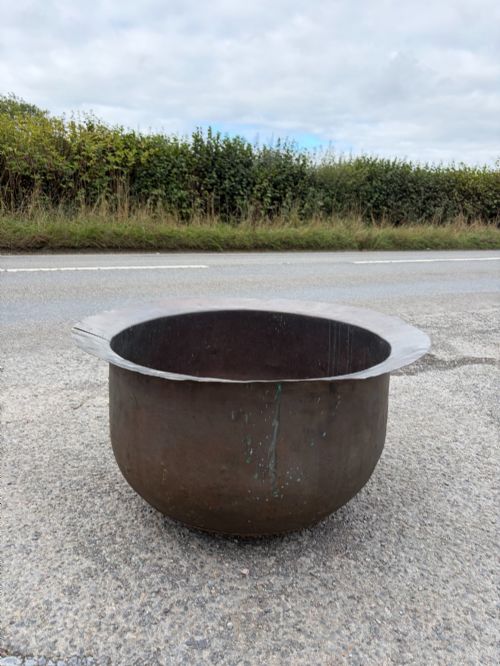
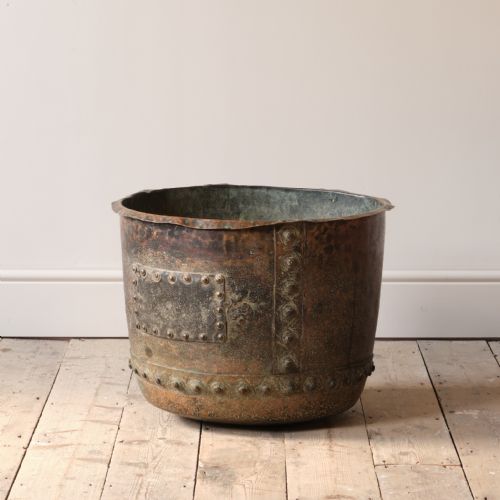
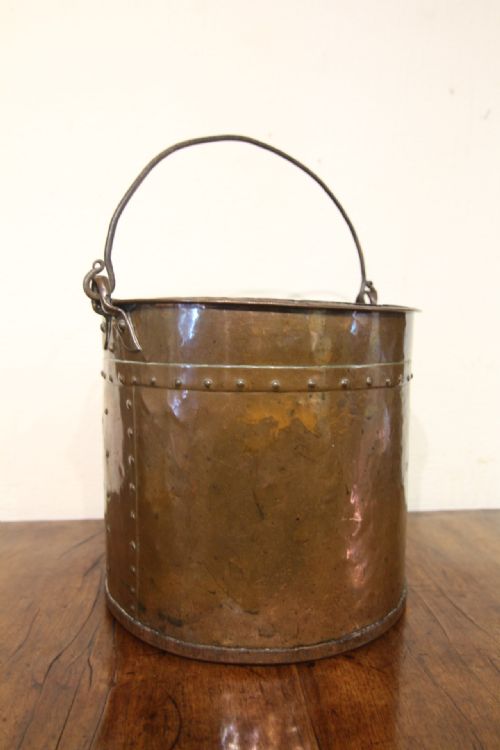
Construction relies heavily upon durable metals suited to the rigours of daily fireside use. Makers utilised cast iron and wrought iron for structural fire baskets, grates, and andirons, providing the necessary heat resistance and load-bearing capacity. Copper and brass sheet metals formed the bodies of coal buckets, scuttles, and log bins, often joined by visible rivets or reinforced rims.
Working methods combined blacksmithing techniques with cooperative woodcraft and metal-spinning. Wrought iron pieces exhibit hand-hammered details and forged elements typical of Arts and Crafts production, whilst copper vessels often feature riveted seams and attached brass handles. Wooden elements appear as hand-woven pine or coopered oak barrels bound with metal hoops.
Listings feature eighteenth-century styles alongside nineteenth-century copper buckets and 1930s Arts and Crafts ironwork.
Distinguishing Quality in Hearth Ware
Quality in a vintage fireplace basket emerges through the weight of the materials and the integrity of the construction. Heavier gauge metals, solid riveted joints, and substantial handles indicate a piece built for enduring utility rather than mere ornamentation. Thinner sheet metals and loose fittings separate standard utilitarian items from superior workshop productions.
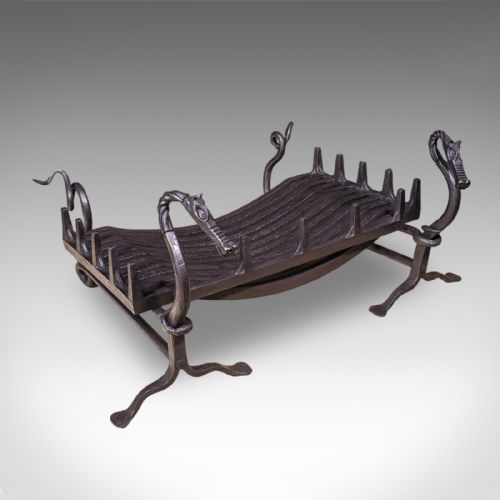
Artistic execution further defines the upper tier of the range. Pieces bearing thoughtful decorative motifs, such as dragon details or medieval Arts and Crafts styling, demonstrate superior design ambition. The balance between functional resilience and refined stylistic detailing marks the distinction between ordinary hearth furniture and collectible examples.
The Vintage Fireplace Basket Glossary
- Fire Basket
- A metal container designed to hold burning logs or coal within a fireplace. These units often sit upon legs or integrate with andirons and fire grates.
- Coal Scuttle
- A bucket or container specifically shaped for carrying and storing coal for a domestic fire. They frequently feature hinged lids and swinging handles for pouring.
- Andiron
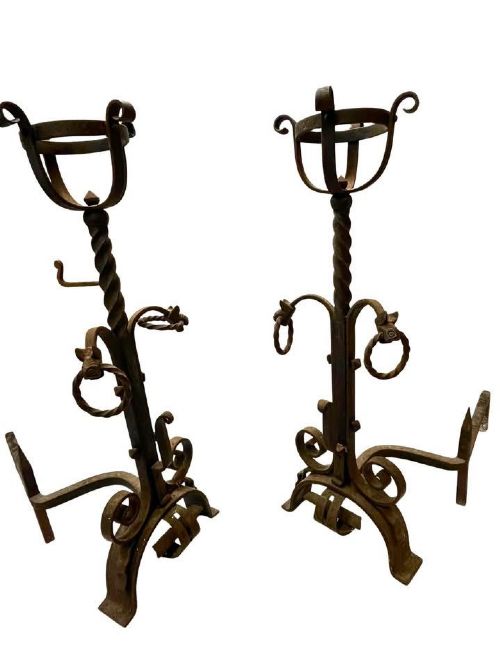
- One of a pair of horizontal metal supports placed in a fireplace to hold logs above the hearth for better airflow. They often accompany fire baskets.
- Coopered
- A term describing wooden vessels constructed from staves joined edge-to-edge and bound with hoops, similar to barrel-making. Oak examples appear frequently in fireside storage.
- Dinanaerie
- Art objects formed from hammered or worked brass and copper, often associated with decorative vessels from the early twentieth century. These items bring polished metallic texture to a room.
Vintage Fireplace Basket: Frequently Asked Questions
What is a fireplace basket used for?
A fireplace basket serves as a designated container to hold logs, kindling, or coal beside an open hearth. They keep fuel organised and accessible while adding decorative presence to the fireplace.
Some variants act as the actual grate holding the burning fuel inside the hearth opening. Others function purely as storage bins positioned on the floor nearby.
How do I date a metal log bin?
Dating relies on examining the manufacturing techniques, materials, and stylistic motifs present on the piece. Nineteenth-century examples often feature hand-riveted copper construction and heavy wrought iron.
Twentieth-century pieces may incorporate Arts and Crafts or Art Deco styling. Maker marks, where present, help pinpoint the exact period and origin.
Can I use an antique fire basket?
Many antique iron fire baskets remain structurally robust enough for burning wood or coal in a working fireplace. Checking the metal thickness and inspecting for severe corrosion ensures safe usage.
Lighter brass or copper bins are intended solely for dry storage of fuel rather than holding an active fire. Using them as decorative log holders protects their historic finishes.
What is the difference between brass and copper bins?
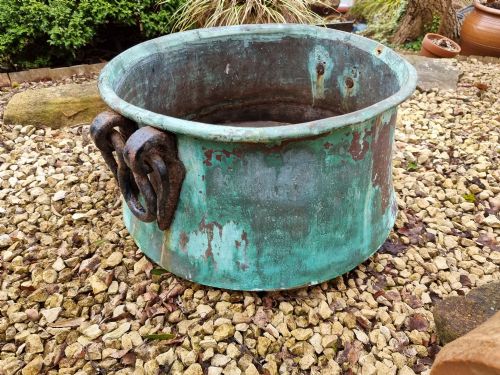
Copper bins display a warm, reddish-brown metallic tone that often develops a natural verdigris patina over time. They were frequently utilised for riveted coal buckets and large log bins.
Brass bins offer a brighter golden hue and typically appear in more formal Regency or Adam style hearth accessories. Both metals require similar gentle cleaning to maintain their historic surfaces.