



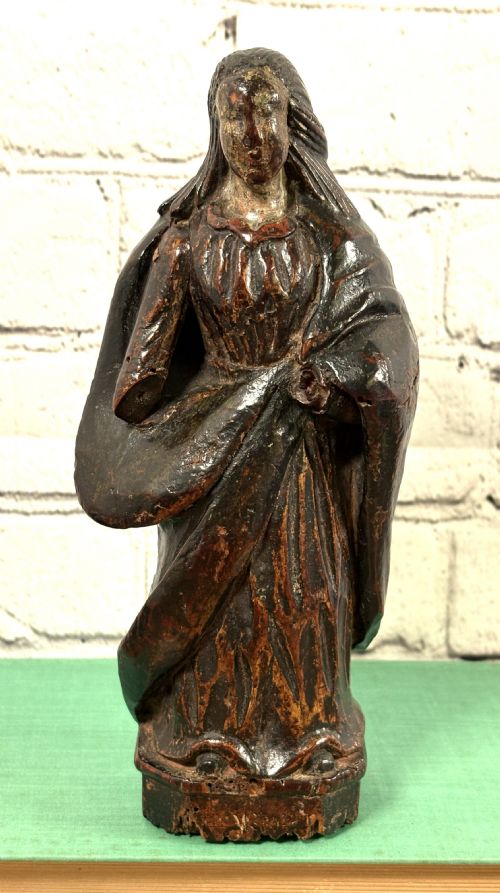


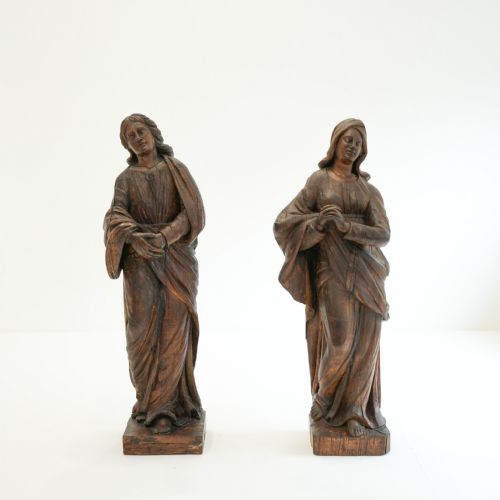


Carved Wooden Saint Figure
A carved wooden saint figure brings centuries of devotion, liturgical history and skilled hand-carving directly into a room.

Carved Wooden Saint Figure
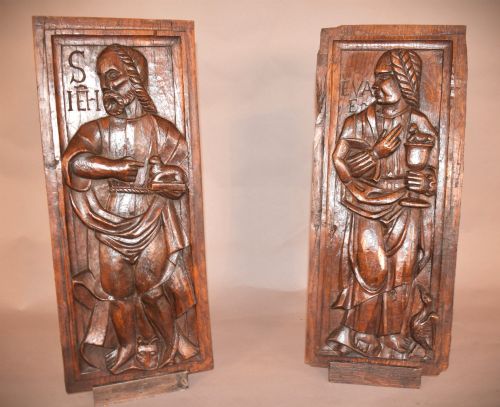
The objects take many forms, from life-sized processional statues and architectural fragments to paired saints, intimate panels, and capipote figures designed for dressing. Continental examples from Germany, France, Italy, and Spain dominate the selection, often carrying the marks of ecclesiastical or folk art traditions.
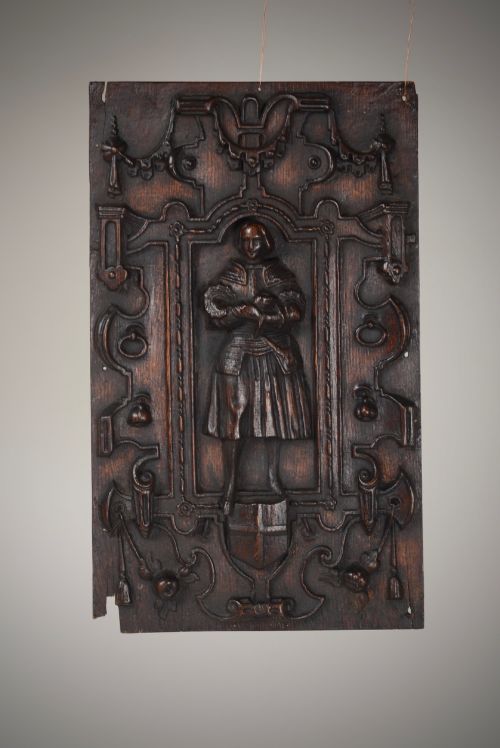
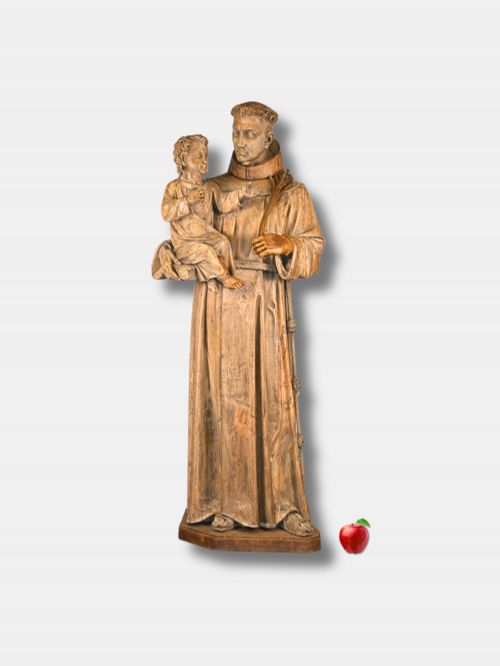
Buyers encounter whole statues of figures like Saint Anthony, Saint Jerome, or the Virgin and Child, alongside specific fragments such as carved heads or panels depicting Joan of Arc. These works reflect the shifting liturgical styles of the Renaissance, Baroque, and Gothic eras.
How they were made
Carvers utilised dense, durable woods like oak and limewood, which allowed for deep undercutting and fine facial detailing without splitting along the grain. Applewood and other dense fruitwoods appear in smaller devotional carvings where intricate drapery folds were required.
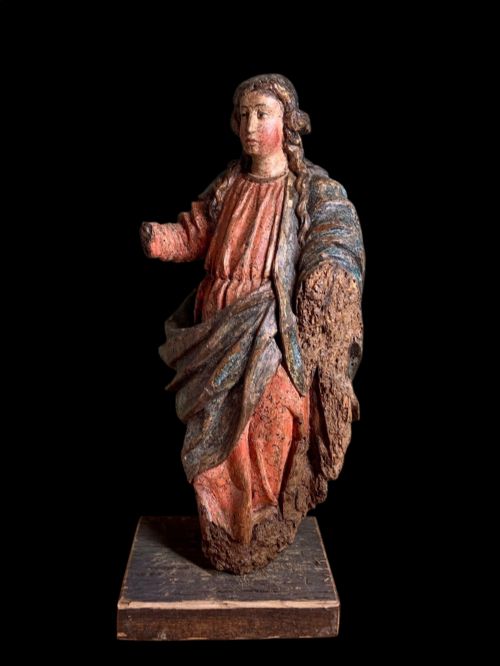
Many figures received a foundational layer of gesso over the bare timber to smooth tool marks before applying polychrome paint, pigments, and gold leaf. These surface finishes enhanced the theatricality of Baroque and Gothic devotional spaces by catching candle flicker.
Among the solemn bishops and angels sits a solitary wooden rescue dog ready to pull a traveller from an imaginary snowdrift.
What varies in quality
The quality of a carved wooden saint figure rests primarily upon the anatomical confidence of the carving and the expressive depth given to the hands and face. Master carvers from the Upper Rhine or Flemish workshops achieved naturalistic drapery fall and lifelike gestures that lesser vernacular pieces miss.
The preservation of original surface treatments, including historical polychrome paint and gilding beneath later layers, defines the integrity of a piece. Pieces retain higher visual interest when tool marks remain crisp and untouched by heavy modern sanding or stripping.
Franz Keller
The Carved Wooden Saint Figure Glossary
- Polychrome
- Decorated in several colours. This surface treatment involves painting directly onto wood or over a gesso ground to give realistic skin tones and garment hues.
- Gesso
- A plaster mixture used as a paint base. Applied to wood carvings, it creates a smooth, absorbent surface for gilding and pigments.
- Capipote
- A Spanish devotional figure with a carved head and hands attached to a wooden framework. These statues were traditionally dressed in real textiles for processions.
- Giltwood
- Wood carved and covered with thin gold leaf. This technique was widely employed on Baroque altarpieces and angel figures to reflect candlelight.
- Limewood
- A pale timber favoured by northern European carvers. Its lack of pronounced grain makes it ideal for intricate, delicate facial expressions and deep relief.
Carved Wooden Saint Figure: Frequently Asked Questions
How do I identify the saint?
Attributes provide the primary clue for identification, such as books for scholars, keys for Peter, or specific animals like eagles and lions.
Inscriptions, monograms, or distinct regional clothing styles also help pinpoint the specific biblical or historical figure represented.
How do I care for wooden carvings?
Keep carvings away from direct heat sources and drastic humidity swings to prevent the timber from splitting.
Dust gently with a dry, soft brush and avoid applying modern polishes or oils to historical surfaces.
How can I tell the period?
Tool marks, wood species, and stylistic traits like Gothic elongation or Baroque theatricality offer clues to the age of the carving.
Wear patterns, the presence of original gesso, and historical repair methods further confirm the century of origin.