

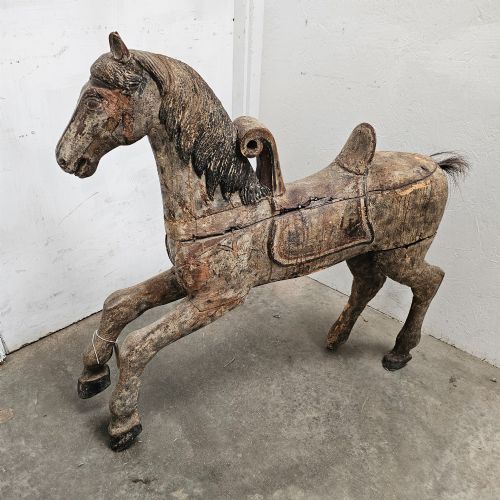


Equestrian Wooden Figure
An equestrian wooden figure brings hand-carved character and traditional craftsmanship straight into a room.
Equestrian Wooden Figure
When you search for an equestrian wooden figure, you encounter an array of sculpted representations spanning multiple centuries and global traditions. These objects range from miniature carved netsuke to large decorative sculptures and traditional rocking horses.
The versions most commonly met on this page include nineteenth-century French folk art carvings, twentieth-century draught horse studies, and traditional painted rocking horses. Each piece displays the distinct sculptural approach of its period, whether European folk tradition or Japanese carving.
Makers ranged from village artisans creating vernacular folk art to skilled netsuke carvers working in boxwood. The forms vary from spirited carousel animals and racing champions to Renaissance carved groups and animalier studies.
How they were made
Carvers shaped these figures from various timbers and hardwoods, utilising traditional hand tools to define the musculature and posture of the animals. Boxwood, painted timber, and carved wood form the primary foundation of these works.
Surface decoration frequently involves hand-applied paint, while certain pieces incorporate natural materials such as horsehair for manes and tails. Metal components, including silver plated details, appear alongside leather elements on larger models.
Equestrian Wooden Figure Retail Price Guide 2026
Typical asking prices for equestrian wooden figure among the pieces listed under this phrase on Sellingantiques today, from the lower quarter to the upper quarter. They describe what is for sale here now, not the wider market.
One determined jockey captured a 1923 derby win in timber, proving that even a wooden horse enjoys crossing the finish line first.
What varies in quality
Quality rests upon the skill of the carving and the anatomical precision captured by the maker. A master carver imparts genuine movement and weight to a draught horse or carousel figure, whereas lesser examples remain stiff and generalized.
The preservation of original surface finishes, whether early paint or polished hardwood, distinguishes superior pieces. Handling wear and the retention of delicate elements like horsehair or silver plated fittings also influence the standing of an individual figure.
Masayuki
The Equestrian Wooden Figure Glossary
- Netsuke
- A small carved Japanese toggle traditionally used to fasten a pouch to a kimono sash. These intricate miniature sculptures often depict figures riding animals in boxwood.
- Animalier
- A nineteenth-century artistic style focusing on the realistic portrayal of animals. Sculptures in this vein emphasise accurate anatomy and lifelike posture.
- Folk Art
- Utilitarian or decorative objects created within a vernacular tradition rather than an academic one. These pieces rely on local materials and unpretentious craftsmanship.
- Carved Wood
- Timber shaped by hand using gouges and chisels to create three-dimensional forms. The method leaves subtle tool marks that reveal the hand of the maker.
Equestrian Wooden Figure: Frequently Asked Questions
What periods do these wooden figures come from?
The pieces span several centuries, with examples originating from the sixteenth century through to the twentieth century. Early works include Flemish carved groups, while later items feature nineteenth-century folk art and 1930s studies.
Twentieth-century examples also encompass Art Deco and Arts and Crafts interpretations alongside traditional painted rocking horses and carousel animals.
How were these carved wooden horses used?
Many served as decorative sculptures within domestic interiors, while others functioned as children's toys such as painted rocking horses and carousel figures. Miniature netsuke figures were worn daily as functional fastenings for traditional Japanese garments.
Larger models functioned as artistic studies or folk art displays, reflecting the cultural and economic importance of horses during their respective periods.
What materials appear in these sculptures?
Carvers utilised various timbers, hardwoods, and boxwood as the primary structural material for these figures. Painted surfaces and natural horsehair frequently complete the details of the mane and tail.
Additional elements include silver plated metal fittings and leather work, particularly on larger twentieth-century decorative models and animalier studies.
How do I care for a wooden equestrian figure?
Keep wooden sculptures away from direct heat sources and sudden temperature fluctuations to prevent the timber from splitting or warping. Dust the carved surfaces gently with a dry, soft cloth.
Avoid using harsh chemical polishes or water on painted or bare wood finishes to preserve the original patina and surface integrity.