





Carved Oak Statue
A carved oak statue brings the weight of centuries into a room, shaped from sturdy timber by hands that knew both faith and craft.
Carved Oak Statue
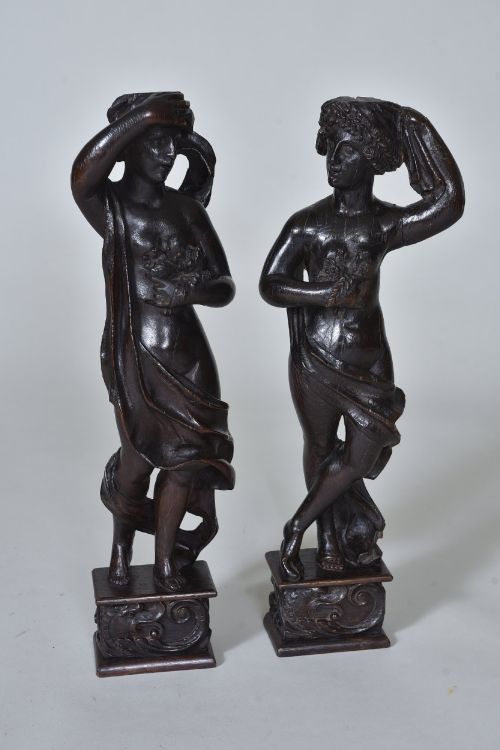
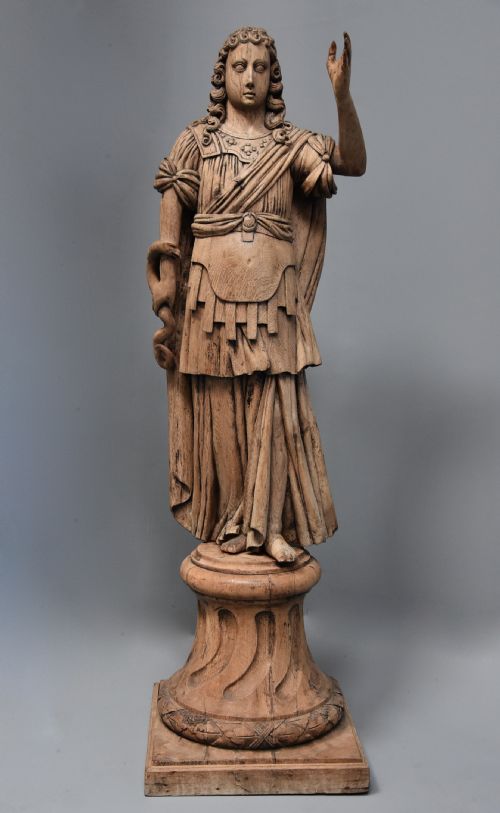
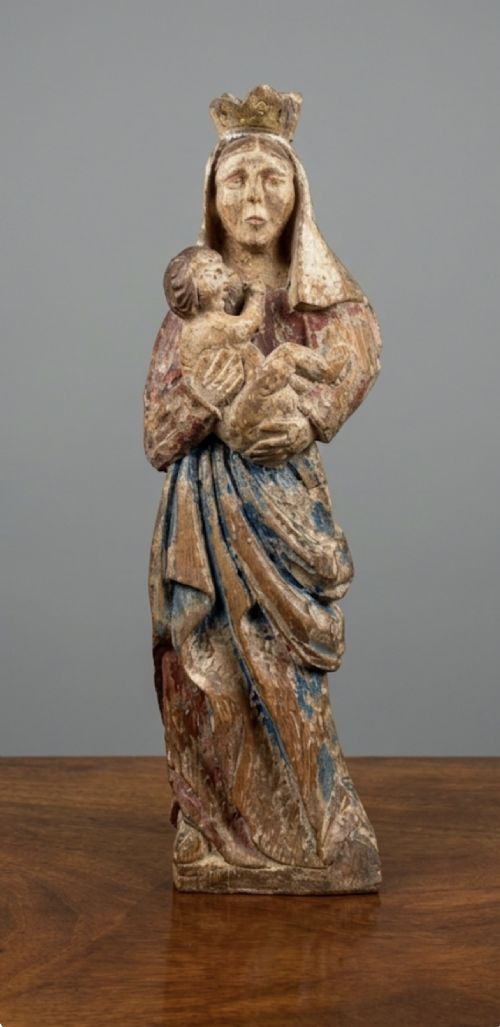
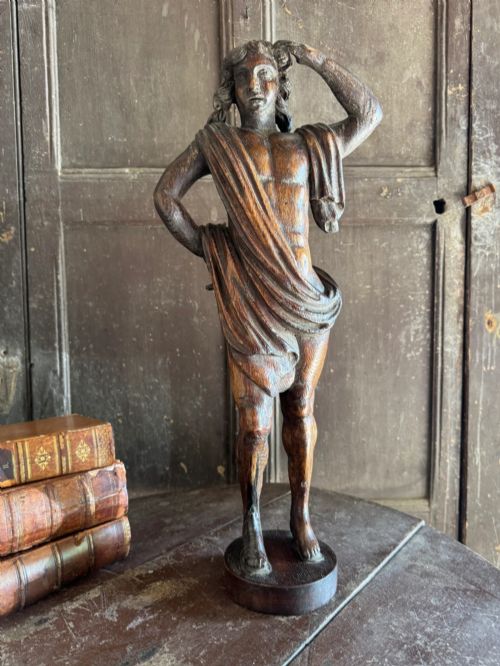
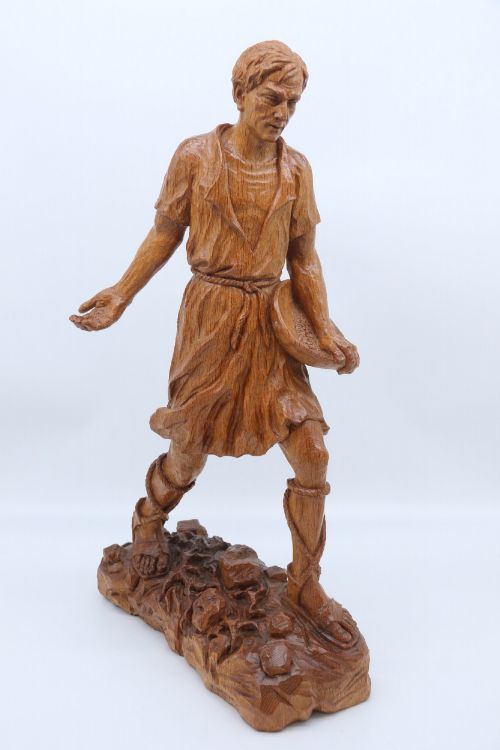
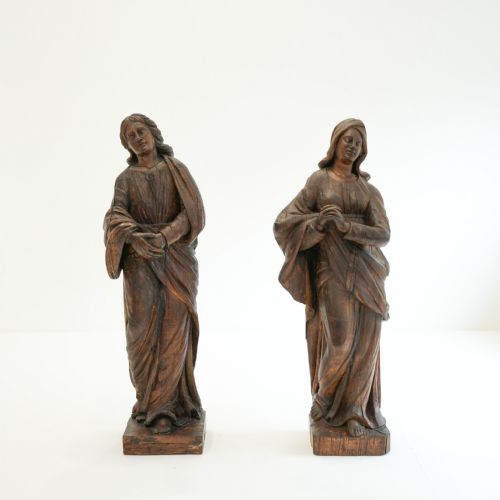
A carved oak statue is a solid wooden representation of a saint, animal, donor or classical figure, shaped across centuries from dense timber. Buyers encounter ecclesiastical fragments from the medieval and Renaissance periods alongside later Revival and folk art interpretations.
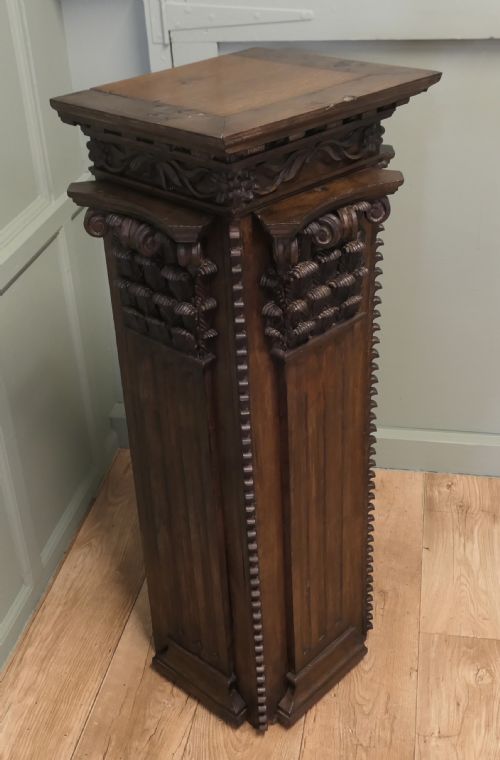
The selections span architectural salvage, devotional panels, and freestanding ornaments intended for domestic or church placement. Pieces originate from workshops across Europe, showing diverse regional hands from the Upper Rhine to Britain.
Early examples often depict saints, Madonnas or biblical scenes with deep drapery folds, while nineteenth-century works lean towards animal finials, classical subjects and narrative figures. Each item bears the tool marks of its period, whether wrought in fifteenth-century Gothic style or nineteenth-century revivalism.
How they were made
Makers shaped a carved oak statue using heavy gouges and chisels directly into seasoned timber, sometimes applying gesso and polychrome paint to the finished wood. Gesso provided a smooth white ground for bright pigments and gilding, though much of this surface colour has worn away over the centuries.
Surviving pieces reveal the structural realities of timber work, such as hollowed backs to prevent splitting or the joining of multiple sections for large figures. Craftsmen utilised the natural grain and density of hardwood to render intricate hair, expressive faces and heavy robes.
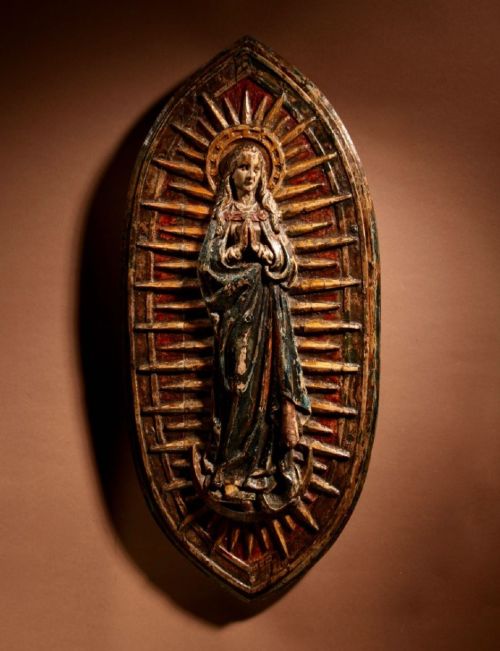
A sixteenth-century altarpiece panel shows the Virgin standing firmly on the half-moon while a tiny serpent looks up with quiet resignation.
What varies in quality
The quality of a carved oak statue rests on the depth of the relief, the naturalism of the anatomy and the expressiveness retained in the face. Master carvers managed to suggest movement beneath heavy fabric and gave their subjects distinct character, whereas simpler workshop pieces rely on stiff symmetry and repetitive gouge marks.
Franz Keller
The Carved Oak Statue Glossary
- Polychrome
- Painted in several colours. This surface treatment was common on medieval and Renaissance religious statues before centuries of wear left many surfaces down to bare wood.
- Gesso
- A plaster mixture applied to wood as a base for paint or gilding. It fills minor pores in the timber and creates a smooth ground for finer detail.
- Gothic
- A medieval art style characterised by pointed arches and vertical emphasis. In sculpture, it appears in deep, linear drapery folds and solemn facial expressions.
- Newel post finial
- An ornamental carving atop the main vertical post of a staircase. These often took the form of heraldic animals or figures.
- Donor figure
- A sculpture representing the person who commissioned a religious work of art. They typically appear kneeling in prayer alongside saints.
Carved Oak Statue: Frequently Asked Questions
Where were these statues originally placed?
Many early figures stood within architectural settings such as church altarpieces, rood screens or flanking choir stalls as objects of devotion. Others served as secular ornaments, architectural salvage or finials within large domestic interiors.
Over time, surviving items shifted from sacred or structural contexts into private collections, gardens and specialised display pedestals.
How should I care for an oak statue?
Keep wooden sculptures in stable indoor environments away from direct sunlight, radiators and sudden humidity shifts. Oak responds to moisture changes by expanding and contracting, which can stress old timber.
Dust the surface gently with a dry, soft brush rather than using liquid polishes or chemical cleaners that might harm aged wood or remaining gesso.
How can I tell the age of the carving?
Dating relies on stylistic clues such as the cut of the garments, hair styling, regional workshop traditions and the tool marks left in the grain. Gothic and Renaissance pieces display distinct proportions and iconography compared to nineteenth-century revivals.
Inspect the back and base for signs of age-related shrinkage, old fixings, worm tracks and the natural darkening of the hardwood over centuries.
Why are so many figures saints?
European woodcarving before the sixteenth century was largely commissioned by the church or pious individuals to adorn holy spaces. Sculptors produced devotional statues of the Madonna and Child, apostles and local martyrs for daily prayer and ritual.
Later periods continued this sculptural tradition or reimagined religious subjects alongside folklore, classical mythology and decorative animal studies.