


Carved Wood Statuette
A carved wood statuette brings character to a room through centuries of diverse regional craftsmanship and detailed figurative expression.
Carved Wood Statuette
A carved wood statuette represents a broad tradition of sculptural figures shaped from timber across various global regions and eras. Buyers examining this page encounter pieces ranging from European animal carvings and historical portraits to Asian figures and tribal artefacts.
The selection on this page draws heavily from the nineteenth century, alongside examples from the eighteenth century and the early decades of the twentieth century. Forms span from realistic depictions of animals and human subjects to decorative ornaments and religious icons.
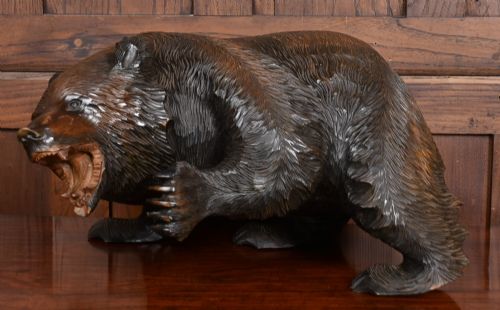
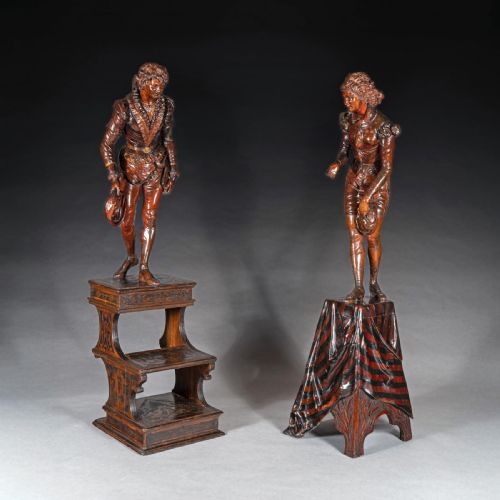
Regional origins shape the visual character of these objects significantly. Pieces originate from diverse traditions including Black Forest workshops, Japanese Meiji period studios, Indian Raj period craftsmen, and African tribal carvers.
How they were made
Carvers utilise various timbers including walnut, oak, linden wood, ebony, boxwood, and general hardwoods depending on the regional tradition and desired level of detail. Certain pieces incorporate contrasting elements such as bone or ivory, while others feature surface treatments like dark stain or polychrome pigment.
Execution relies on traditional hand-carving techniques applied directly to the timber block. Artisans shape the contours using chisels and gouges to define musculature, drapery, and facial expressions before finishing the surface.
The listings include pieces spanning from the sixteenth century through to the 1930s, incorporating woods such as boxwood, ebony, walnut, and oak.
What varies in quality
Depth of carving and anatomical precision separate standard decorative items from superior works. Master carvers capture realistic textures in fur, cloth, and skin, whereas lesser pieces exhibit stiff proportions and generalized surface details.
Simon Troger·Tomochika·Valentino Besarel
The Carved Wood Statuette Glossary
- Black Forest
- A style of wood carving originating from the Swiss and German mountain regions, well known for realistic depictions of bears and local wildlife. These pieces often utilise walnut or linden wood.
- Meiji Period
- An era in Japanese history associated with highly detailed decorative arts, including intricately carved okimono and netsuke. Works from this period frequently depict animals and folkloric figures.
- Boxwood
- A dense, pale hardwood favoured by carvers for miniature and highly detailed figurative work. Its fine grain prevents splintering during intricate chisel work.
- Giltwood
- Timber treated with gold leaf or gilt paint to create a decorative metallic finish. This treatment frequently appears on eighteenth-century Italian and Georgian decorative ornaments.
Carved Wood Statuette: Frequently Asked Questions
What types of wood were used?
Makers selected timbers based on regional availability and the required level of detail. Walnut, oak, linden wood, ebony, boxwood, and general hardwoods appear across the different stylistic traditions.
Specific workshops favoured certain woods for their grain and density. Boxwood suited miniature figures, while larger animal studies often utilised walnut or oak.
How do I identify a Black Forest carving?
Black Forest carvings are typically rendered in walnut or linden wood and heavily feature naturalistic animal subjects. Bears, deer, and alpine livestock appear frequently in this regional style.
The carving style prioritises lifelike texture and dynamic poses, often reflecting Swiss and German craftsmanship from the nineteenth century.
How should I care for wooden sculptures?
Wooden figures require stable environmental conditions away from direct sunlight and dramatic temperature fluctuations. Excessive heat or dryness can cause timber to split over time.
Dusting gently with a dry, soft cloth preserves the surface finish without introducing moisture or abrasive cleaning agents to the carved details.