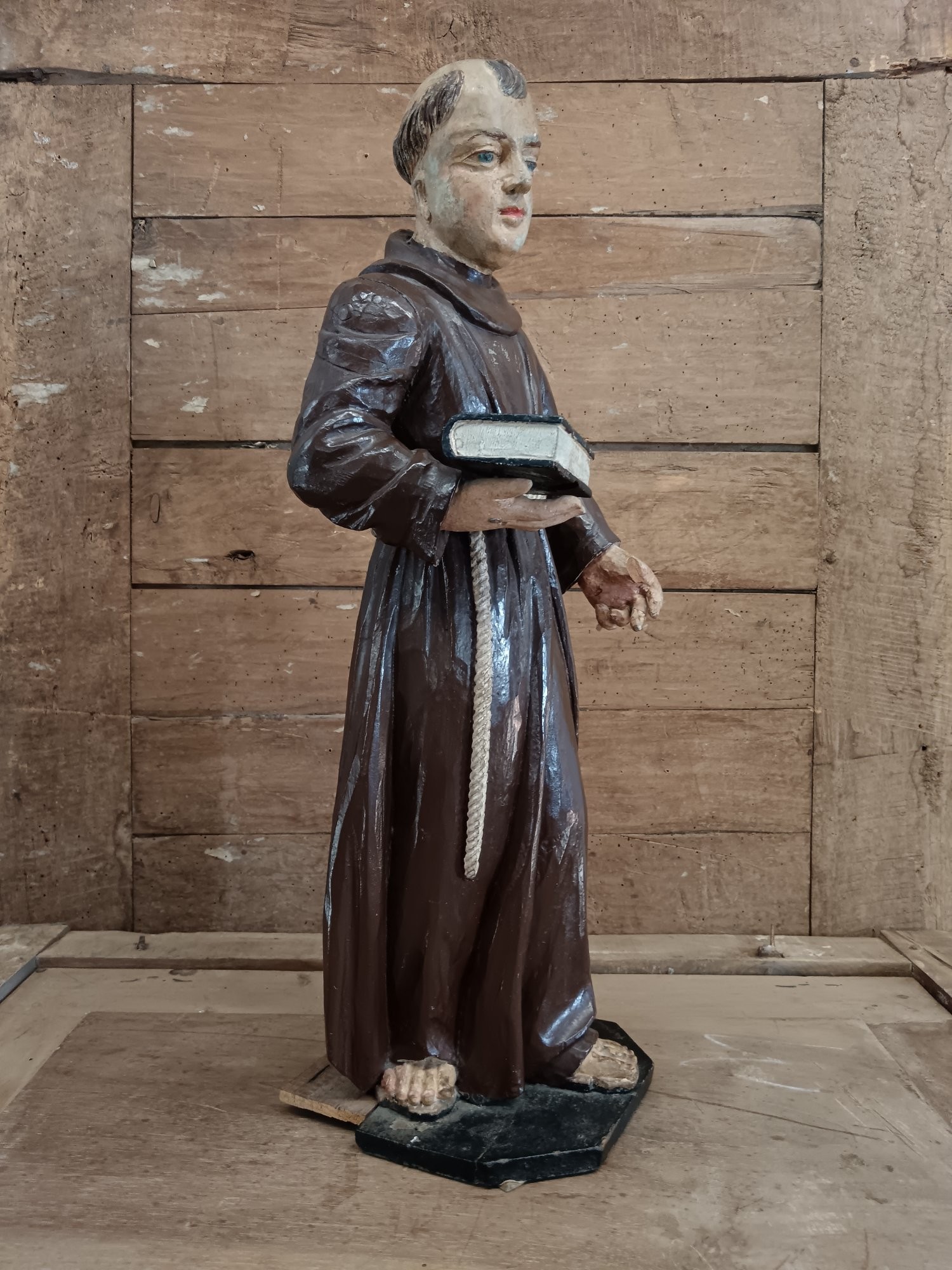
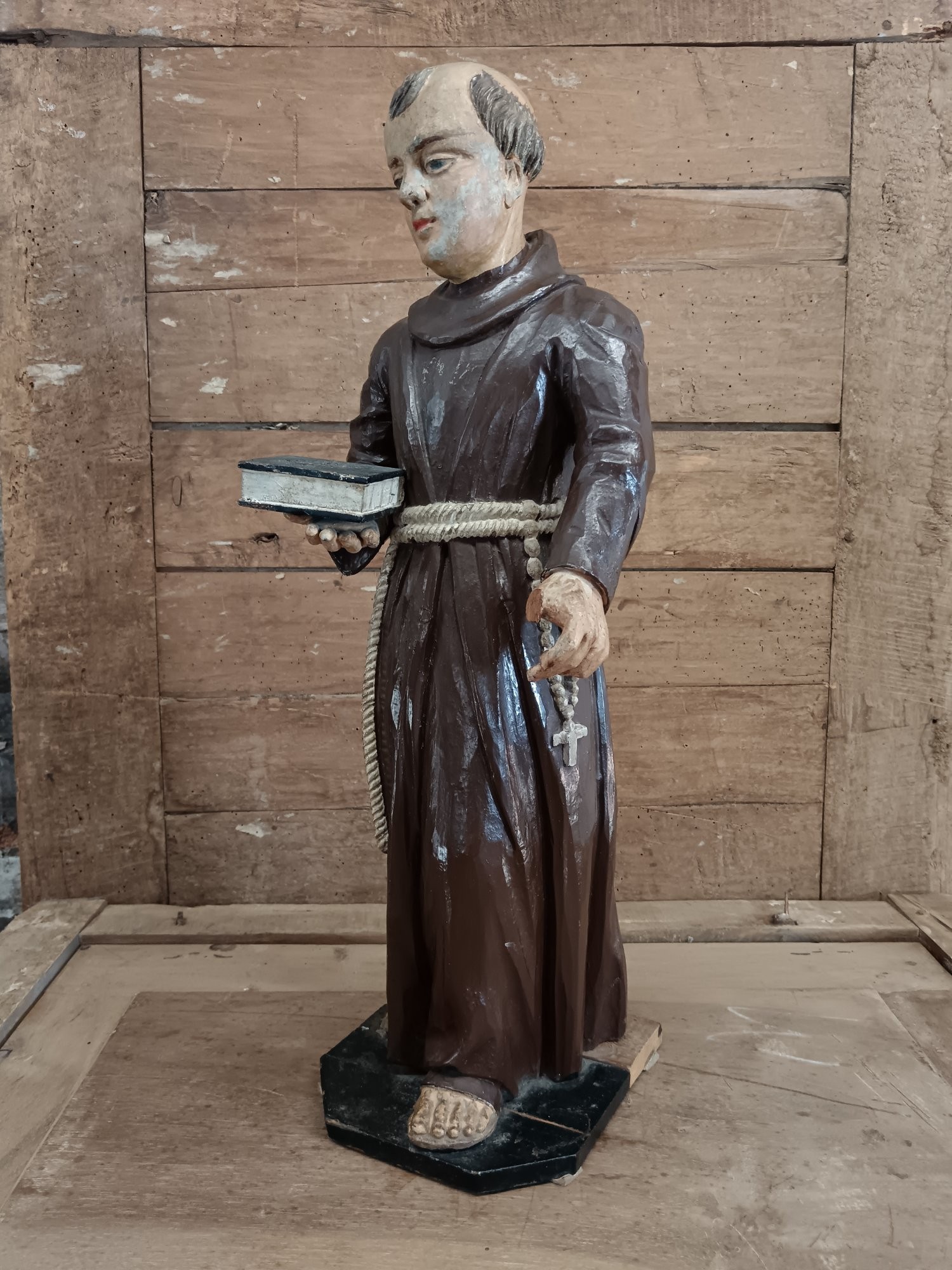
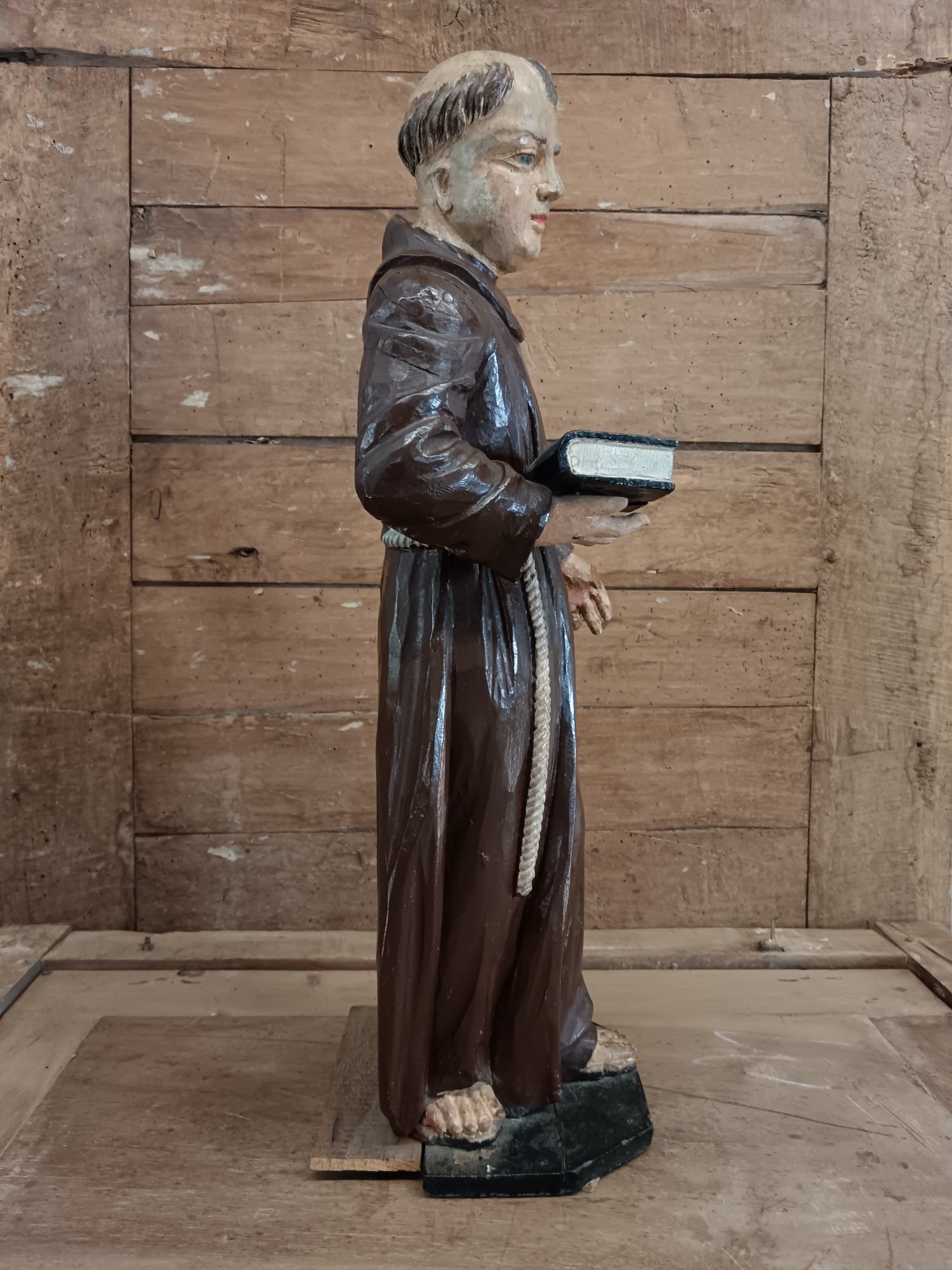
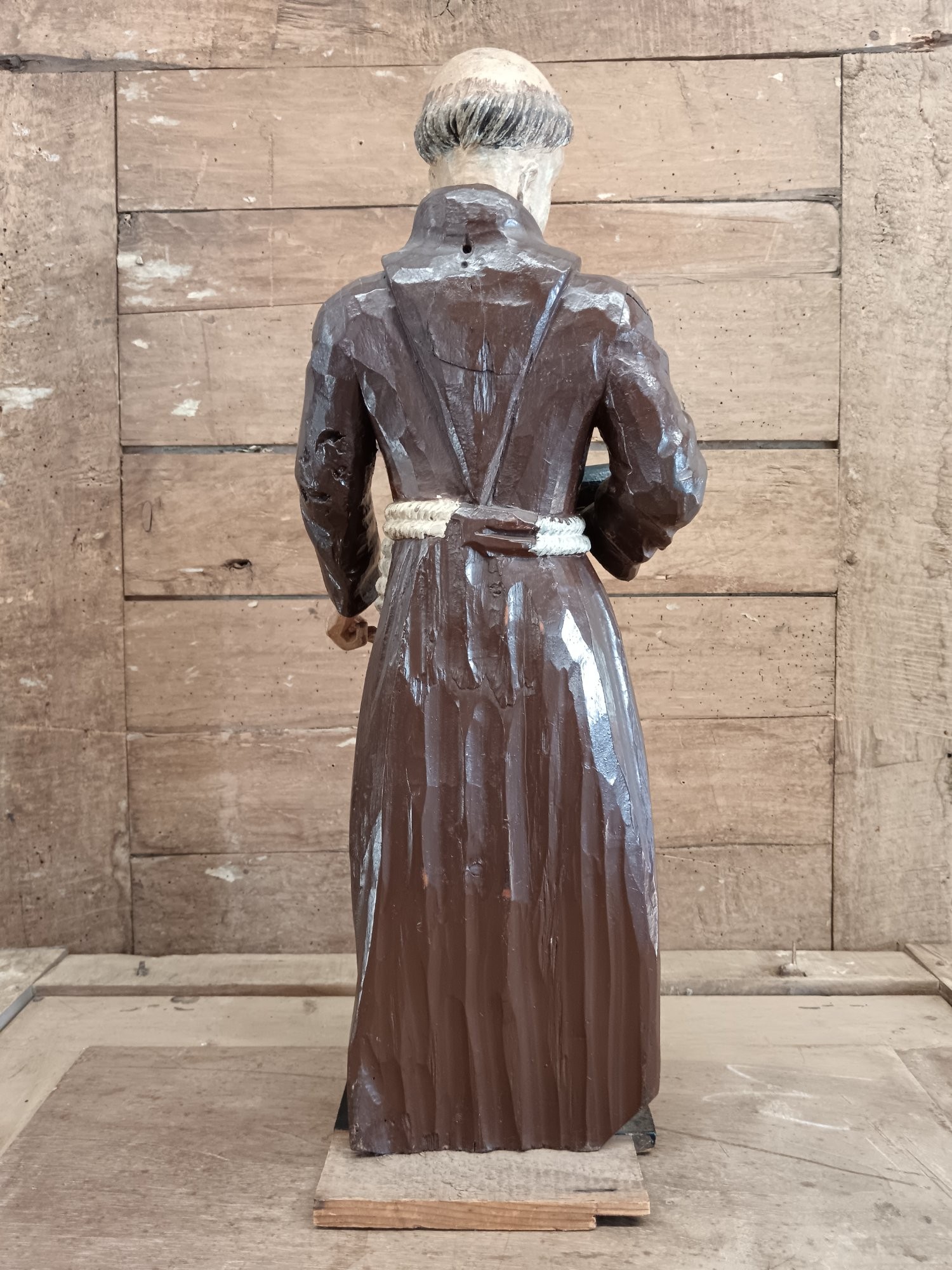
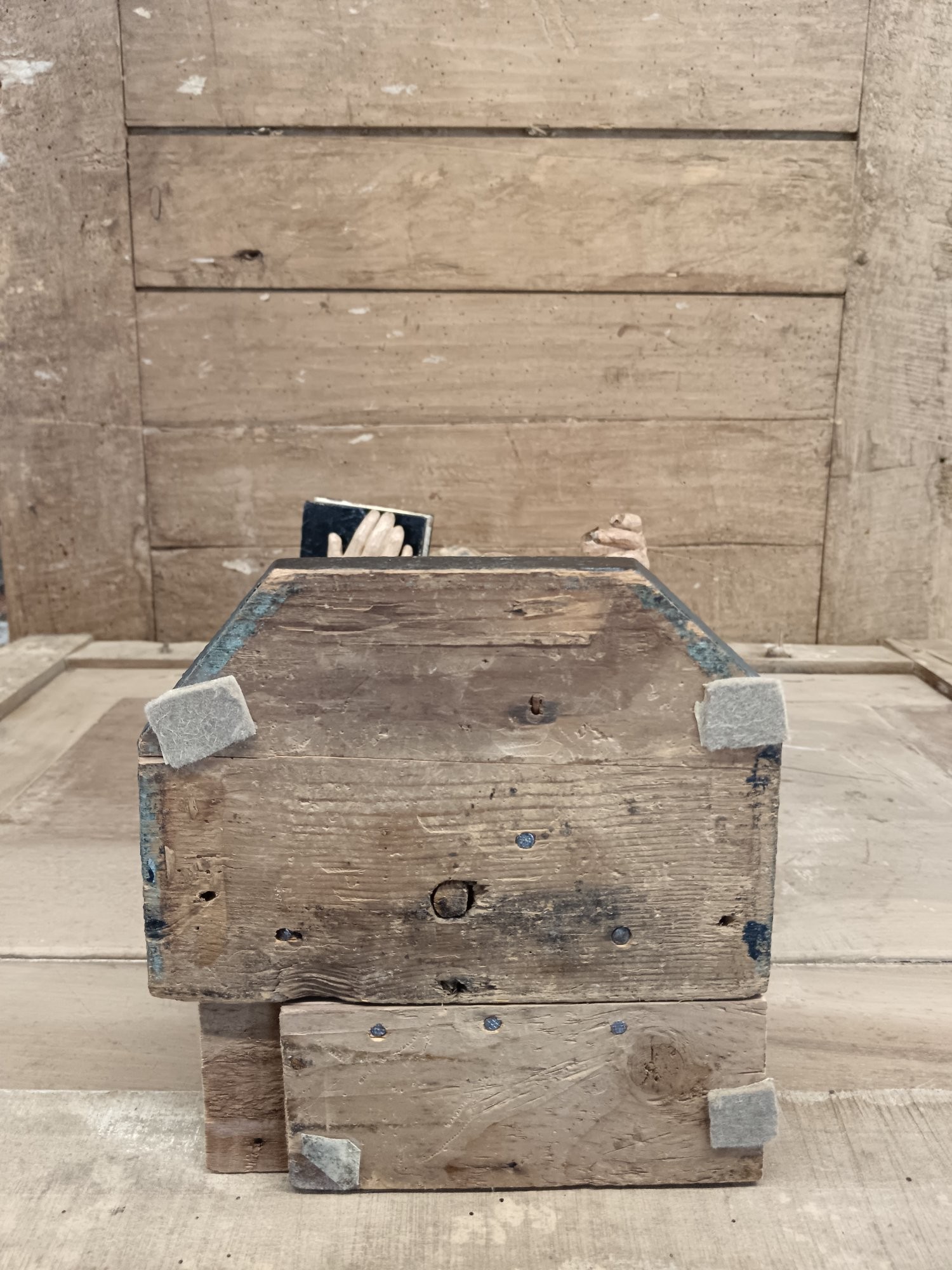
Pareglio & Ayres Antiques Interiors has dated this Carved Wooden Saint Statue to the 19th Century.
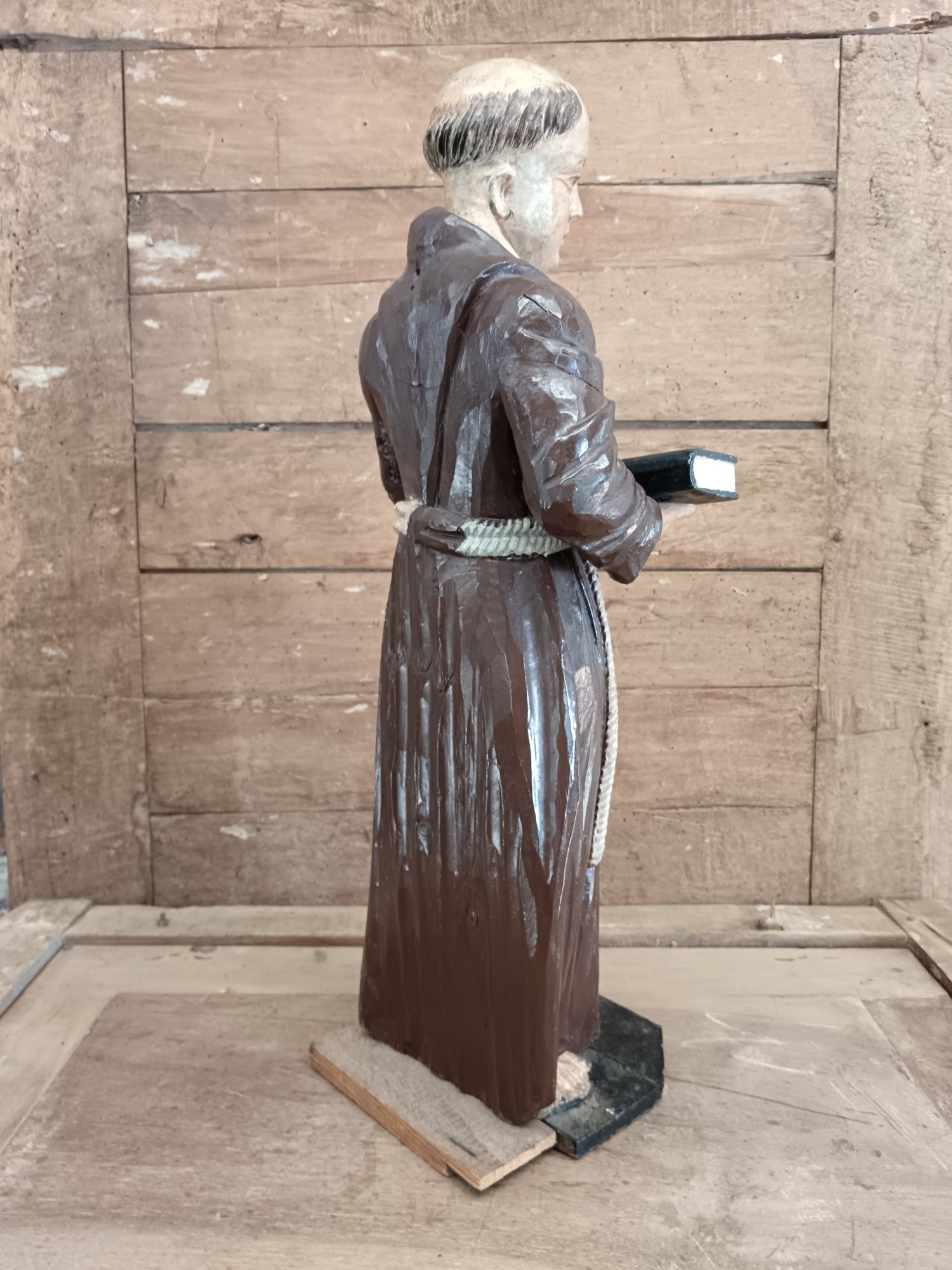
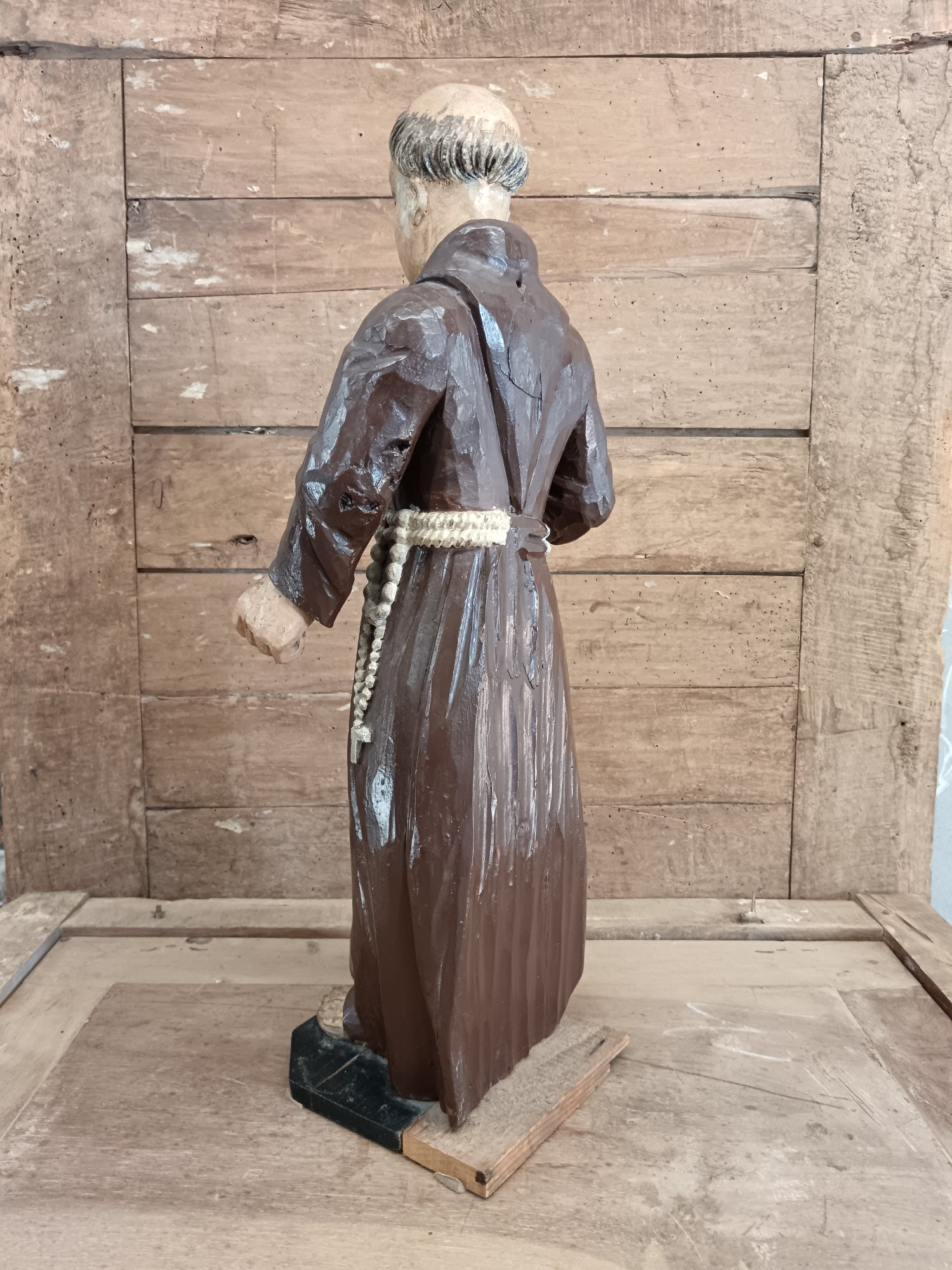
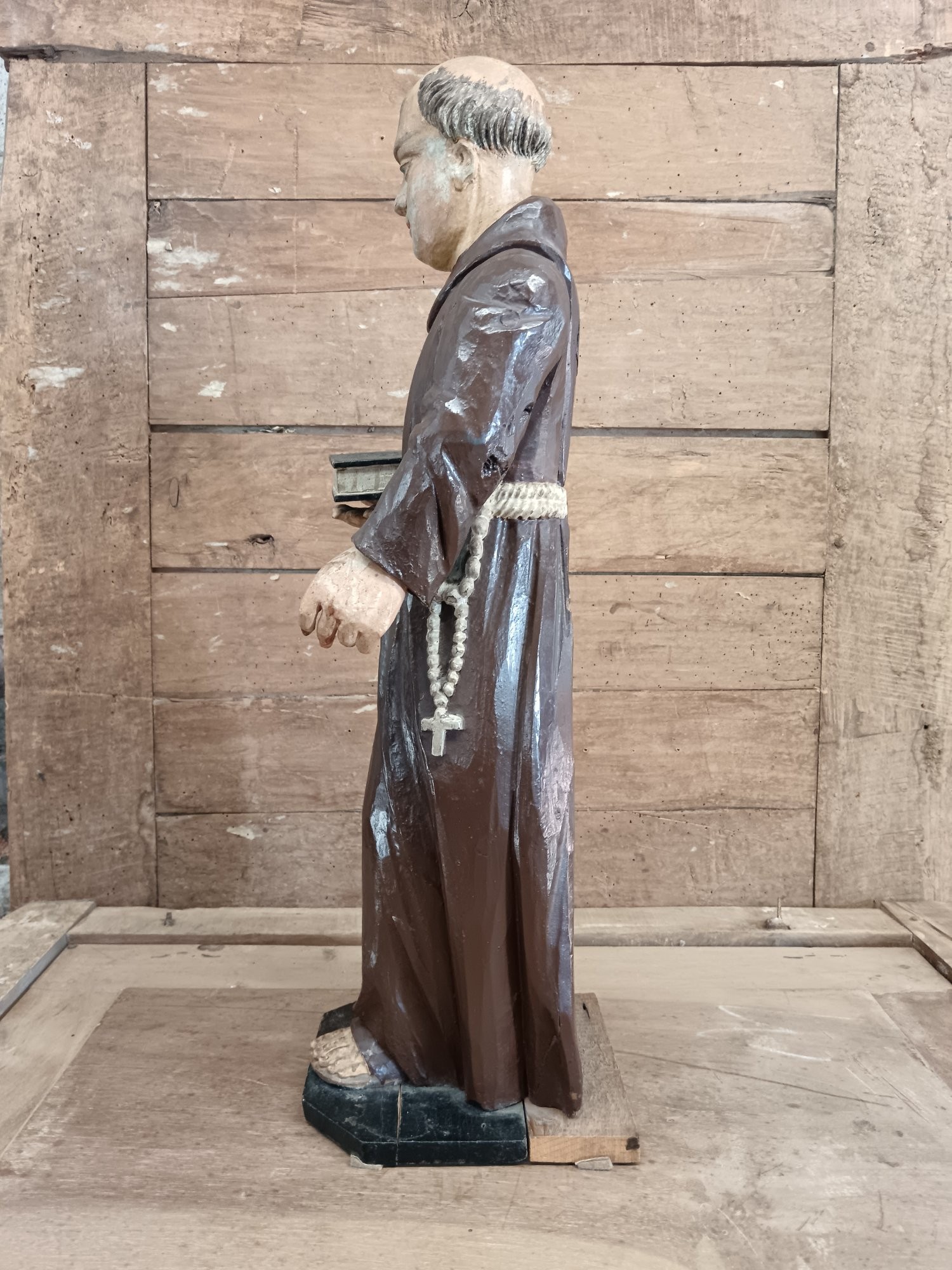
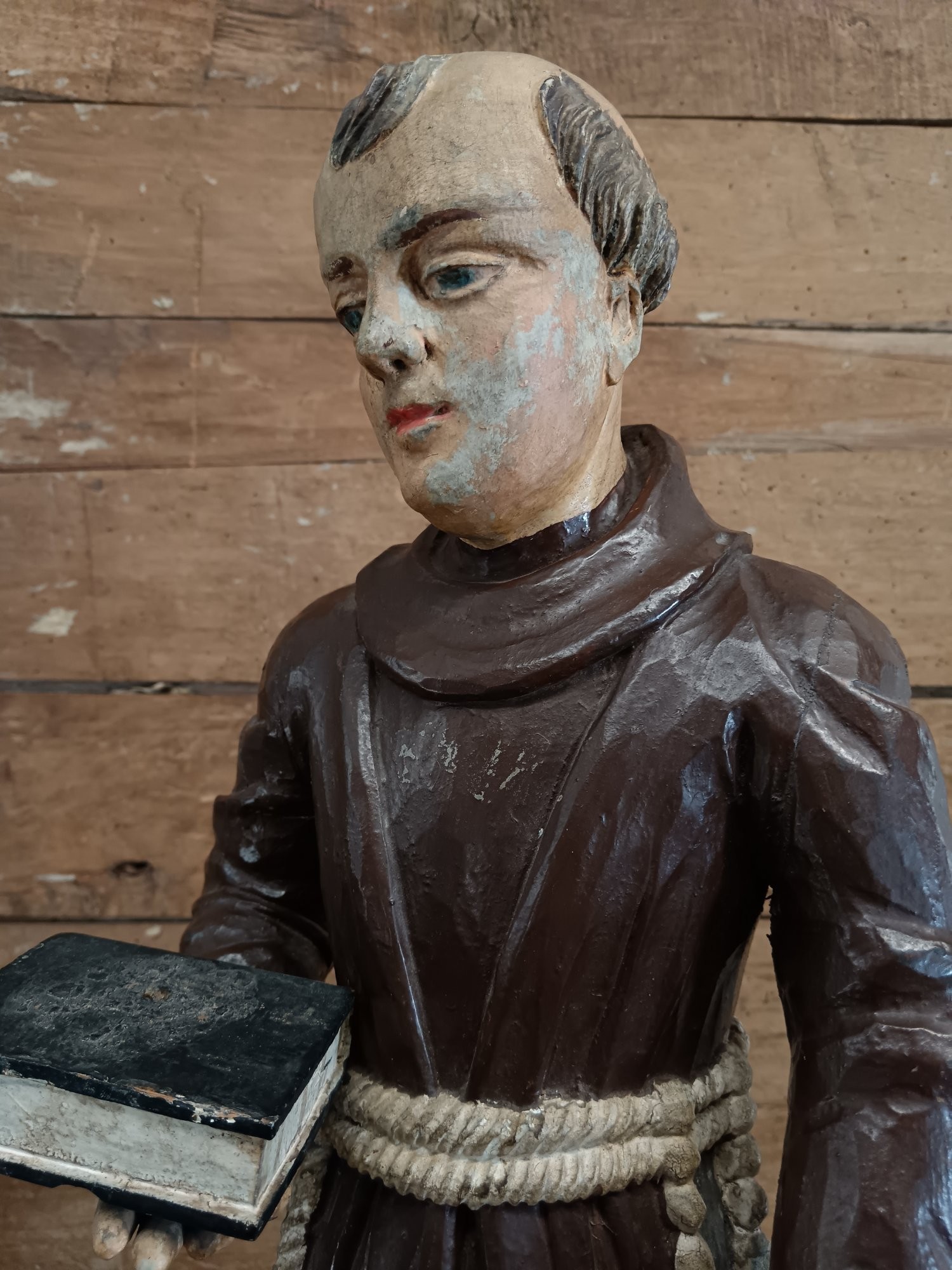
The Saint is depicted in the traditional brown Franciscan tunic with a rope belt and rosary beads.
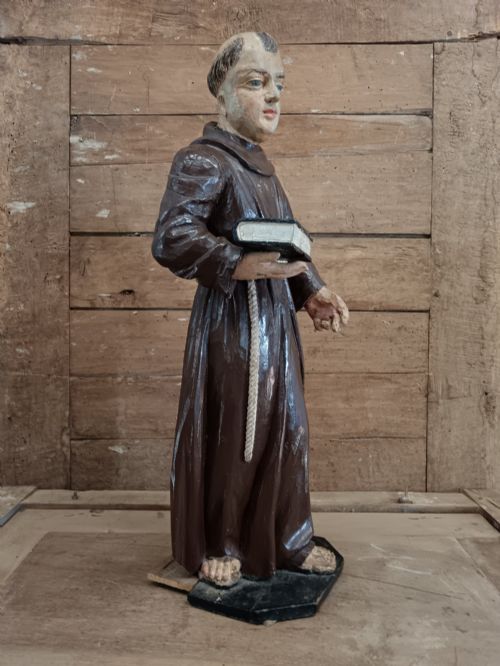
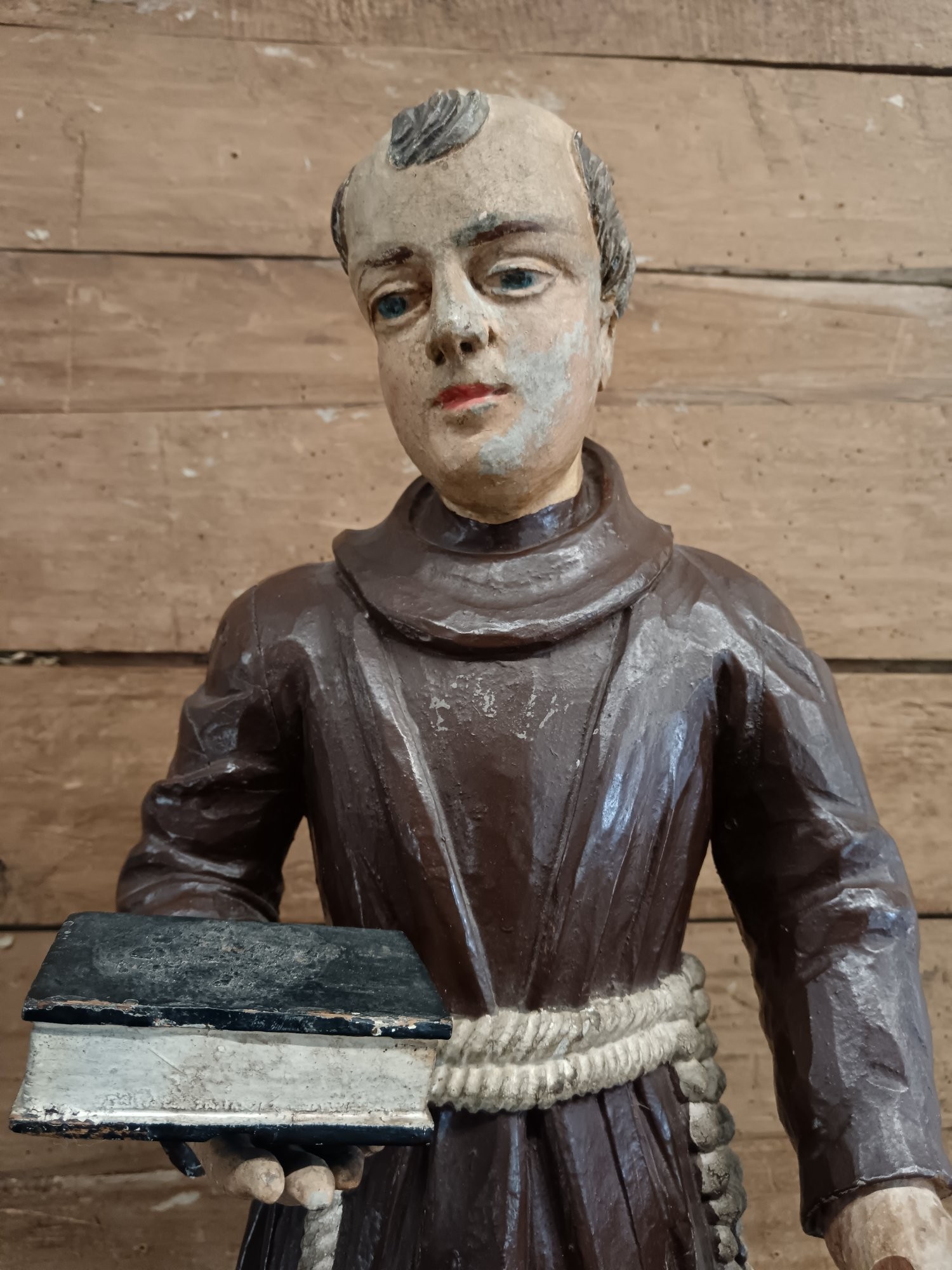
He holds a closed sacred book in his right hand, a traditional symbol of his profound theological knowledge.
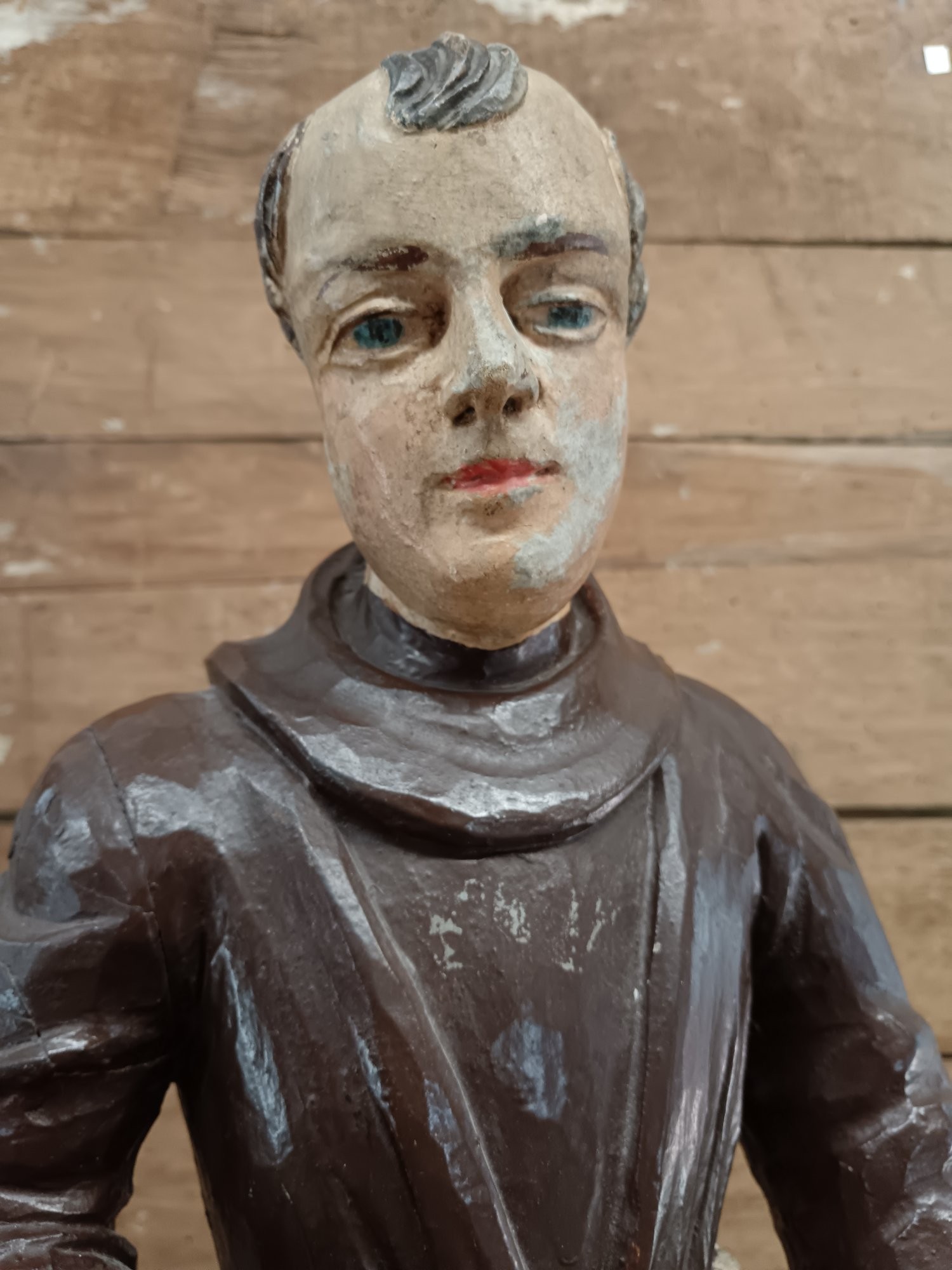
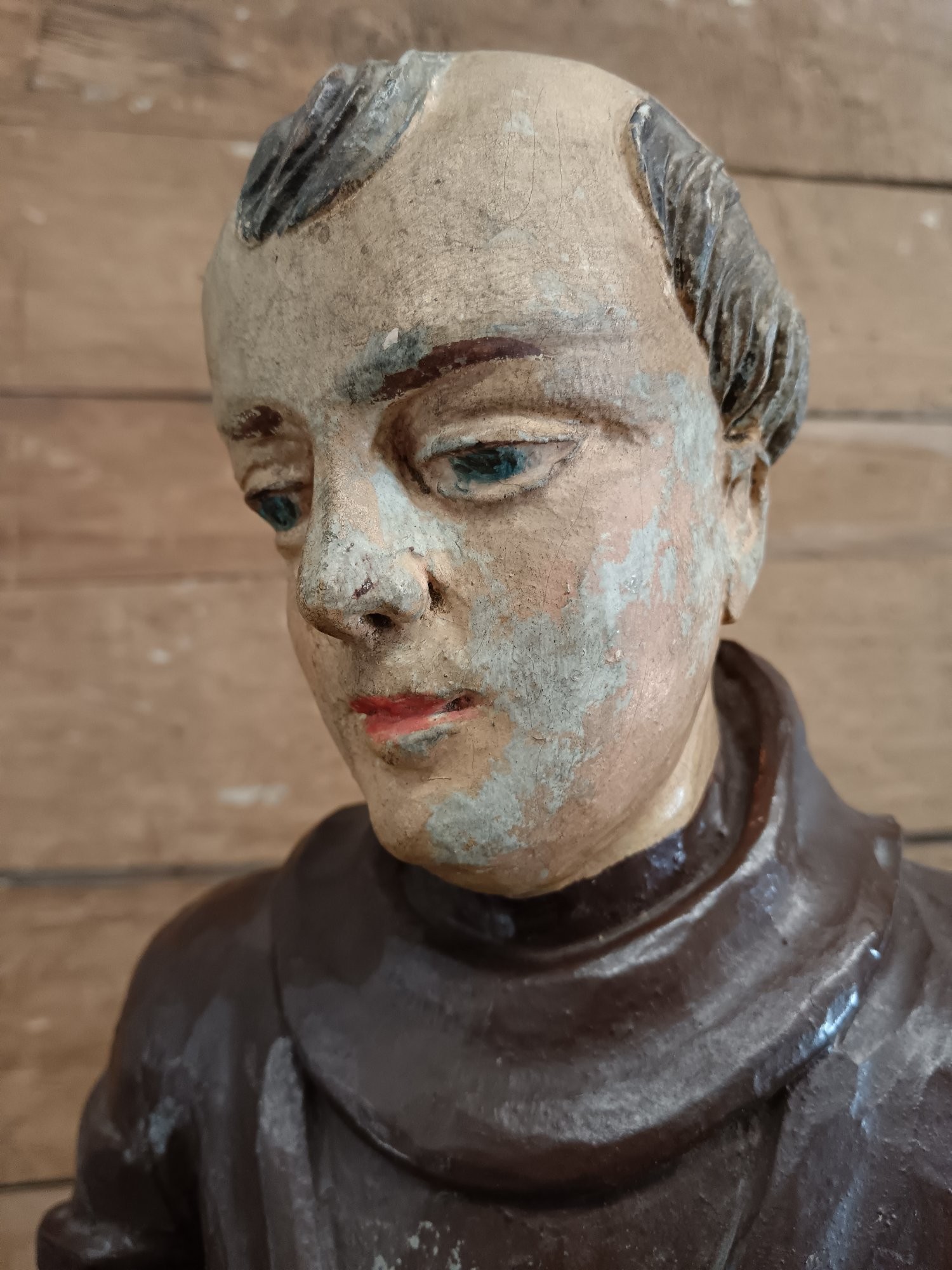
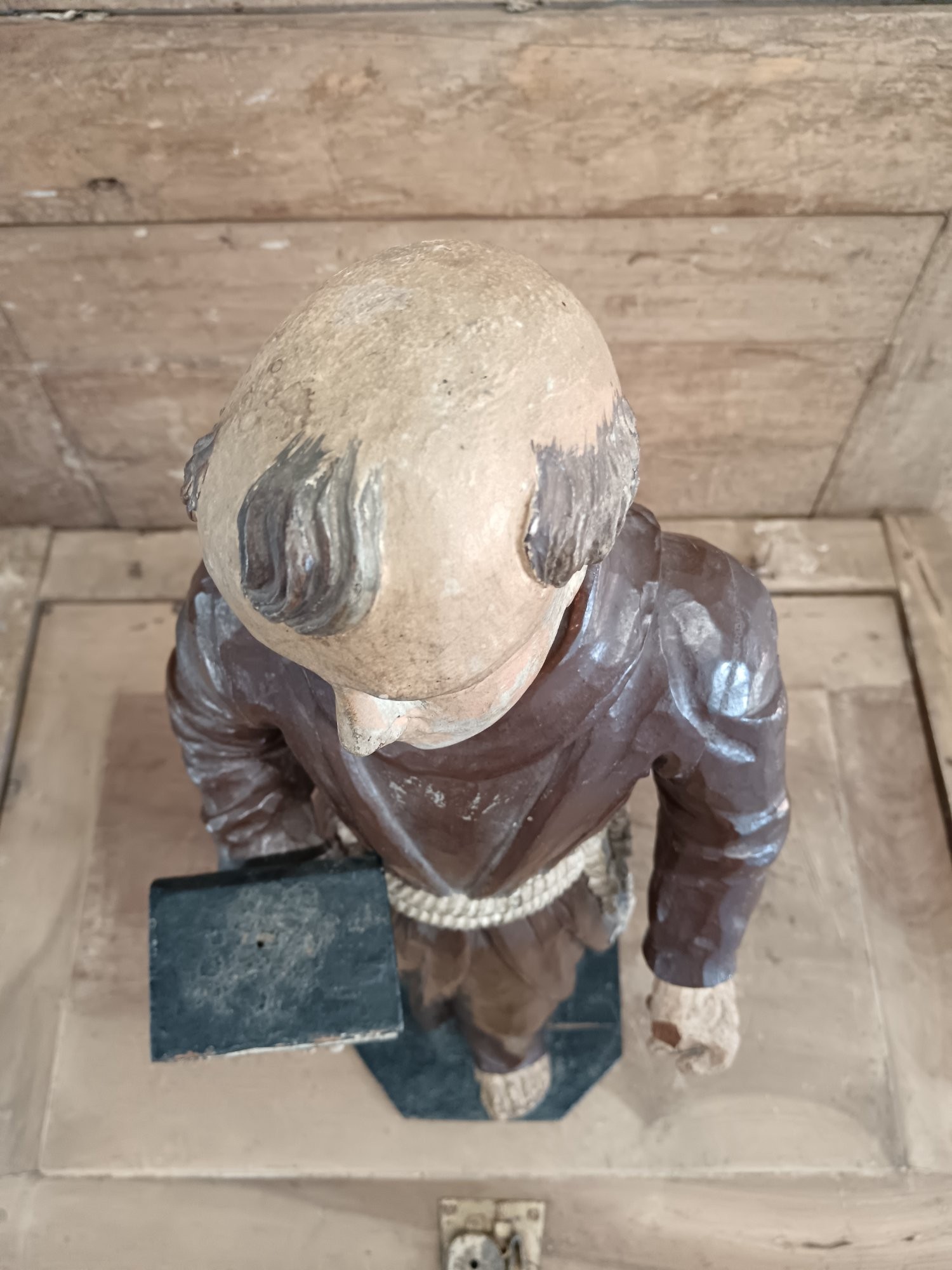
The face of this statue is its most compelling folk-art element because it abandons the idealized "official" beauty for something deeply human. Its large, earnest eyes and regional character make the saint feel like a neighbour or a village elder, which was essential for local devotion. Furthermore, the face is where the highest level of detail is concentrated, including the tonsure (shaved scalp), which is finished with fine details. This "hierarchy of focus" is typical in folk art, where the most spiritually significant part of the figure—the head—receives the most personal attention.
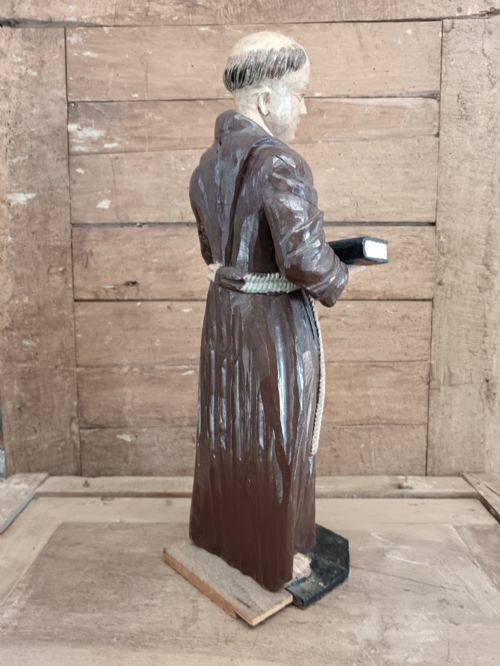
Ecclesiastical folk art carries a unique, soulful weight precisely because of its inherent fragility. Its value lies in its sincerity; the artist wasn't concerned with a legacy or "art history," but with a direct, tactile connection to the divine. Because it wasn't built to last, it captures a raw, unpolished faith that permanent monuments often lose.
We believe that this statue is from the early 19th century or earlier.
This sculpture shows honest wear including, time worn patina, with loss to the thumb of his left hand.
Pareglio & Ayres Antiques Interiors has dated this Carved Wooden Saint Statue to the 19th Century.
Specialists in english and italian antiques
You can view the stock and full dealer information on the Pareglio & Ayres Antiques Interiors Profile Page
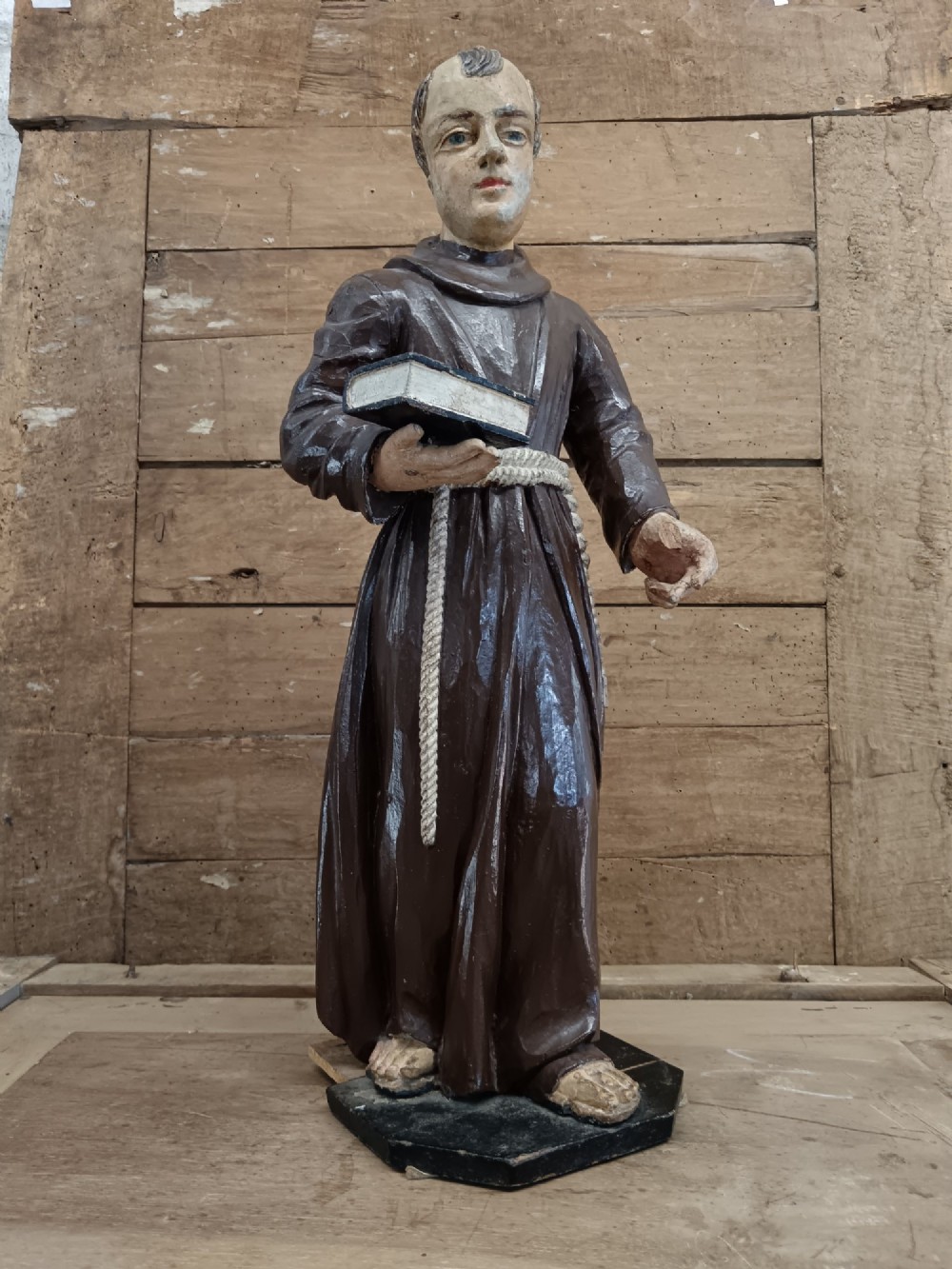
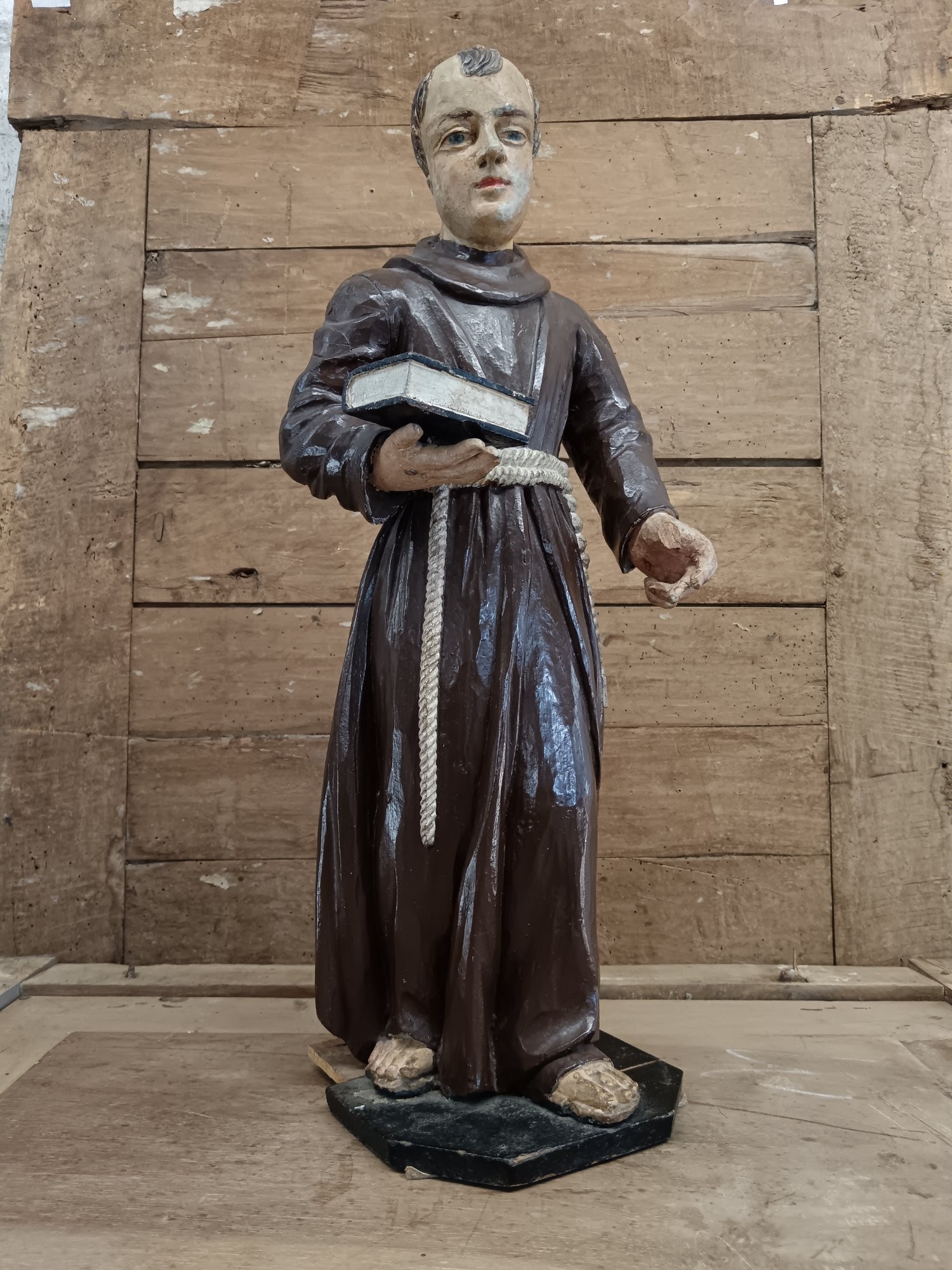
Antique Italian Folk Art Wooden Statue of Saint Anthony of Padua