




Italian Carved Wood Sculpture
These pieces of italian carved wood sculpture bring centuries of theatrical movement and devotional craft straight into a room.
Italian Carved Wood Sculpture
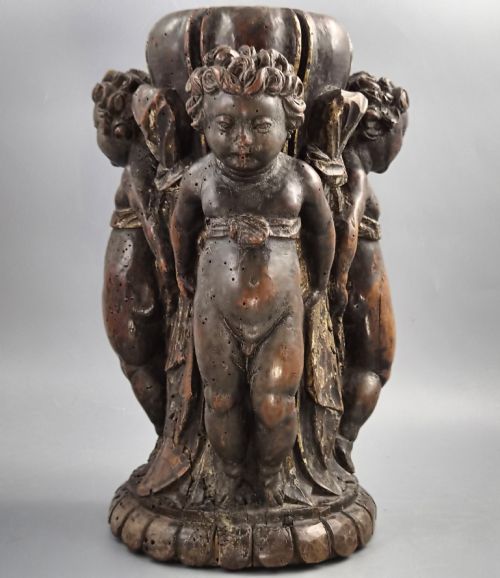
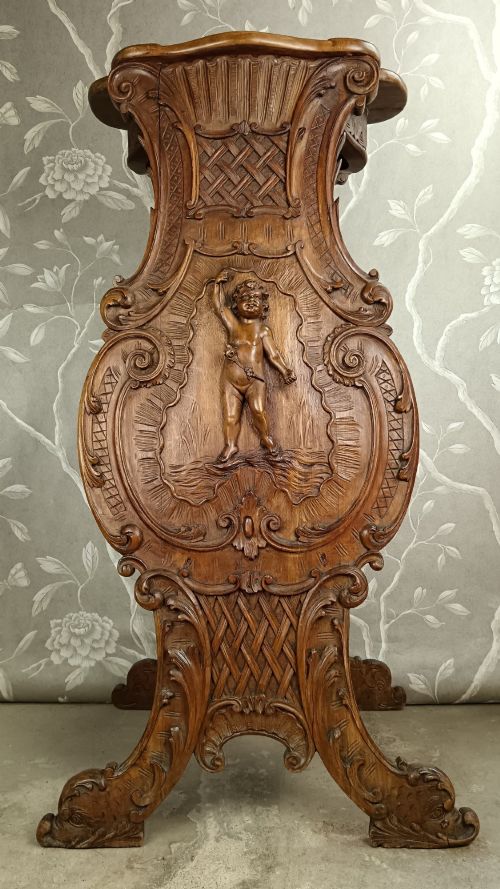
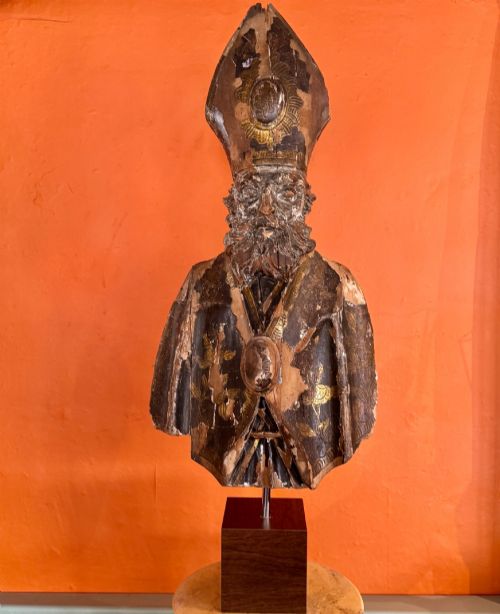
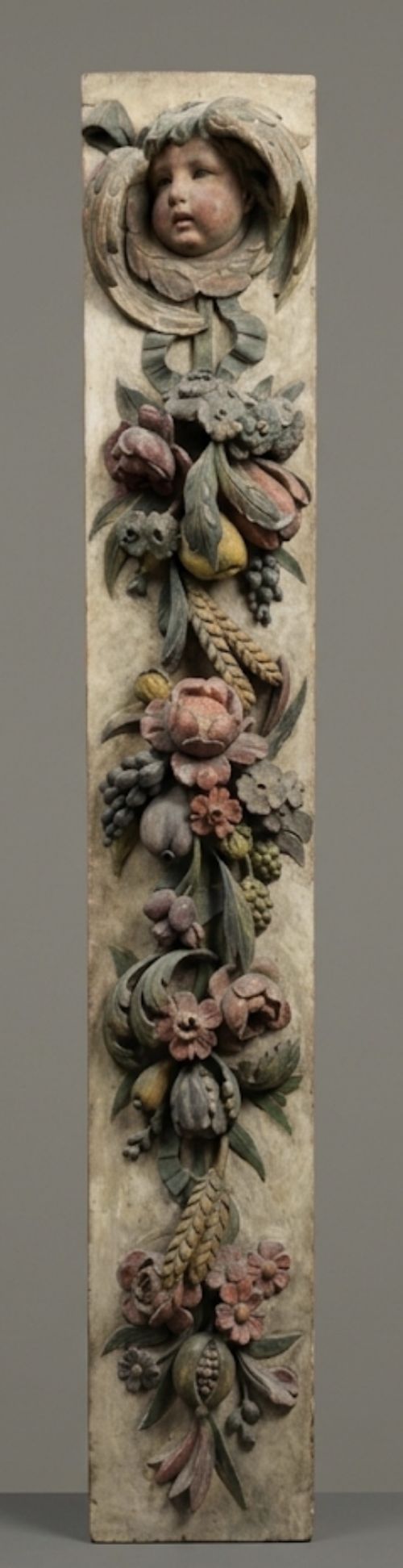
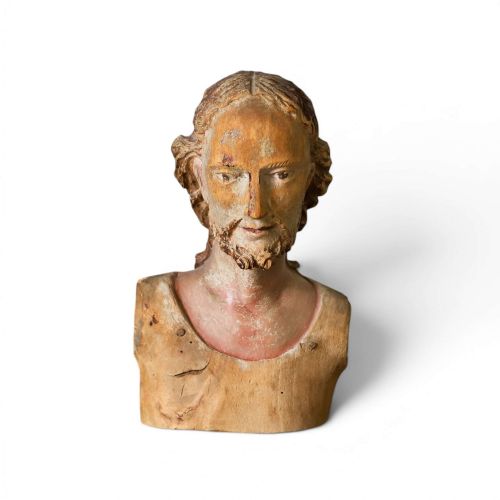
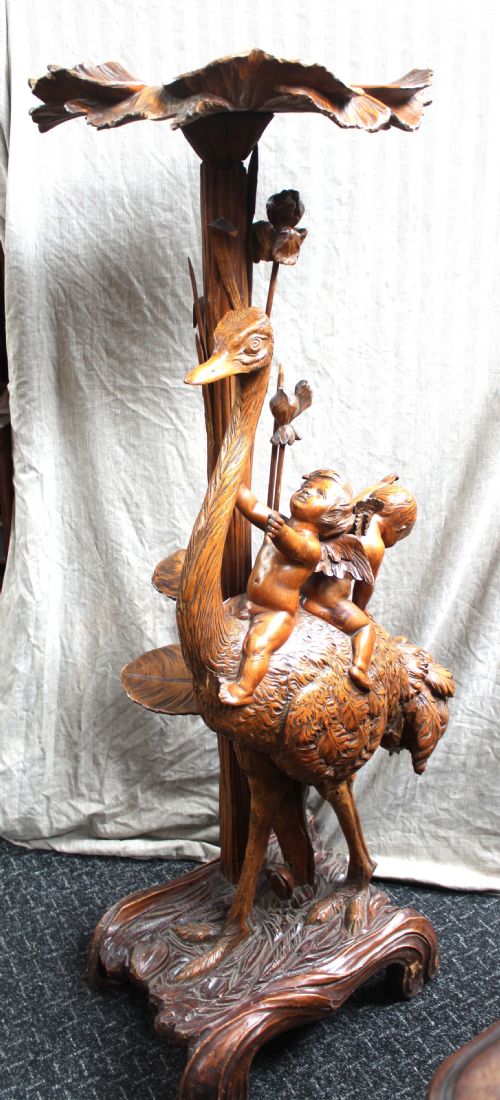
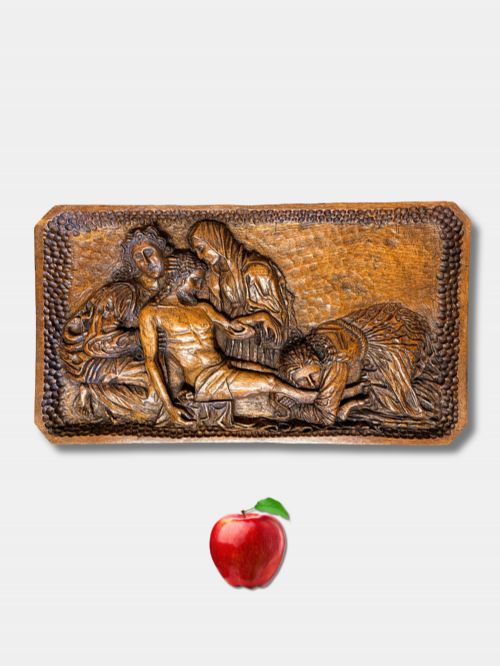
An italian carved wood sculpture encompasses figures, reliefs, and furnishings spanning the seventeenth through to the early twentieth century. Buyers encountering this selection will find ecclesiastical figures, putti, ecclesiastical busts, and devotional panels alongside decorative blackamoor figures and torchere stands. The pieces draw upon baroque and renaissance styles, originating primarily from workshops in Venice, Naples, and Sicily.
The objects serve diverse functions, moving from monumental church sculpture and processional figures to grand tour souvenirs and domestic lighting bases. Many figures retain their original stands or pedestals, completing compositions that were conceived as unified decorative schemes.
How they were made
Carvers shaped local timbers including walnut, chestnut, olive wood, oak, and lime wood using traditional chisels and gouges. Artisans then applied gesso grounds to prepare the timber surfaces for subsequent decoration.
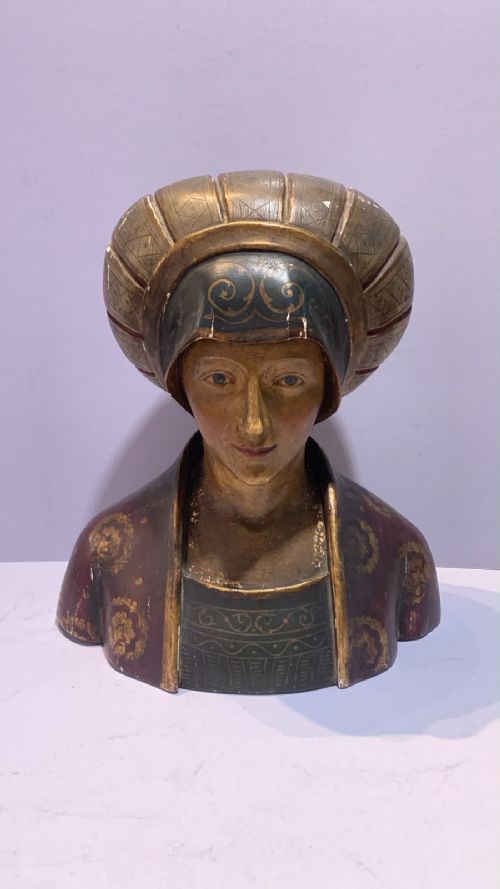
Finishes relied heavily on polychrome paint, silvering, and gold leaf, often applied in layers to create rich, light-reflecting surfaces. Many surviving works preserve these original painted and gilded coatings, which define the visual weight of the sculpture.
The inventory records ecclesiastical busts, wall relief carvings, torchiere stands, and marionettes.
What varies in quality
The distinction between ordinary workshop production and master carving lies in the anatomical fluency and the depth of the relief work. Dynamic posture, expressive facial modelling, and confident drapery separate ambitious sculptural groups from simpler regional figures.
The survival of original surface finishes dictates much of the visual impact. Pieces retaining untouched polychromy, gesso, and gold leaf hold greater artistic coherence than those stripped or aggressively overpainted during later centuries.
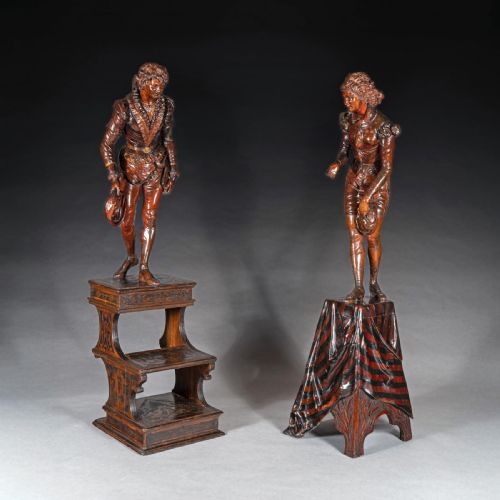
Valentino Besarel
The Italian Carved Wood Sculpture Glossary
- Polychrome
- Painted in several colours. This surface treatment brings depth and realism to carved wooden garments and flesh tones.
- Torchiere
- A tall stand or floor lamp designed to hold a light source. These wooden supports frequently take the form of figures bearing aloft torch arms.
- Gesso
- A plaster mixture applied to wood as a base for painting or gilding. It provides a smooth, absorbent ground for metallic leaf.
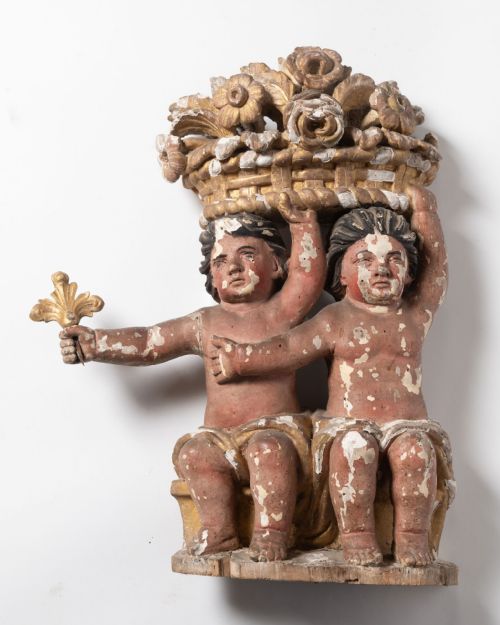
- Putto
- A plump, naked male child figure, often winged, common in baroque art. Sculptors employed these figures to impart movement and theatrical charm.
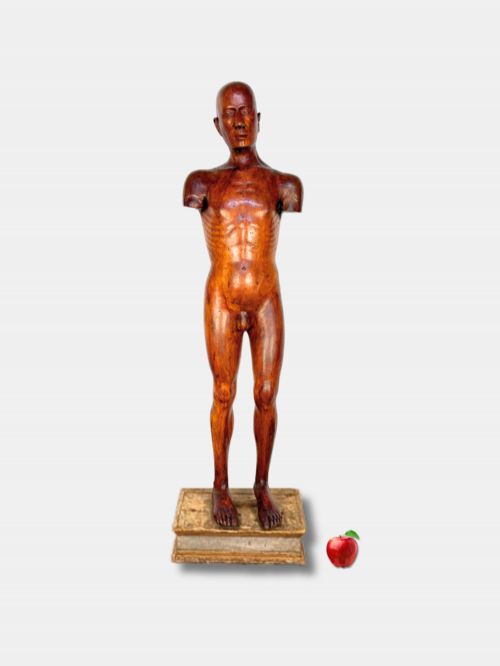
- Écorché
- A figure drawn or sculpted to show the muscles of the body without skin. These anatomical studies served as teaching aids for artists.
Italian Carved Wood Sculpture: Frequently Asked Questions
How do I care for wooden sculpture?
Maintaining these pieces requires stable environmental conditions away from direct sunlight and sudden temperature shifts. Dry indoor air can cause old timbers to shrink and split.
Dusting should be done gently with a dry, soft brush rather than cloths that might catch on delicate gesso or flaking paint layers.
What is a blackamoor figure?
These decorative carved wooden figures typically depict Moorish attendants, often functioning as torchere stands, waiters, or plant stands. Originating largely from Venetian traditions, they frequently feature elaborate polychrome paint and gilded garments.
Their production spanned from the baroque period through the nineteenth century, serving opulent domestic interiors.
Are these pieces usually signed?
Signatures or maker marks remain exceptionally uncommon on historical carved wooden sculpture. Most religious and decorative works emerged from communal workshops or regional guilds without individual attribution.
When signatures or initials do appear, they generally point towards specific nineteenth or early twentieth-century master carvers.
What is a santos figure?
A santos figure represents a holy person or saint, carved from wood for religious devotion or processional use. These sculptures often featured articulated limbs to allow for dressing in real textiles.
Many retain traces of original polychrome paint beneath layers of subsequent handling and traditional veneration.