


Wooden Santos Figure
A wooden santos figure brings centuries of devotion into a room, carved from wood and finished with paint and gesso.
Wooden Santos Figure
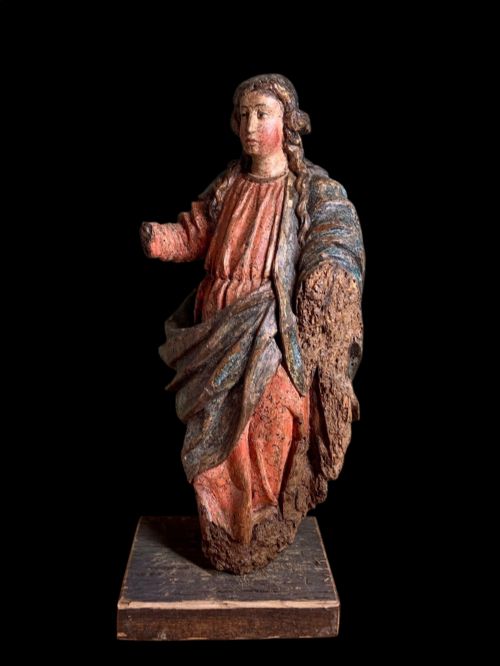
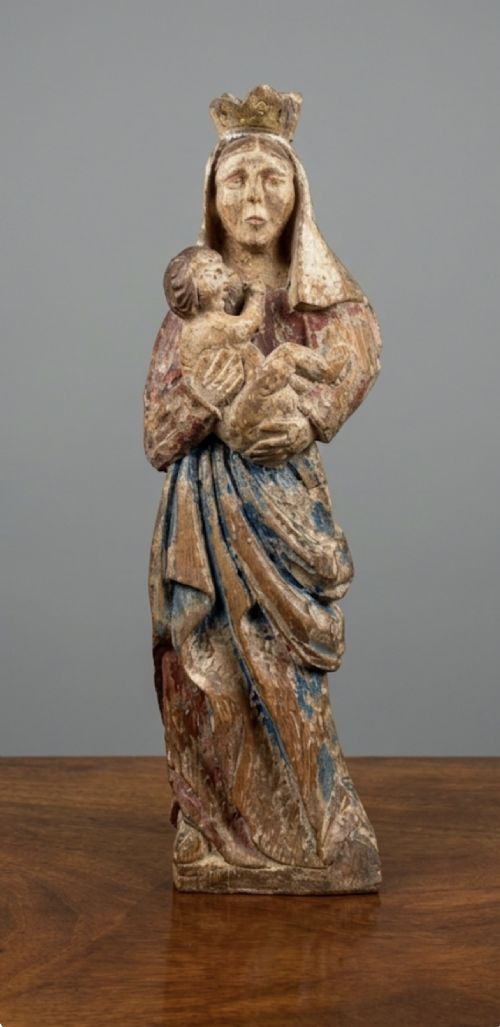
A wooden santos figure represents holy persons and religious subjects, emerging primarily from Italian and Spanish traditions across the seventeenth, eighteenth, and nineteenth centuries. These sculptures take the form of full figures like Saint Anthony of Padua, Mary and Jesus, or Christ, alongside processional pieces and portrait busts.
The pieces appearing here span distinct regional interpretations, moving from Italian folk art and grander Baroque styles to specialised forms like the Spanish capipote. Hand-carved wooden bodies often carry original gesso and polychrome paint, occasionally complemented by applied gold leaf and fabric elements.
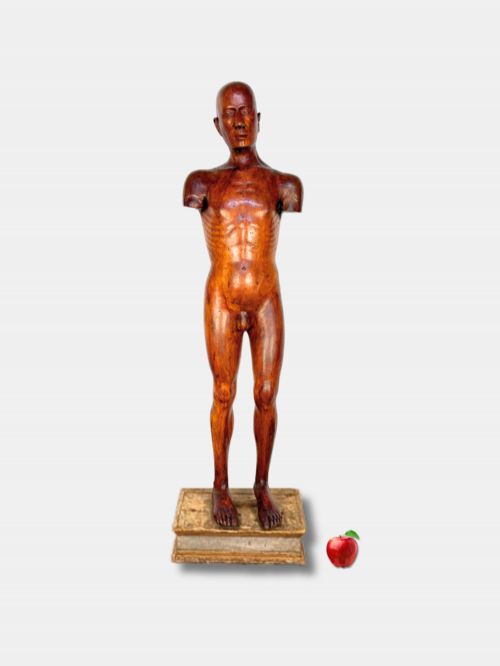
Scale varies from intimate walnut busts to life-size figures mounted on plinths, reflecting the diverse devotional spaces they originally occupied. The examples gathered on this page highlight this range of sculptural output, showing how makers shaped timber into enduring objects of faith.
How they were made
Makers shaped these sculptures from solid timber using hand-carving techniques, forming the anatomical details and drapery directly from the wood. Walnut and other native woods provided the structural base for both small busts and life-size figures.
Surfaces were prepared with a layer of gesso before receiving polychrome paint, creating a smooth ground for flesh tones and garments. Gold leaf was often applied to highlight decorative borders and vestments, adding rich reflectivity to the carved forms.
Current listings feature pieces spanning the seventeenth, eighteenth, and nineteenth centuries, executed in carved wood, gesso, and polychrome paint.
What varies in quality
Sculptural proficiency dictates the visual power of a piece, separating competent regional carving from sophisticated artistic execution. Expressive facial modeling and fluid drapery demonstrate the hand of a skilled sculptor working within Baroque or folk traditions.
The survival of original surface decoration plays a major role in the character of these sculptures. Intact polychrome paint, gesso layers, and traces of gold leaf retain the intended visual impact of the period.
The Wooden Santos Figure Glossary
- Santos
- A representation of a saint or holy figure used in religious devotion. These sculptures were central to domestic and processional worship, particularly in Catholic regions.
- Polychrome
- Painted in several colours. This surface treatment brings carved wooden sculptures to life through realistic flesh tones and decorated garments.
- Gesso
- A plaster-like mixture applied to wood as a base for painting and gilding. It provides a bright, smooth ground that holds fine detail.
- Capipote
- A type of processional figure with a wooden framework or partial body designed to be dressed in real fabric vestments. They often feature carved wooden heads and hands attached to simpler underlying structures.
- Baroque
- An artistic style characterised by dynamic movement, drama, and rich detail. In these sculptures, it appears in the sweeping folds of robes and expressive poses.
Wooden Santos Figure: Frequently Asked Questions
How were santos figures used?
These figures were placed in domestic shrines, churches, or carried through streets during religious festivals. Processional pieces were often mounted on plinths or designed to wear real fabric garments.
Their presence supported personal devotion and community ritual, acting as tangible links to the holy figures they represent.
How do I date a wooden santos figure?
Dating relies on stylistic clues, sculptural conventions, and the physical characteristics of the wood and surface finish. Eighteenth-century pieces often display Baroque movement, while folk art examples show simpler, direct regional carving.
Examining the wear on the gesso and polychrome layers also helps establish the age of the object.
How do I care for an antique wooden sculpture?
Keep wooden figures in stable indoor environments away from direct sunlight and dramatic humidity changes. These precautions protect the underlying timber and prevent the historic gesso and paint layers from cracking.
Dust the surface gently with a soft, dry brush without applying modern cleaning products or oils.