


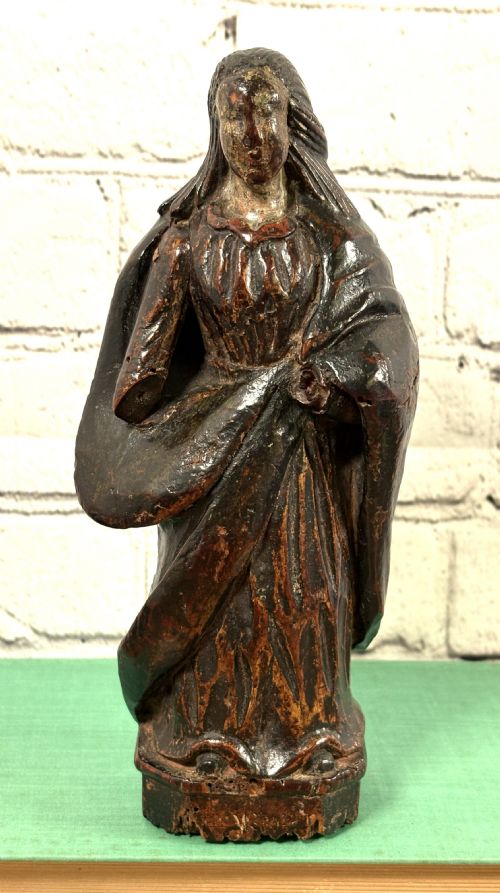


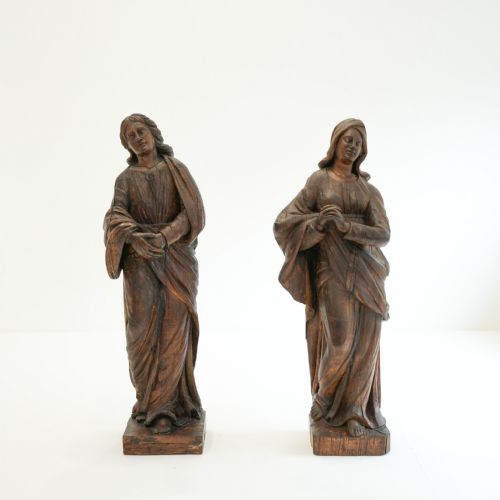


Carved Wooden Saint Statue
These figures bring centuries of devotion into a room, offering tactile connection to sacred history through carved wooden saint statue pieces.
Carved Wooden Saint Statue
A carved wooden saint statue represents figures from religious history, originating primarily from European churches, domestic shrines, and private chapels. These works span multiple centuries, ranging from pre-sixteenth century Gothic carvings to eighteenth-century Baroque sculptures.
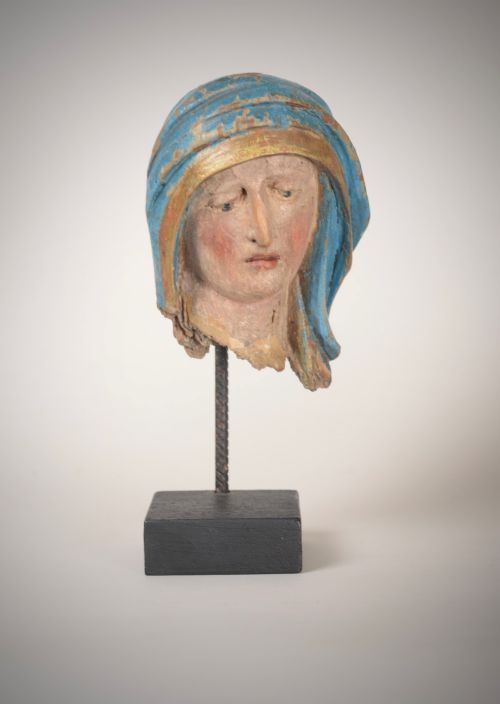
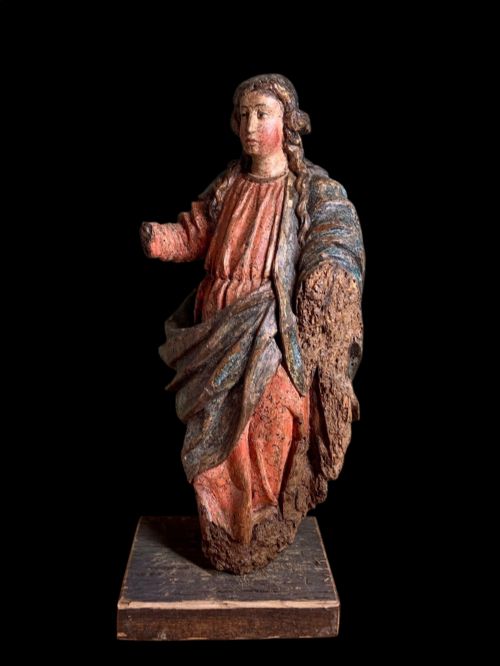
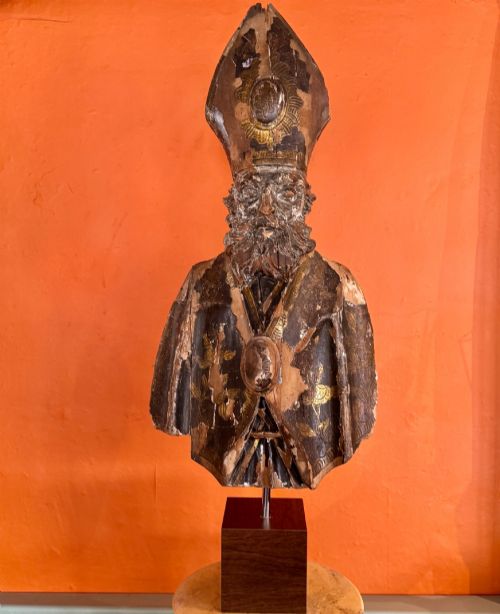
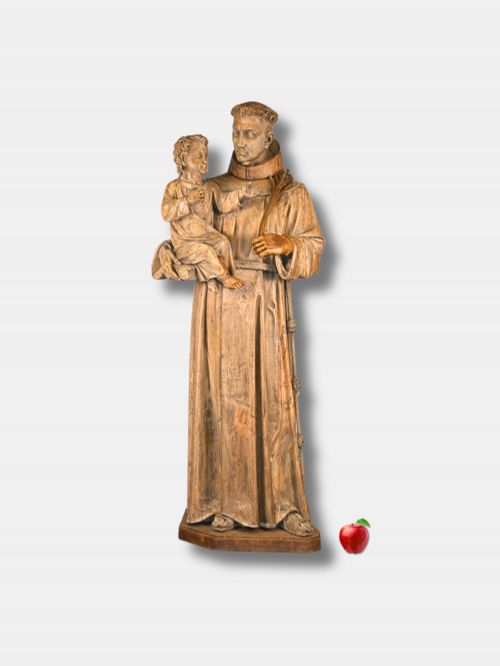
Buyers encounter depictions of specific figures such as Saint Anthony, Saint Jerome, Saint John, and the Virgin Mary. Forms vary from full-length statues and fragments to processional figures and ecclesiastical busts.
Origins stretch across Italy, France, Germany, Spain, Flanders, and Croatia, reflecting distinct regional schools of religious art. Pieces take the form of single devotional objects, pairs of saints, and larger architectural fragments.
Materials and Techniques
Many surfaces received layers of gesso to prepare the wood for subsequent decoration. Guilds applied polychrome paint and gold leaf to bring lifelike colour and divine illumination to the garments and flesh.
Tool marks left by gouges and chisels remain visible on unpainted timber and beneath surviving layers of pigment. This subtractive sculpting process required precise planning to avoid flaws within the grain of the wood.
Listings span periods from pre-sixteenth century Gothic works up to mid-twentieth century carvings, utilising oak, limewood, applewood, gesso, and gold leaf.
Evaluating Quality
Anatomical proportion and the expressive depth of the face separate master carvers from provincial artisans. The handling of drapery folds - whether they fall with natural weight or appear rigid - demonstrates the sculptor's technical command.
The survival rate of original surface treatments determines much of the visual impact. Patination that shows genuine age alongside undisturbed polychrome or gilt layers retains greater historical integrity than heavy nineteenth-century repainting.
Completeness alters the character of a piece, though fragments maintain value if the remaining carving displays exceptional vigour. The integration of the wooden support with its original polychromy dictates the visual harmony of the whole.
Franz Keller
The Carved Wooden Saint Statue Glossary
- Polychrome
- Decoration consisting of several colours applied to the surface of wood or gesso. This technique gave statues a lifelike appearance in dimly lit ecclesiastical interiors.
- Gesso
- A plaster mixture applied to wood to create a smooth surface for gilding and painting. It seals the timber and holds fine sculptural details.
- Giltwood
- Timber decorated with thin sheets of gold leaf over a prepared ground. It catches candlelight to create a luminous effect.
- Capipote
- A Spanish devotional figure with a carved head and hands attached to a framework dressed in real textiles. These statues were often used in processions.
- Limewood
- A fine-grained hardwood favoured by northern European carvers for intricate detail work. It resists splitting and accepts crisp chisel marks.
- Acolyte
- An altar assistant depicted in sculptural form, frequently holding candlesticks. These figures date largely from the Baroque period.
Carved Wooden Saint Statue: Frequently Asked Questions
Where were these statues originally displayed?
These figures stood in churches, monastic chapels, and roadside shrines as focal points for prayer. Some smaller examples functioned within domestic home altars or private devotional spaces.
Over time, many migrated from sacred settings into secular collections, retaining their atmospheric presence within residential interiors.
How should I care for a wooden sculpture?
Keep wooden sculptures away from direct sunlight, heating vents, and rapid humidity fluctuations to prevent the timber from splitting. Dust them gently with a dry, soft brush without applying liquid polishes.
Stable environmental conditions preserve both the underlying wood and any fragile historic paint layers.
How can I tell the period of a carving?
Stylistic indicators such as Gothic elongation or Baroque theatricality provide initial clues to a statue's age. Tool marks, wood shrinkage patterns, and the composition of underlying gesso layers offer further confirmation.
Comparing regional costume details and facial types against documented examples helps narrow down the century of creation.
What is the difference between polychrome and gilt surfaces?
Polychrome surfaces use paint to depict skin tones, hair, and coloured garments with realistic or symbolic hues. Gilt surfaces utilise gold leaf to represent divine light, halos, and royal vestments.
Many statues combine both techniques, applying gold leaf to hems and mantles while using polychrome paint for the face and hands.