



Carved Wooden Asian Statue
When you search for a carved wooden asian statue, you are looking at centuries of hand-carved deities, guardians, and scholars collected to anchor a room.
Carved Wooden Asian Statue
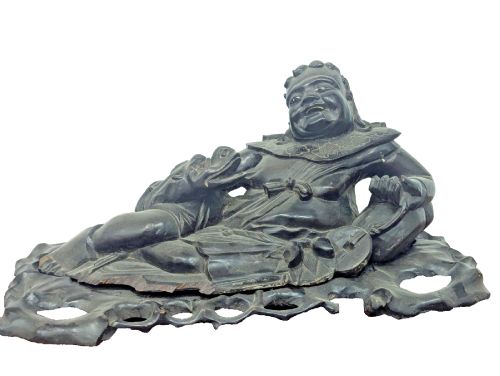
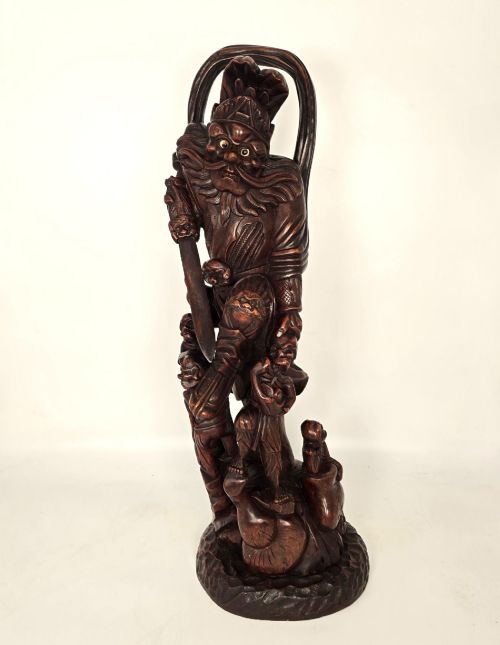
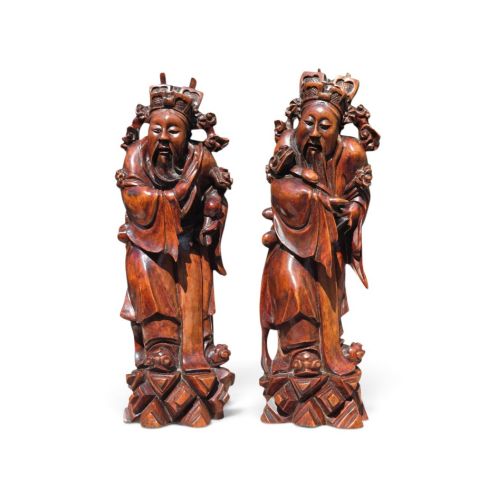
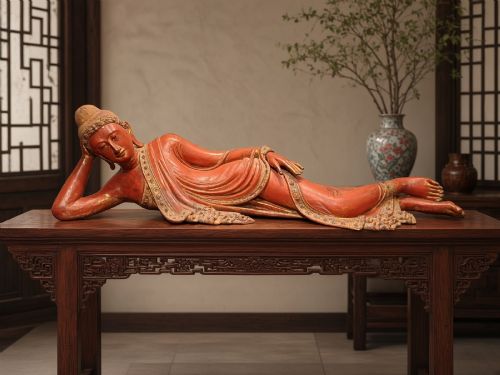
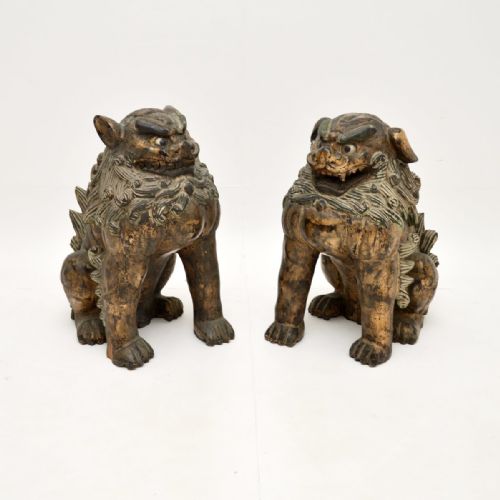
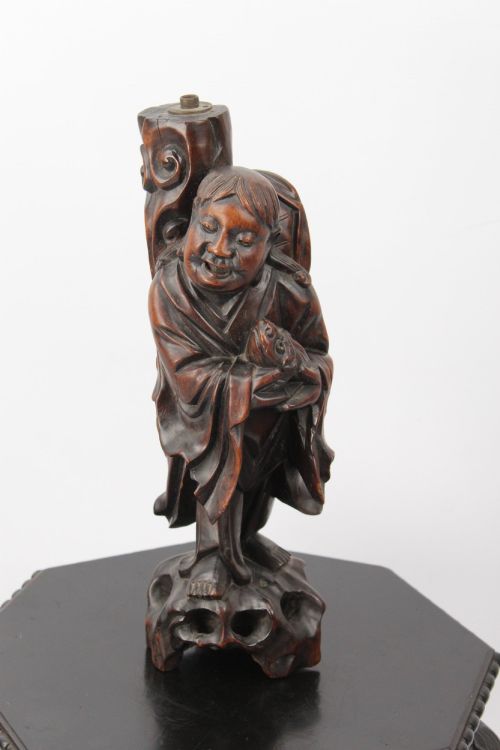
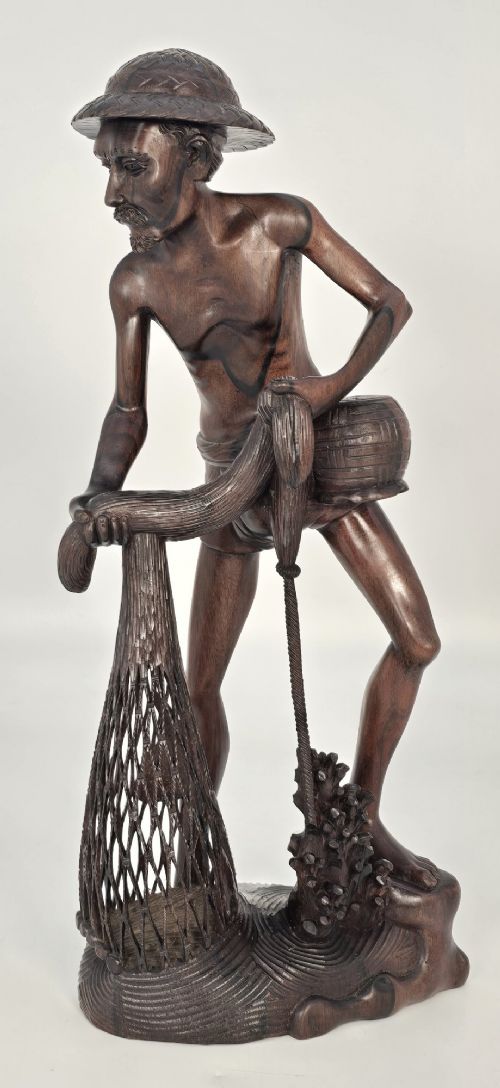
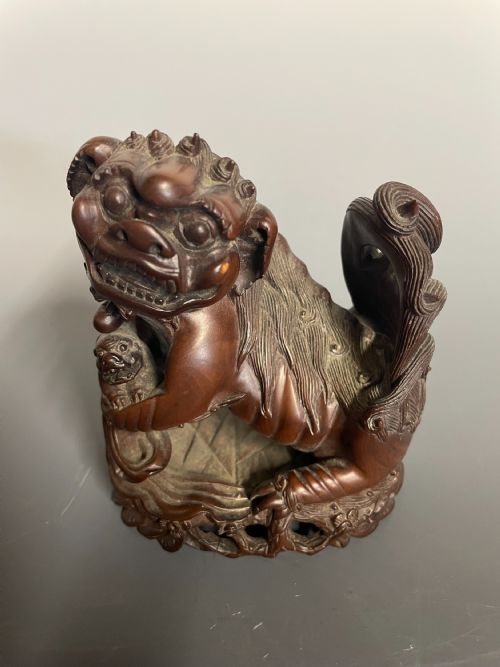
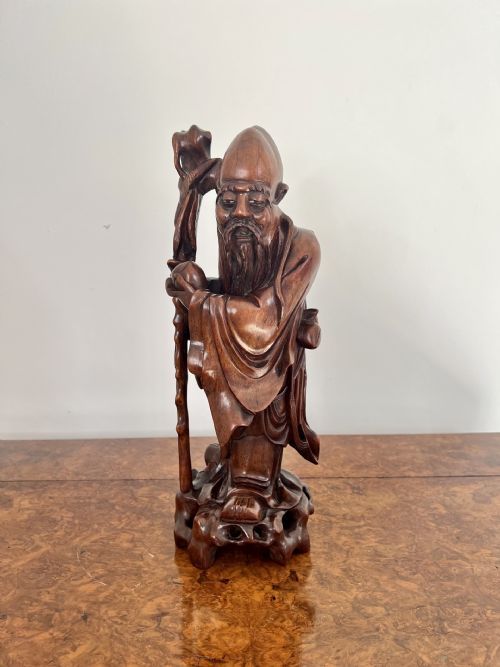
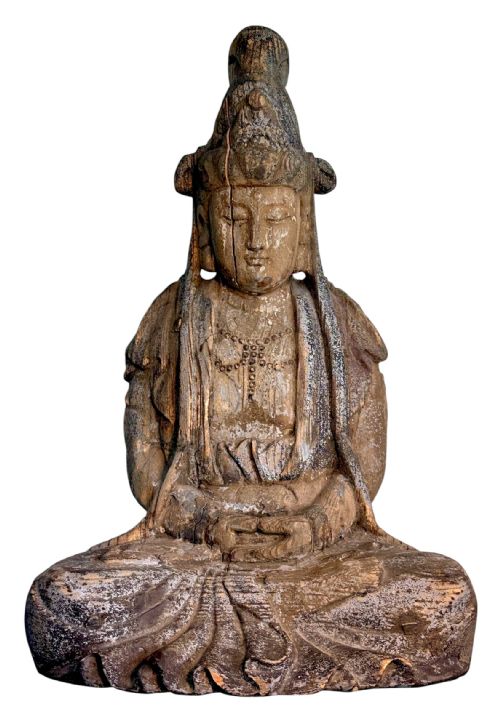
A carved wooden asian statue encompasses figures from Chinese, Japanese, Burmese, and Indonesian traditions, ranging from intimate boxwood okimono to monumental temple guardians. When searching this phrase, a buyer most frequently encounters hardwood sculptures depicting figures such as Daoist immortals, Buddhas, Foo dogs, and fishermen.
The selections span distinct periods including the Qing Dynasty, Meiji period, and the late eighteenth through early twentieth centuries. Forms vary from single freestanding statues and matched pairs to complex root wood carvings and temple figures depicting deities and daily life.
How they were made
Carvers shaped these figures primarily from dense hardwoods, boxwood, and burr root wood using specialised hand chisels to define intricate drapery, facial expressions, and naturalistic textures. Artisans frequently integrated gold leaf, polychrome paint, and lacquer finishes directly onto the wooden surface to highlight specific vestments and religious iconography.
Root wood carvings utilised the natural contours of the timber to form organic shapes for scholars and mythical beasts, while boxwood allowed for miniature detail in Japanese okimono. Larger temple statues employed high relief carving techniques on heavy timber sections to withstand ceremonial environments.
At least one wooden sculpture depicts a Mongolian pack horse carrying a load.
What varies in quality
The complexity of the composition dictates the tier of the piece, with monumental guardian kings and multi-figure groups demanding greater sculptural skill than single static statues. The natural integrity of the chosen hardwood or root wood also influences the overall presence and balance of the sculpture.
The Carved Wooden Asian Statue Glossary
- Hardwood
- Dense, slow-growing timber selected by carvers for its strength and fine grain. It supports intricate undercut details without splitting.
- Polychrome
- Painted in several colours directly onto the wood surface. This technique brings depth to historical temple figures and deities.
- Okimono
- A Japanese ornamental carving designed for display. These figures often depict traditional deities, historical figures, or daily scenes.
- Root Wood
- Timber shaped by the natural growth of tree roots. Carvers incorporate these organic curves into scholars and mythical creatures.
- Foo Dog
- A mythical guardian lion depicted in pairs outside temples. They protect sacred spaces and command authority in domestic interiors.
Carved Wooden Asian Statue: Frequently Asked Questions
How do I identify a temple figure?
Temple figures typically display monumental proportions, layered robes, and traces of gilt or polychrome paint applied for ritual settings. Their intense expressions and authoritative postures reflect their historical function as spiritual guardians.
Many of these larger wooden sculptures bear the wear of centuries of incense exposure and ceremonial placement. Examining the rear and base often reveals the mounting holes or heavy timber construction characteristic of temple installations.
What is root wood carving?
Root wood carving is a traditional technique where the artisan works directly with the gnarled, twisting contours of tree roots. Instead of imposing a rigid form, the carver lets the natural grain dictate the shape of scholars, animals, or mythical beasts.
This method ensures that every single sculpture remains entirely unique because no two root systems grow alike. The resulting pieces showcase natural knots, hollows, and swirling grain patterns integrated into the final subject.
How should I care for antique wood?
Antique wood requires stable indoor humidity and protection from direct sunlight to prevent the timber from drying and splitting. Dusting with a dry, soft cloth preserves the original surface patina without introducing moisture or harsh chemicals.
Avoid placing wooden statues near direct heat sources such as radiators or fireplaces. Natural temperature fluctuations cause expansion and contraction that stress historical joints and carved details.
How do I distinguish Chinese and Japanese styles?
Chinese wooden sculptures often lean toward monumental figures, Daoist immortals, and robust guardian kings executed in heavy hardwoods or root wood. Their forms emphasise symbolic weight, formal posture, and deep undercutting.
Japanese pieces, particularly from the Meiji period, frequently favour compact boxwood okimono focusing on narrative clarity, animal studies, and everyday human gestures. The carving scale tends to be smaller and more intimate compared to grand Chinese temple works.