


Hardwood Chinese Figurine
A hardwood Chinese figurine brings substantial presence to a room, carved from dense timber to depict figures, animals, and mythological subjects.
Hardwood Chinese Figurine
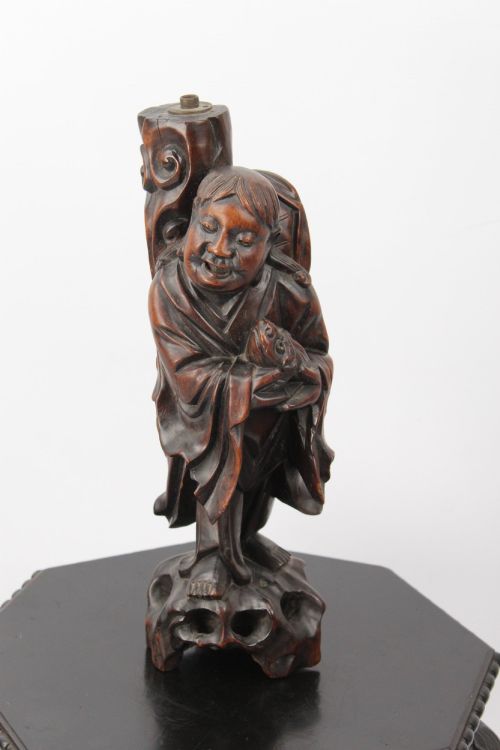
A hardwood Chinese figurine represents traditional subjects such as Daoist immortals, fishermen, wise men, and auspicious creatures like Mandarin ducks and water buffaloes. These carvings range from single figures to pairs and groups, originating from periods including the nineteenth century and the early twentieth century.
Most pieces encountered on this page date from around nineteen hundred or the late nineteenth century, often falling within the Qing Dynasty or Chinese Qing style. Sculptures and decorative carvings utilise dense timbers, sometimes complemented by root wood to exploit natural organic forms.
How they were made
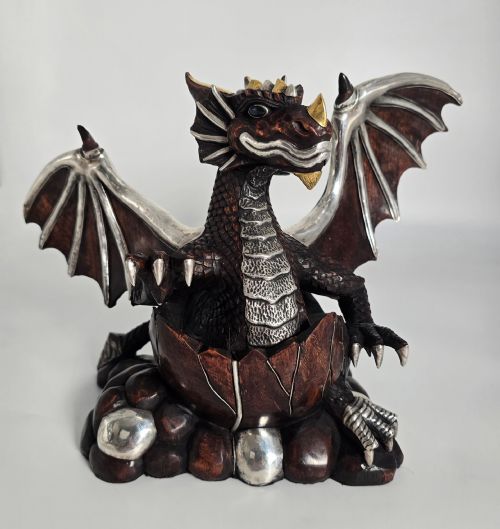
Artisans carved these sculptures directly from dense hardwoods and root wood, allowing the natural grain and knots of the timber to define the shape of figures and animals. Certain pieces incorporate mixed metal mounts, brass, bone, glass, or silvered metal to add detail to the carved wooden bodies.
The traditional Chinese folk art style relies on manual cutting, chiselling, and smoothing of the wood to capture the posture of fishermen, immortals, and water buffaloes. Root wood carvings particularly depend on shaping the existing contours of the root to suggest boats, figures, and natural settings.
Listings feature periods from the nineteenth century up to nineteen thirty, with nineteen hundred appearing most frequently among dated items.
What varies in quality
Depth and ambition of the carving separate simpler figures from more complex works, such as multi-figure groups or sculptures featuring intricate mythical creatures. The treatment of facial expressions, drapery folds, and animal musculature demonstrates the skill of the carver.
The choice of material also distinguishes the range, with select pieces utilising finely grained hardwoods or expressive root wood that takes a smooth finish. Added elements like metal mounts or inlaid details show greater labour in the construction of the sculpture.
The Hardwood Chinese Figurine Glossary
- Hardwood
- Dense and durable timber derived from angiosperm trees, used to create long-lasting carved sculptures. It provides a heavy feel and a fine surface texture.
- Root wood
- Timber taken from the root system of a tree, displaying irregular and twisting natural shapes. Carvers incorporate these organic forms directly into figures and boats.
- Daoist immortal
- A mythological figure from Chinese tradition, frequently depicted in carvings as a sage or holy person. Liu Hai is a well-known example seen in these sculptures.
- Mandarin duck
- A traditional water bird symbolising fidelity and affection in Chinese culture. Pairs of these ducks appear frequently in Qing style carvings.
- Mixed metal
- The combination of different metallic elements used for mounts and decorative accents on wooden sculptures. It adds contrasting colour and texture to the piece.
Hardwood Chinese Figurine: Frequently Asked Questions
What do these figures typically depict?
These carvings show traditional subjects including Daoist immortals, wise men, fishermen with traps, and animals such as water buffaloes and Mandarin ducks. Many pieces also incorporate mythical creatures.
They reflect Chinese folk art traditions and Qing style aesthetics, focusing on human characters and symbolic fauna.
How old are most of these sculptures?
The majority of pieces date from the nineteenth century, around nineteen hundred, and the early decades of the twentieth century. Styles often reference the Qing Dynasty.
Specific dates in the listings indicate periods like eighteen eighty, eighteen ninety, and nineteen thirty.
What materials are used alongside wood?
While the primary material is hardwood or root wood, certain sculptures incorporate additional elements. These can include brass, bone, glass, and mixed or silvered metal mounts.
Such materials are used to accent the wooden carvings rather than replace the primary timber structure.
Are these pieces found in pairs?
Yes, several listings feature pairs of sculptures, such as water buffaloes or Mandarin ducks. Single figures and multi-piece sets also appear in the selection.
Pairs often display mirrored or complementary poses suited for balanced placement.