



Hand Carved Wood Immortal
These hand carved wood immortal figures are characterful sculptural works depicting revered sages and deities, sought after for their intricate detail and rich historic presence.
Hand Carved Wood Immortal
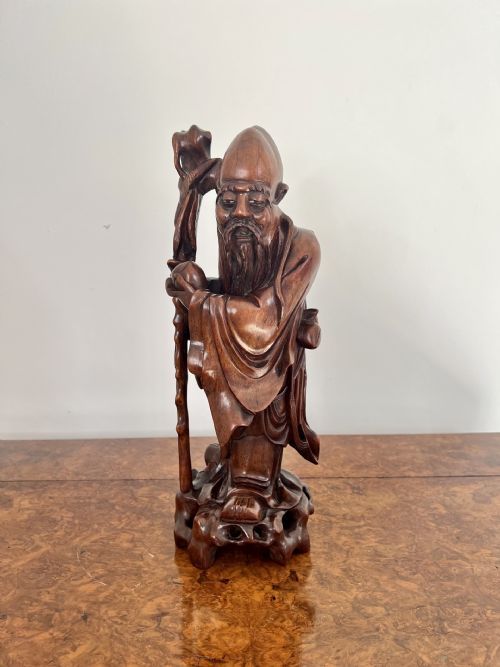
When you search for hand carved wood immortal, you encounter sculptural representations of Daoist and Buddhist figures, scholars, and deities spanning several centuries. The selection here leans heavily towards Chinese hardwood carvings from around nineteen hundred, alongside root wood examples from the nineteenth century and Japanese works.
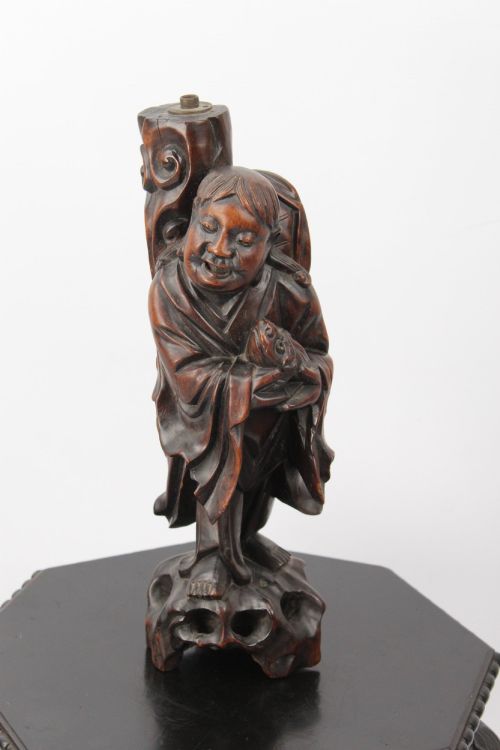
The forms range from individual standing figures with mythical creatures to table lamps fashioned from root wood and groups of multiple figures. You also find depictions of specific subjects like Liu Hai or sages with attendants, reflecting traditional Asian artistry across various periods.
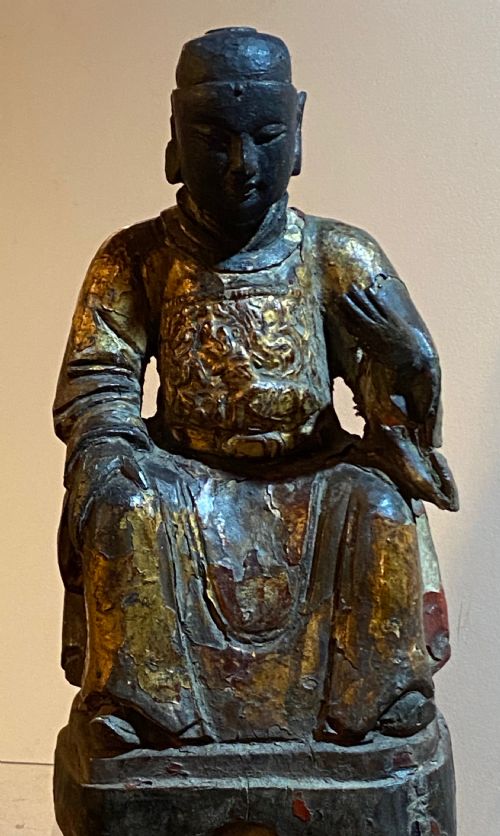
Originating largely from Chinese and Japanese traditions, these objects vary from eighteenth century deity sculptures to Edwardian root wood lamps. The common thread is the sculptural treatment of natural timber to portray venerated characters.
How they were made
Carvers utilised dense timbers such as hardwood, rosewood, and burr root wood, working the natural grain of the material to define the drapery of robes and facial expressions. Root wood pieces make direct use of the gnarled contours of the timber to form the body and base.
Some sculptures incorporate polychrome pigments or gesso over the wood surface to add colour and detail to the figures. Brass elements appear on related items such as temple bells, while electrical fittings were integrated when root wood carvings were later adapted into table lamps.
Periods represented span from the eighteenth century through the Meiji period and Edwardian era to nineteen ten.
What varies in quality
The preservation of the original timber surface and the harmonious integration of natural root forms dictate the visual success of the piece. Well-balanced composition in multi-figure groups also distinguishes finer examples from more static works.
The Hand Carved Wood Immortal Glossary
- Daoist Immortal
- A mythical or historical personage in Daoism who achieved immortality and spiritual perfection. These figures are frequently represented with specific attributes such as coins or magical creatures.
- Hardwood
- Slow-growing timber from broad-leaved trees, prized for its density and fine grain. Carvers relied on these heavy woods to achieve crisp, durable details.
- Root Wood
- Timber sourced from the root system of a tree, displaying twisted and organic shapes. Artisans shaped these natural irregularities into the dynamic forms of figures and lamps.
- Meiji Period
- A Japanese historical era lasting from eighteen sixty-eight to nineteen twelve, associated with traditional craftsmanship and decorative arts.
Hand Carved Wood Immortal: Frequently Asked Questions
How do I date these carvings?
Dating relies on the style of the carving, the choice of material, and the tool marks visible on the underside or back of the piece. Eighteenth century examples often show softer wear and simpler mounting.
Later nineteenth and twentieth century pieces, particularly from around nineteen hundred, exhibit sharper detailing and specific hardwood selections typical of the Qing tradition.
Were root wood lamps made originally?
Many root wood table lamps started life as sculptural carvings before being converted for electrical use in later periods. The natural twists of the wood made them attractive candidates for lighting.
Inspect the wiring entry points and the base to understand how and when the adaptation took place.
How should I display them?
Place these sculptures away from direct sunlight and heat sources to prevent the hardwood or root timber from drying out and splitting. A stable environment protects both the wood and any gesso or polychrome surfaces.
Allow enough space around the piece for the natural grain and organic contours to be appreciated from multiple angles.