


Brown Timber Asian Sculpture
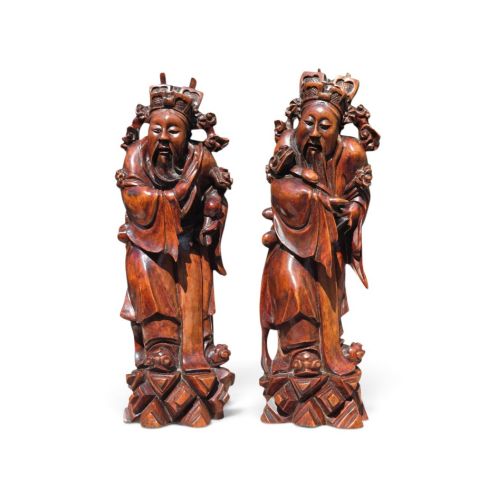
These brown timber asian sculpture pieces range from Daoist immortals to Himalayan masks, bringing carved character and rich grain into a room.
Brown Timber Asian Sculpture
When you search for brown timber asian sculpture, you encounter a varied collection of figures, masks, and wall plaques carved from rich woods. These pieces originate from traditions across China, Japan, Tibet, Nepal, Bali, and Sri Lanka, capturing subjects from religious deities to folklore characters.
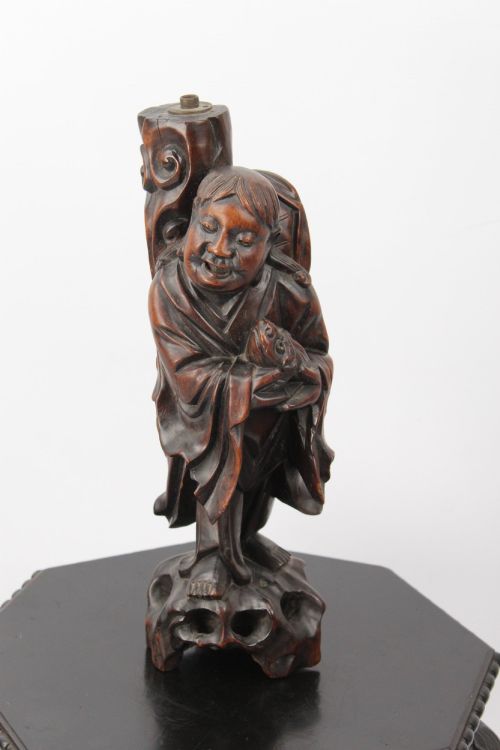
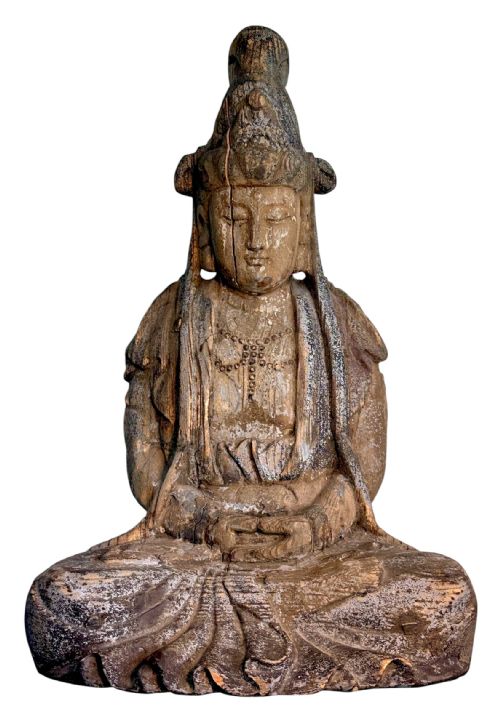
The selections on this page lean heavily toward nineteenth-century craftsmanship, including Qing dynasty figures, root wood lamps, and traditional depictions of Buddha. You will find both diminutive netsuke and substantial sculptural pairs designed to command attention in an interior.
Makers shaped these brown timber asian sculpture items to serve devotional, decorative, or narrative purposes, capturing everything from mythical creatures to daily village life. Each object records the particular aesthetic and sculptural vocabulary of its specific region of origin.
How they were made
Carvers utilised dense materials such as hardwood, boxwood, and root wood, often selecting timber with pronounced grain to accentuate the musculature or drapery of the figures. These woods were shaped using specialised chisels and gouges to achieve deep relief and intricate detail.
Surface finishes vary from polished natural timber to applications of gilded wood, while supplementary elements in brass and metal occasionally provide functional or decorative contrast. Artisans allowed the inherent qualities of the wood to dictate the final texture of the sculpture.
Recorded styles include Qing dynasty, traditional Chinese, Himalayan folk art, Balinese, Japanese folk art, and East Asian folk art.
What varies in quality
The distinction between standard examples and superior work rests entirely on the depth of the carving and the vitality of the posture. Master carvers imbued timber with a sense of movement and anatomical accuracy, whereas lesser pieces remain stiff and formulaic.
Material selection also dictates value, with dense, well-figured hardwoods holding their crisp edges far better over time than softer woods. The articulation of fine details, such as facial expressions and hands, reveals the level of training possessed by the original artisan.
The Brown Timber Asian Sculpture Glossary
- Hardwood
- Timber derived from broad-leaved trees, prized for its density and resistance to wear. These heavy woods allow carvers to achieve extremely fine, lasting detail.
- Root wood
- Timber taken from the root system of a tree, displaying contorted and gnarled natural shapes. Carvers often incorporated these organic forms directly into the design of figures and lamps.
- Boxwood
- A pale, fine-grained hardwood favoured for intricate miniature carvings andnetsuke. Its tight structure prevents splintering during detailed work.
- Gilded wood
- Timber surface treated with a thin layer of gold leaf. This technique was frequently applied to religious sculptures to signify sacred status.
Brown Timber Asian Sculpture: Frequently Asked Questions
How do I clean carved timber sculptures?
Dust these items gently with a soft, dry brush to prevent accumulation in the crevices. Avoid using liquid polishes or damp cloths, which can damage the aged patina.
Keep the sculptures away from direct sunlight and heat sources to prevent the timber from splitting or warping over time.
What is a root wood lamp?
Root wood lamps combine natural, gnarled timber forms with electrical fittings, usually dating from the late nineteenth century. They utilise the eccentric shapes of tree roots to create rustic, organic illumination.
These functional objects retain the sculptural qualities of traditional carvings while serving a practical purpose in a room.
How can I identify a Qing dynasty piece?
Qing dynasty carvings often feature distinct stylistic conventions such as elaborate robes, specific Daoist or Buddhist iconography, and dense hardwood construction. The carving tends to be deep and confident, reflecting established imperial or folk traditions.
Examine the tool marks and the wear on the timber to help gauge the age of the object.
Where should I place these sculptures?
Position these pieces on stable surfaces where their carved details can be appreciated from multiple angles. Pairing them with neutral backgrounds allows the rich grain of the timber to stand out.
Ensure the display location maintains a stable humidity level to protect the old wood from environmental shock.