


Carved Wildfowl Decoy
These carved wildfowl decoy pieces bring rustic folk art presence to a room, spanning the nineteenth century through the early twentieth.
Carved Wildfowl Decoy
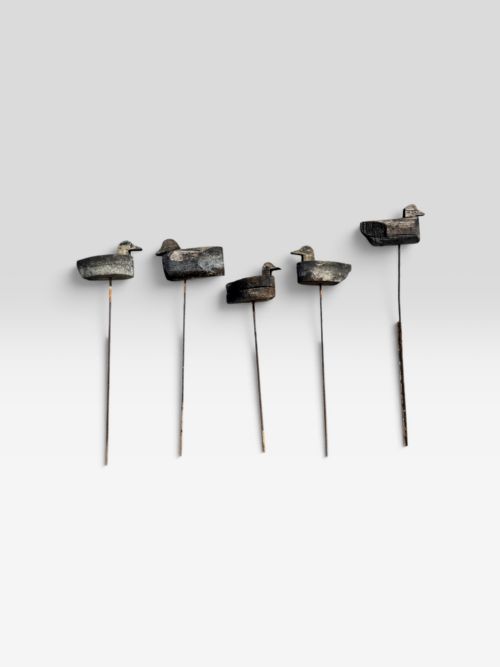
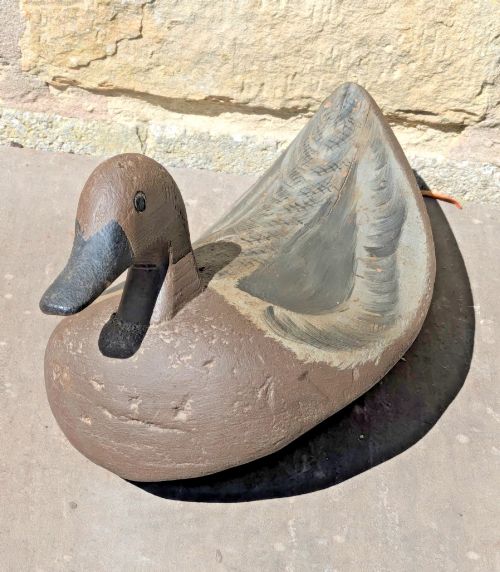
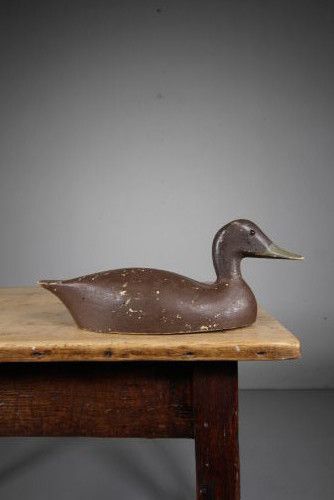
A carved wildfowl decoy represents working water birds sculpted for shooting use and now collected as decorative objects. The selection here ranges across the nineteenth century, the Edwardian era, and the 1920s and 1930s.
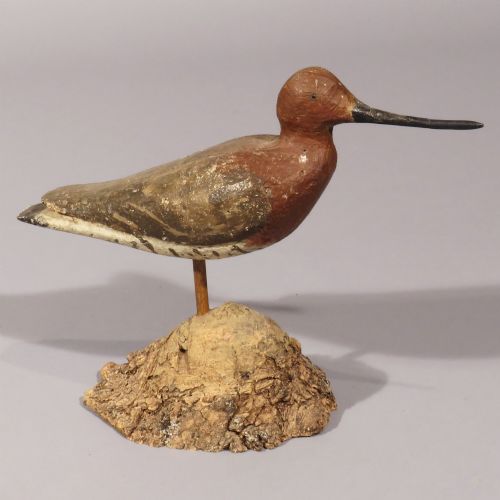
Most examples appear as decoy ducks, alongside specific regional forms such as a Black Tailed Godwit and an American Loon with her chick. English country folk art pieces share space with French rustic water bird sculptures.
Makers shaped these items from timber and pine, often finishing the surfaces with hand paint and adding glass eyes or iron details. Sets of three alongside individual birds form the core of the available decorative sculptures.
How they were made
Artisans carved blocks of wood, timber, and pine into bird forms using hand tools to shape bodies and heads. Some makers incorporated bark elements to enhance the naturalistic texture of the rustic sculptures.
Surfaces received hand painted finishes in muted tones to mimic real plumage for field use. Glass eyes and iron fittings were occasionally integrated to complete the realistic appearance of the water birds.
Listings span the nineteenth century, the Edwardian period, and the 1920s and 1930s, utilising pine, timber, bark, glass, and iron.
What varies in quality
The strength of the carving distinguishes simpler workshop output from more expressive folk art examples. Vigorous handling of the timber produces bolder silhouettes in the better birds.
Surviving paint layers dictate much of the visual character across these pieces. Original surface patination holds greater interest than later overpainting, preserving the authentic working history of the decoy.
The Carved Wildfowl Decoy Glossary
- Folk art
- Objects created by self-taught or traditional artisans outside formal academic traditions. These pieces reflect regional tastes and practical utility.
- Decoy duck
- A carved or moulded floating figure used by hunters to attract wildfowl. They form the primary category within these decorative sculptures.
- Pine
- A softwood commonly utilised for working carvings due to its predictable grain and ease of shaping. It takes paint finishes readily.
- Patina
- The surface sheen and wear accumulated through age and handling. This visual depth indicates genuine historical use.
Carved Wildfowl Decoy: Frequently Asked Questions
What is a carved wildfowl decoy?
A carved wildfowl decoy is a wooden bird sculpture originally created to lure ducks and shorebirds within range of hunters. Over time, these working objects transitioned into decorative folk art displayed within homes.
Today, collectors value them for their sculptural forms and the honest wear of their working lives.
How were decoy ducks used?
Hunters placed wooden decoys upon the water or along marsh edges to encourage wildfowl to land nearby. The painted wooden shapes simulated resting flocks.
Once retrieved, the birds were stored in damp sheds or boats, which contributed to the weathered surfaces seen today.
Where do these decoys originate?
The pieces available here include English country examples alongside French rustic water bird sculptures. Regional carving styles often reveal the specific traditions of the makers.
Makers utilised local timbers and specific painting techniques tied to their geographic origins.
How do I display a decoy?
These decorative objects sit comfortably on bookshelves, sideboards, or mantels where their silhouettes stand out against plain walls. Single ducks or sets of three work well grouped together.
Keep them away from direct heat sources to protect the aged wood and painted surfaces.