
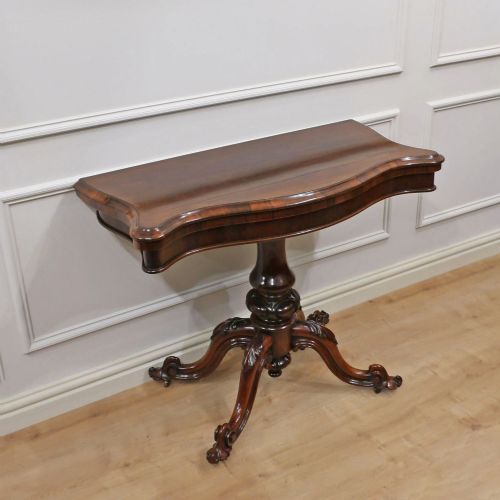
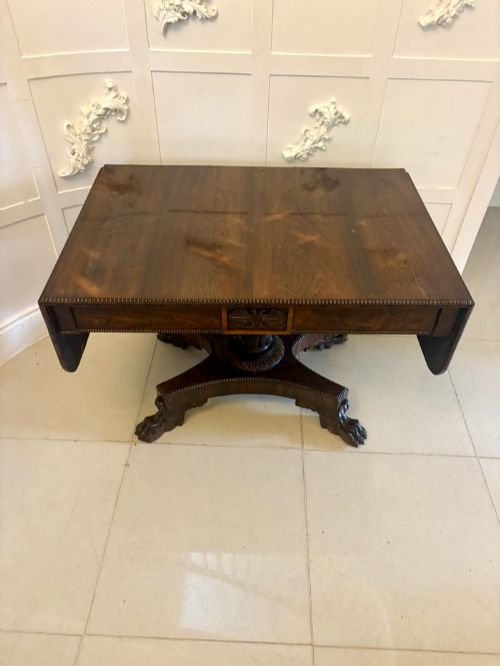
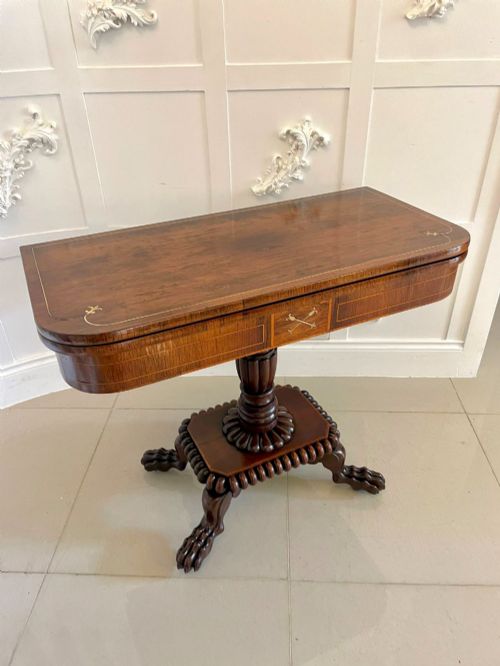
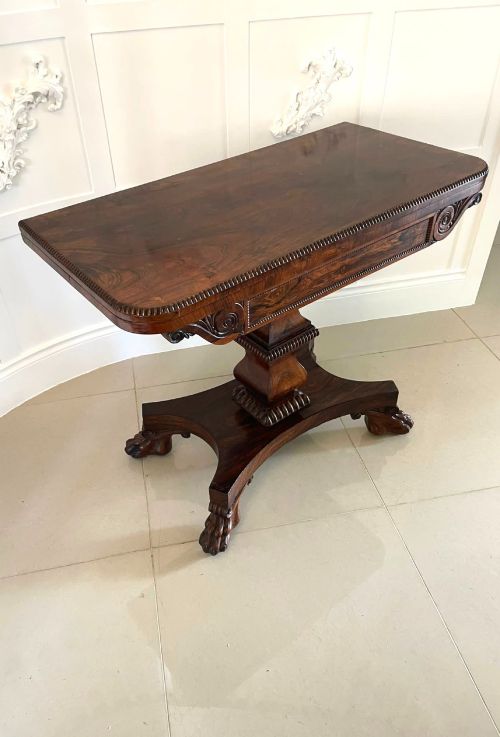
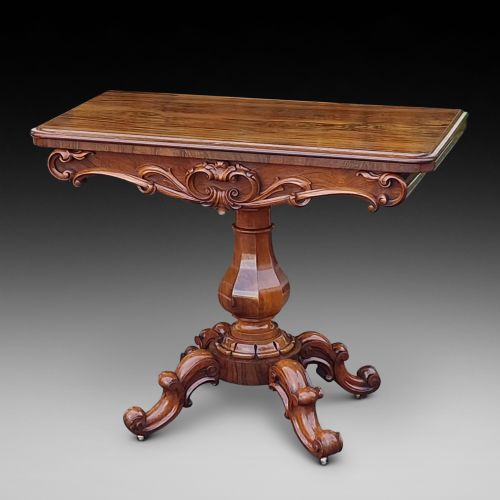
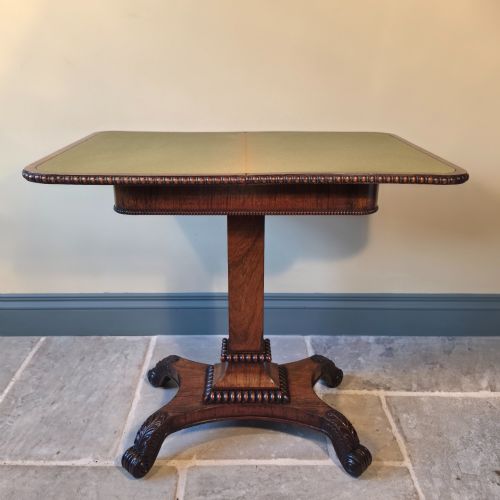
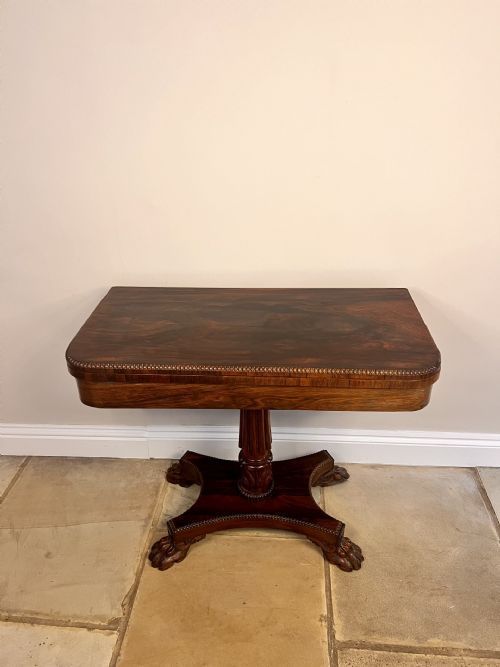
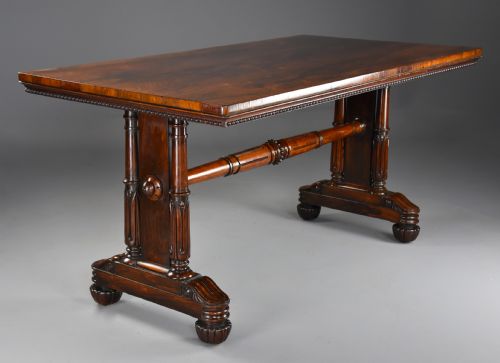
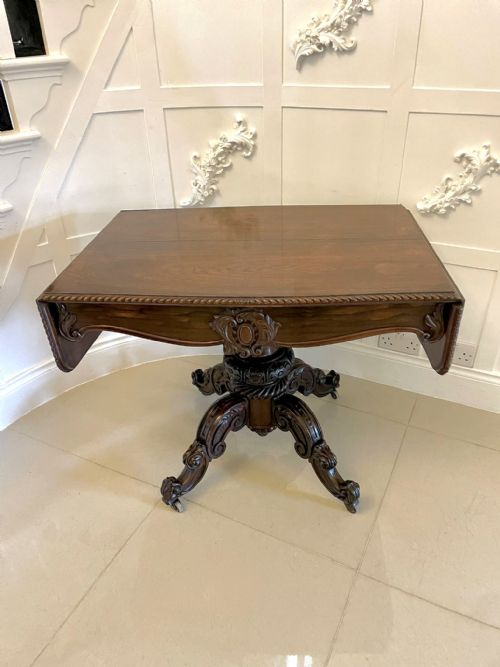
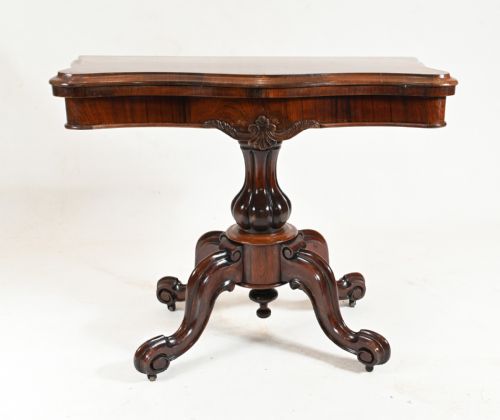
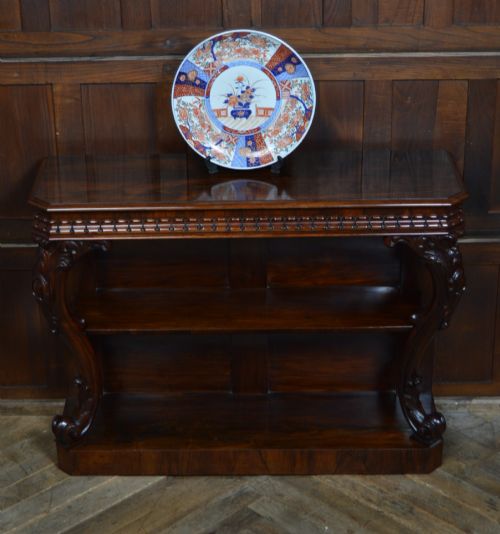
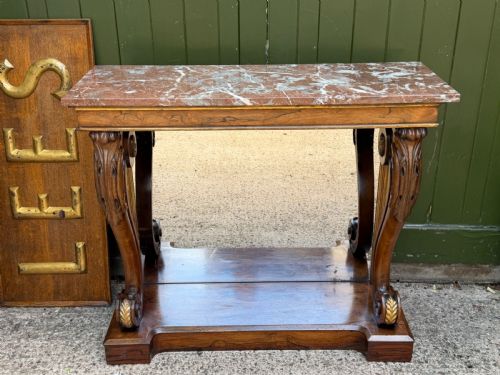
Carved Rosewood Console Table
A carved rosewood console table brings architectural presence and rich grain to a hallway or drawing room.
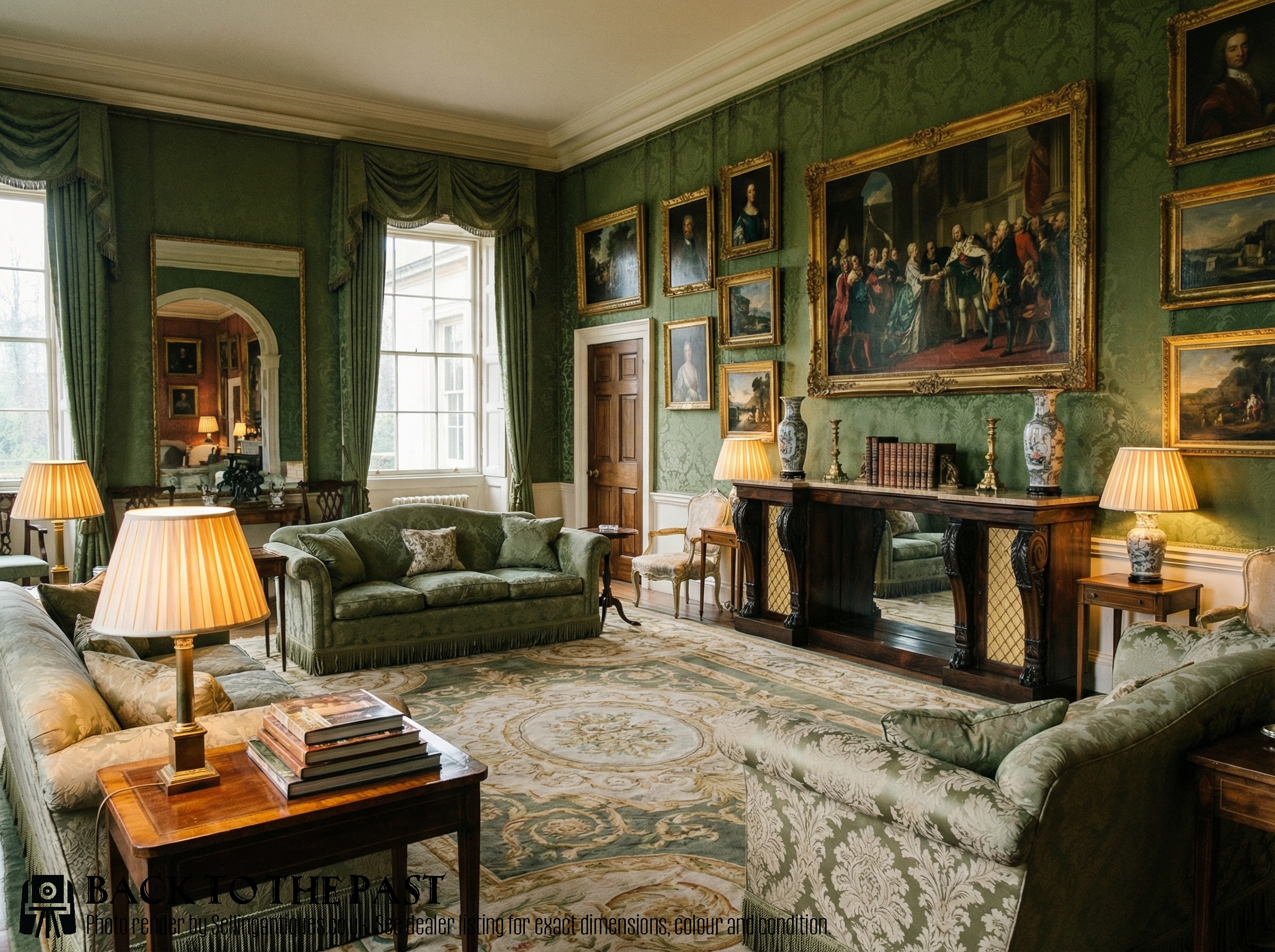
Carved Rosewood Console Table
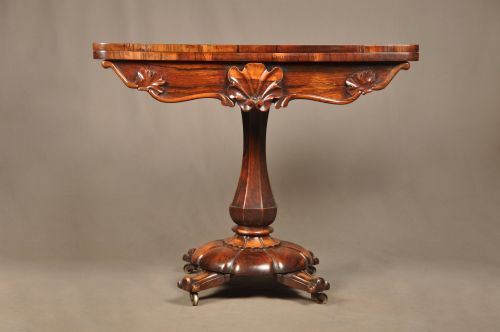
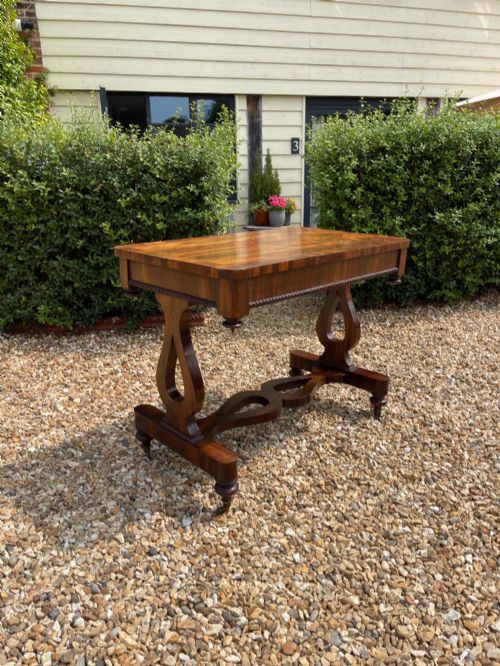
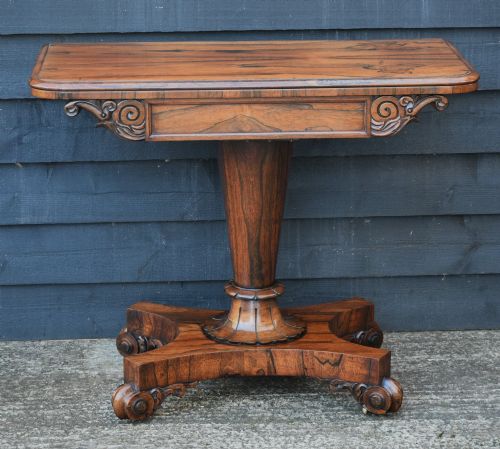
When searching for a carved rosewood console table, buyers encounter a selection spanning the nineteenth century, including Regency, William IV, Victorian, and Anglo-Indian periods. These pieces frequently overlap in form with card tables, side tables, and tea tables that share wall-standing or pedestal formats.
The pieces on this page range from English formal designs with brass inlay and mirror backs to intricate Chinese Qing Dynasty and Anglo-Indian carved hardwood examples. Console formats often feature shaped marble tops or fold-over mechanisms designed for versatile domestic use.
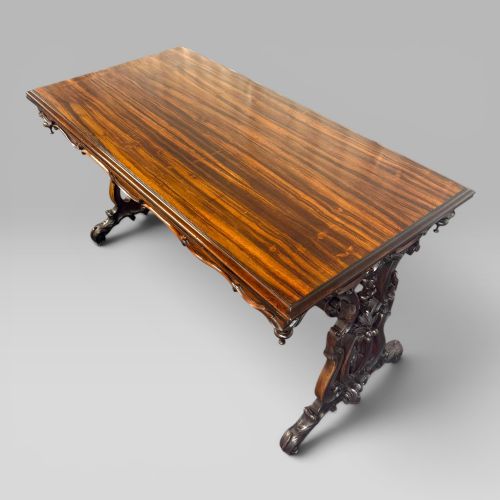
Makers and regional workshops from the 1800s onward utilised dense tropical timbers to create heavy, durable furniture with deep relief carving. Buyers select these items to anchor an interior space with dark wood tones and classical or exotic ornamentation.
Materials and Construction
Cabinet makers constructed these tables primarily using solid rosewood and related hardwoods, often accented with brass inlay, parcel-gilt, and glass mirror panels. Tops frequently incorporate fitted white or rouge marble slabs that provide a cool, heavy contrasting surface.
Carved Rosewood Console Table Retail Price Guide 2026
Typical asking prices for carved rosewood console table among the pieces listed under this phrase on Sellingantiques today, from the lower quarter to the upper quarter. They describe what is for sale here now, not the wider market.
Listings feature items spanning the Regency, William IV, Victorian, and Qing Dynasty periods, utilising rosewood, mahogany, marble, and brass.
Evaluating Execution
The distinction between standard workshop production and superior output lies in the crispness of the hand-carving and the choice of figured timber veneers. Finer examples display symmetrical grain patterns and deeply undercut relief work on bases and friezes.
Structural integrity and original components dictate the standing of a piece, particularly in folding mechanisms, brass work, and the precise fit of inset marble tops.
Robert Strahan·Gillows
The Carved Rosewood Console Table Glossary
- Console table
- A wall-mounted or freestanding table designed to stand against a vertical surface, frequently topped with marble.
- Card table
- A folding table with a hinged top that opens to reveal a baize or leather-lined surface for games.
- Parcel-gilt
- Wood or gesso partially decorated with applied gold leaf to highlight carved details.
- Sofa table
- A rectangular freestanding table traditionally placed in front of or behind a sofa, often fitted with drop leaves.
- Qing Dynasty
- The final imperial dynasty of China, known for producing carved hardwood furniture featuring inset marble panels.
Carved Rosewood Console Table: Frequently Asked Questions
Where should I place a console table?
These tables suit entrance halls, drawing rooms, or narrow passages where floor space is limited. Their shallow depth allows them to sit flush against a wall while displaying decorative objects.
Positioning them beneath a mirror or artwork creates a balanced focal point in an interior scheme.
How do I care for a rosewood surface?
Rosewood requires minimal intervention, benefiting mainly from dusting with a soft, dry cloth. Avoid placing timber tops in direct sunlight or near heat sources to prevent the wood from drying out.
Wax can be applied sparingly to maintain the natural sheen of the polished grain.
What is the difference between a console and a side table?
Console tables are traditionally designed to stand against a wall, sometimes with brackets or rear legs relying on wall stability. Side tables are fully freestanding pieces finished on all sides for placement anywhere in a room.
Historic terminology often blurs these lines, as many console designs incorporate finished backs.
How can I identify the Regency period?
Regency pieces date from the early nineteenth century and typically display classical restraint, architectural symmetry, and influences from ancient Greece and Rome. Details often include brass inlay, scroll supports, and dark tropical veneers.
Later Victorian interpretations tended to introduce heavier proportions and more exuberant relief carving.