
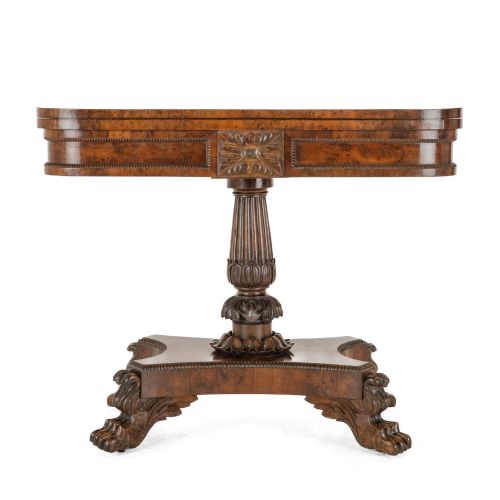


Regency Swivel Top Table
A regency swivel top table brings clever mechanical ingenuity and rich cabinet timbers together for daily entertaining.
What these tables are
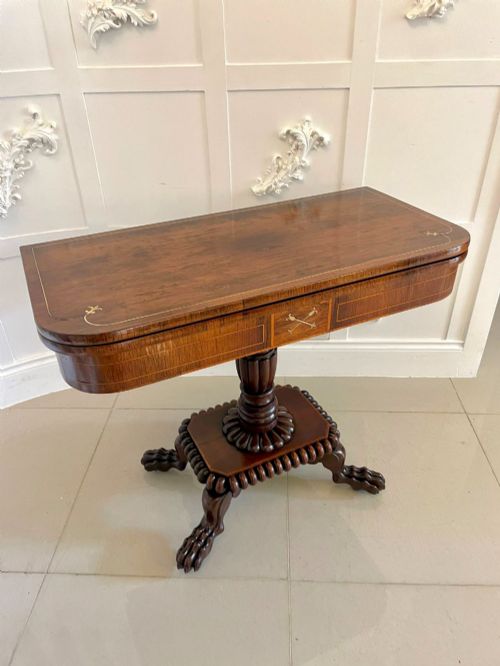
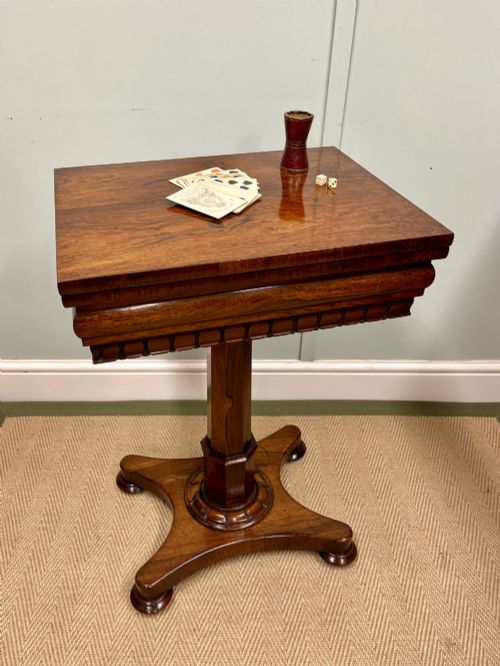
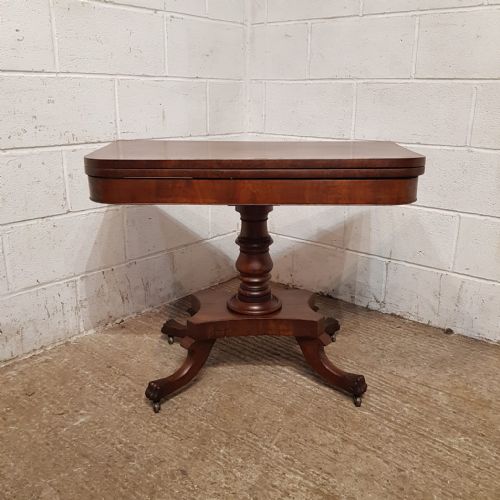
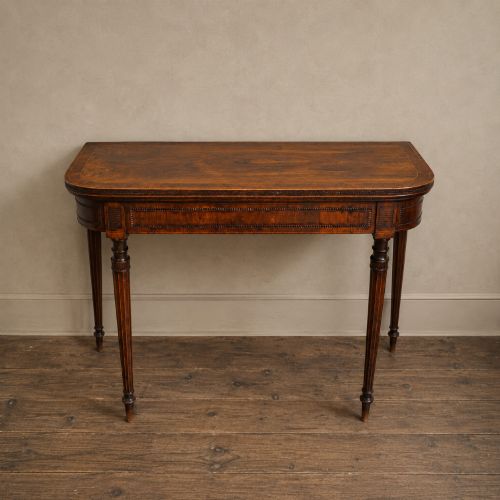
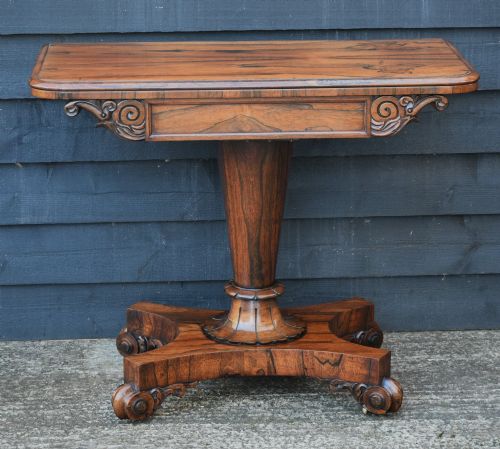
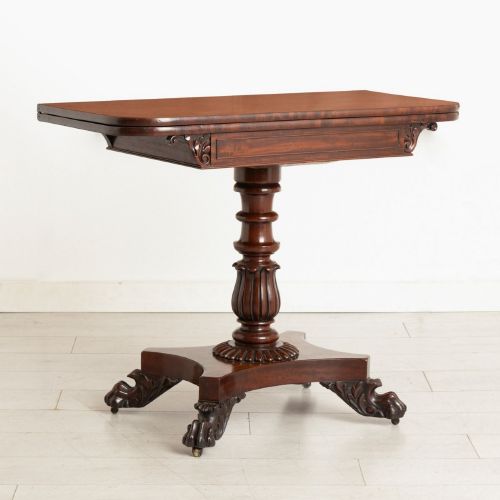
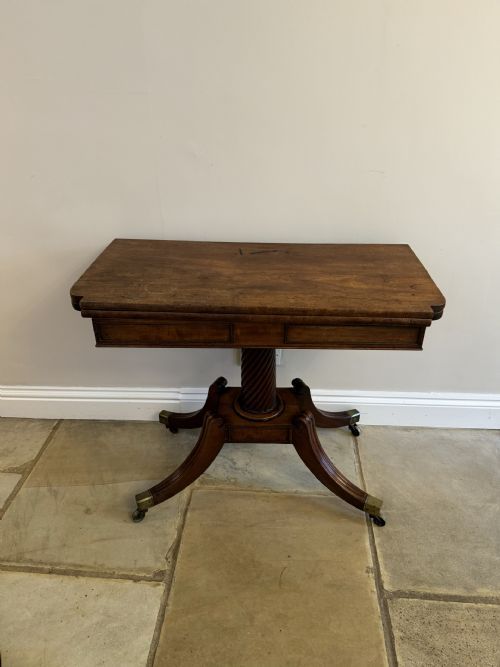
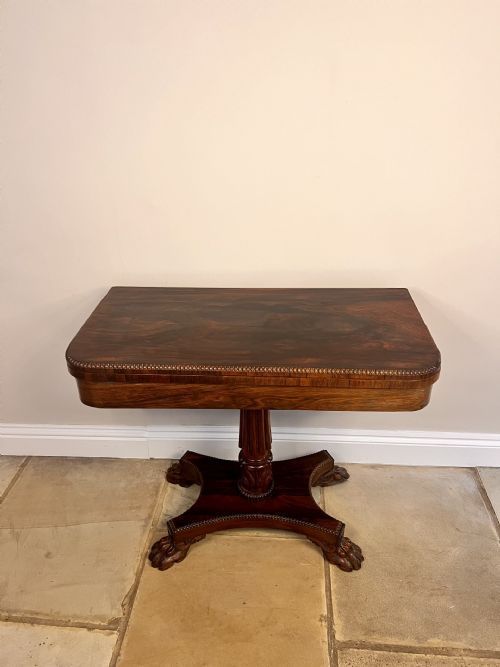
A regency swivel top table combines a pivoting upper surface with a concealed compartment or folded writing space beneath, serving multiple functions in the nineteenth-century interior. These pieces appear most frequently in rich mahogany or figured rosewood, often configured as card tables, games tables, or tea tables.
The construction spans the Regency period into the William IV era, utilising pedestal bases and folding leaves that swing open on pivot mechanisms. Examples range from plain timber surfaces to sophisticated designs crossbanded in burr yew or executed in goncalo alves.
How they were made
Cabinetmakers constructed these tables using solid timber frames faced with carefully selected veneers of rosewood, mahogany, and goncalo alves. Surfaces often feature contrasting crossbanding in materials like burr yew, paired with brass inlay or castors to accent the structural lines.
Internal compartments frequently retain their original baize lining for card play, whilst the pivot mechanism allows the top to rotate ninety degrees and lock securely over the frieze. Joinery relies on traditional cabinet techniques suited to supporting heavy pivoting weights without sagging.
Retail Price Guide 2026
Typical UK retail prices for regency swivel top table, calculated from the Sellingantiques database of over a million retail prices indexed since 2003. This retail price guide relies exclusively on Sellingantiques data; no external sources or auction records are used, so the figures do not describe the wider market.
Patience tables keep solitary card players happily occupied while the rest of the household slumbers.
What varies in quality
Distinctions in quality rest upon the choice of timber figure, the precision of the crossbanding, and the sophistication of the pivot mechanism. Finer examples display highly figured rosewood or goncalo alves alongside crisp brass mounts and substantial pedestals.
The integrity of the rotating mechanism and the alignment of the folding leaves separate standard production from superior cabinet work. Pieces associated stylistically with known makers demonstrate greater refinement in their carving and timber selection.
Gillows·William Trotter
The Regency Swivel Top Table Glossary
- Swivel top
- A tabletop mounted on a central pivot that rotates to reveal a hidden compartment or to support a fold-over leaf. This clever engineering allows a single surface to shift between display, card playing, and storage.
- Crossbanding
- A narrow strip of veneer applied to the border of a tabletop with the grain running perpendicular to the main surface. It creates a neat framing effect that highlights the primary timber.
- Baize
- A coarse woollen felt material traditionally used to line the playing surfaces of card and games tables. It provides a soft texture that protects playing cards and dampens sound.
- Goncalo Alves
- An exotic dense timber with striking contrasting dark brown and light golden-brown markings. Cabinetmakers utilised this highly decorative wood for premium Regency furniture.
- Frieze
- The horizontal band of timber situated directly beneath the tabletop. On these pieces, this section often conceals the well or mechanism accessed by the rotating top.
Frequently Asked Questions
What is a regency swivel top table used for?
These tables served primarily for card games, tea, and general entertaining in Regency drawing rooms. The rotating top opens to reveal a concealed well for storing cards and counters.
When folded closed, the piece functions as a side or console table against the wall. The pivoting action makes shifting between closed display and open use straightforward.
How do you date a swivel top table?
Dating relies on timber choices, leg styles, and construction details characteristic of the Regency and William IV periods. Rosewood, mahogany, and goncalo alves predominate alongside pedestal supports and brass castors.
Earlier examples from around 1800 display restrained classical lines, while later William IV pieces adopt heavier proportions. Crossbanding in burr yew also helps pinpoint the manufacturing era.
Are all these tables lined with baize?
Many card and games tables feature baize interiors designed to provide a soft surface for playing cards. The fabric lines the interior well exposed when the top is swivelled and opened.
Some tables configured specifically as tea or patience tables omit the fabric lining in favour of polished wood surfaces. The presence of baize usually indicates a primary function for gaming.
How do you care for rosewood and mahogany tables?
Protect the polished timber surfaces from direct sunlight and excessive moisture to prevent fading and veneer lifting. Regular dusting with a soft, dry cloth maintains the finish without building up residue.
Avoid placing hot cups directly on the antique polish, particularly on tea table variants. Natural wax feeds the wood and preserves the grain structure over time.