


Inlaid Mahogany Card Table
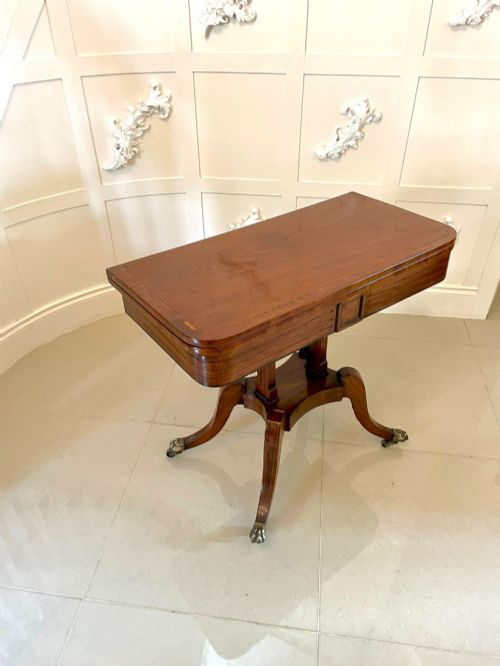
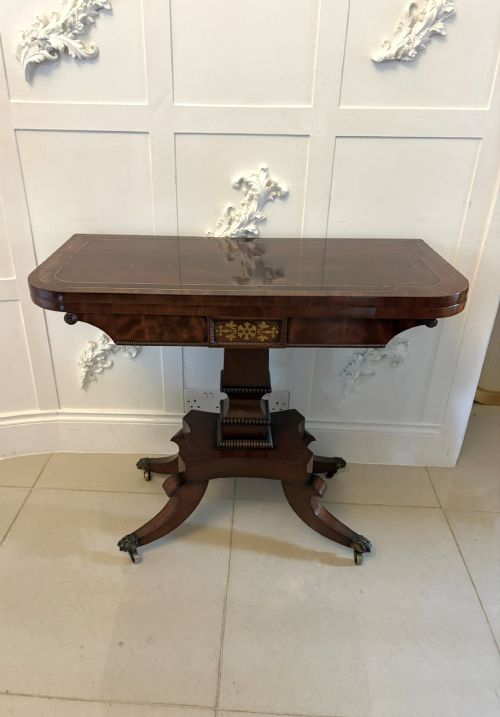
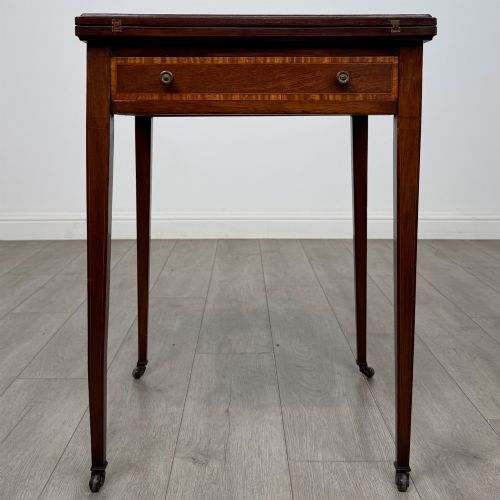
An inlaid mahogany card table brings folding utility and polished grain into the room, spanning Georgian, Regency, and Edwardian periods.
Forms and periods
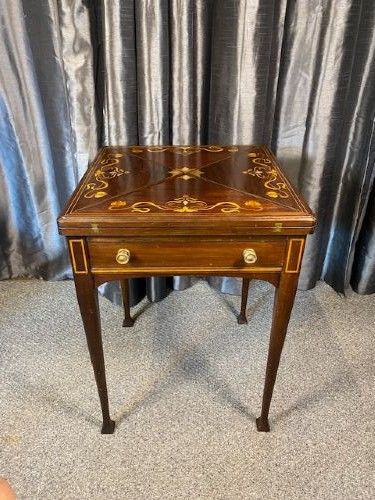
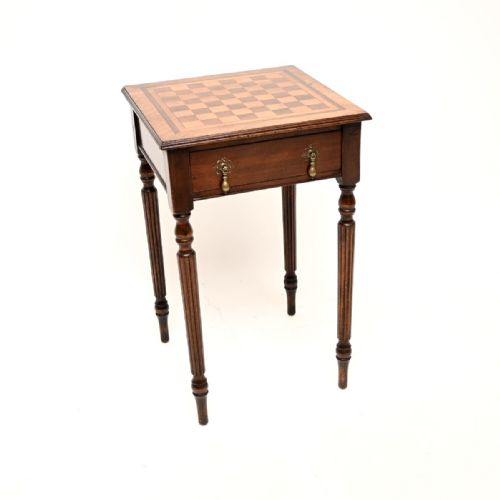
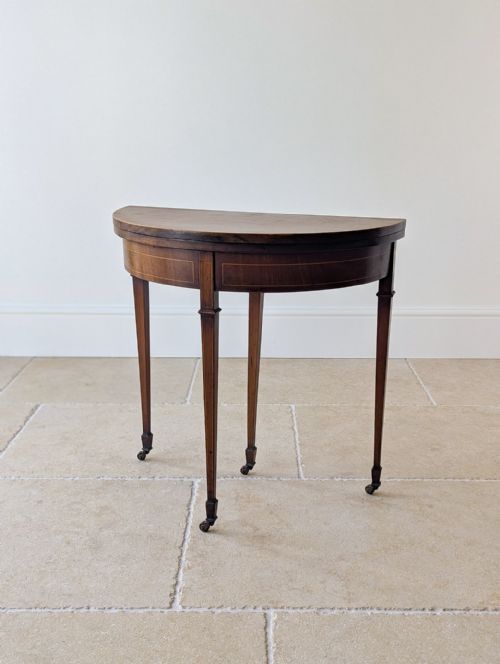
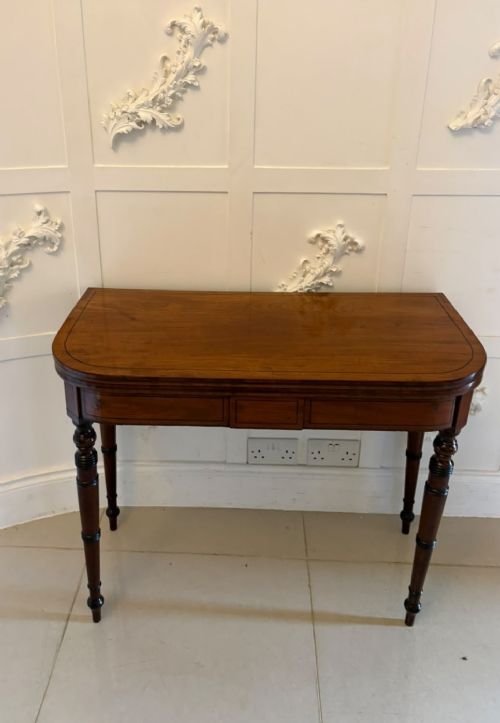
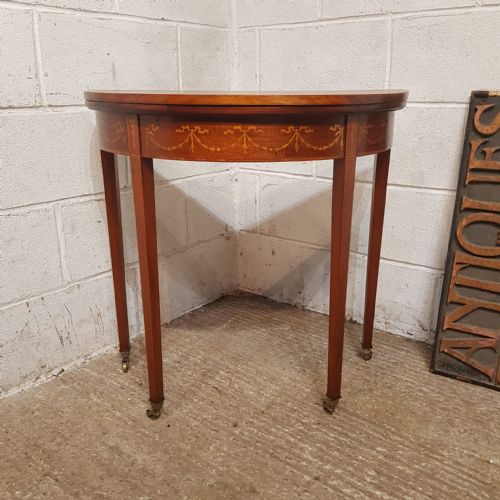
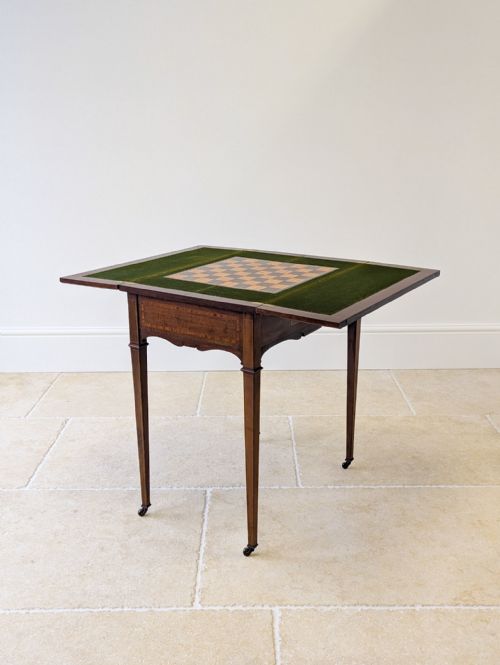
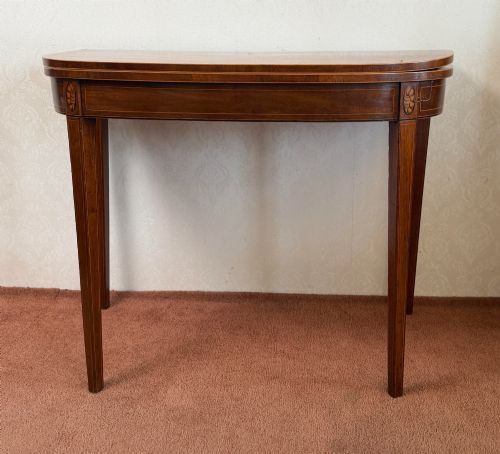
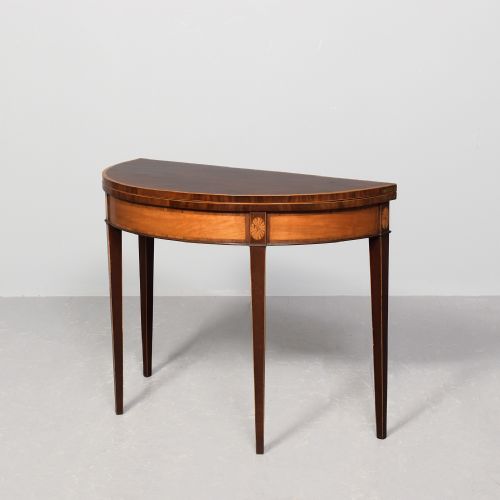
An inlaid mahogany card table is a folding games surface designed for the parlour, most frequently appearing in George III, Georgian, and Edwardian guises. These pieces range from demi-lune console tables to rotating envelope forms.
The evidence shows examples from the eighteenth century, the regency era, and the Victorian period, alongside Edwardian productions. Demi-lune shapes and envelope tops dominate the forms currently listed and sold previously.
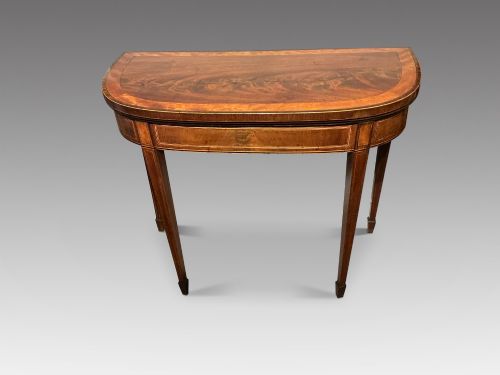
Makers and designers working across these periods utilised specific silhouettes, including serpentine fronts and fold-over consoles. Buyers will encounter both simple crossbanded edges and elaborate marquetry schemes.
Materials and construction
Cabinet makers built these folding surfaces using solid and veneered mahogany, frequently combining satinwood, rosewood, boxwood, and ebony for contrasting stringing and banding. Marquetry inlay appears on later Victorian and Edwardian iterations.
Metal components such as brass mounts, hinges, and occasional ormolu details complete the structural hardware of the folding tops and gateleg supports.
Retail Price Guide 2026
Typical UK retail prices for inlaid mahogany card table, calculated from the Sellingantiques database of over a million retail prices indexed since 2003. This retail price guide relies exclusively on Sellingantiques data; no external sources or auction records are used, so the figures do not describe the wider market.
Listings span the eighteenth century, Georgian, Regency, Victorian, and Edwardian periods, showcasing mahogany, satinwood, rosewood, and brass.
Judging quality
Quality rests in the crispness of the contrasting wood inlays and the precision of the mitres around the fold-over top. Superior examples maintain alignment when closed and balance weight evenly across the pivoting legs.
Finer items demonstrate richer figuring in the primary mahogany timber combined with balanced satinwood or rosewood borders. The depth and warmth of the polished finish separate workshop standards across the periods.
Edwards and Roberts
The Inlaid Mahogany Card Table Glossary
- Demi-lune
- Half-moon shape. This semicircular format allows the furniture to sit flat against a wall when folded.
- Crossbanding
- A strip of veneer run perpendicular to the grain. It frames the primary surface of the top.
- Marquetry
- Inlaid patterns forming pictures or designs. Cabinet makers use various tinted woods for pictorial effect.
- Envelope table
- A square card table with a rotating four-flap top. The flaps unfold to reveal a baize-lined interior.
- Serpentine
- A gently undulating curved front. This shaping requires skilled hand-cutting of the mahogany frame.
Frequently Asked Questions
How do I use an inlaid mahogany card table today?
These pieces function well as console tables against a hallway wall when folded shut. When guests arrive, simply unfold the top to create a surface for games or drinks.
Position the furniture away from direct heat sources to protect the mahogany veneer and delicate inlaid stringing. The hinged leaves require gentle handling when opening.
How can I tell a Georgian card table from an Edwardian one?
Georgian tables rely on restrained satinwood stringing, taper legs, and classical proportions. The timber often shows deeper patination.
Edwardian examples embrace more extensive marquetry inlay and lighter mahogany frames. Their envelope tops represent a distinct departure from earlier folding formats.
What woods are used besides mahogany?
Satinwood provides a bright yellow contrast for banding and shell medallions. Rosewood and ebony supply darker linear accents.
Burr walnut appears on specific Victorian surfaces, introducing complex swirling grain patterns. Boxwood lines the edges of geometric inlay schemes.