


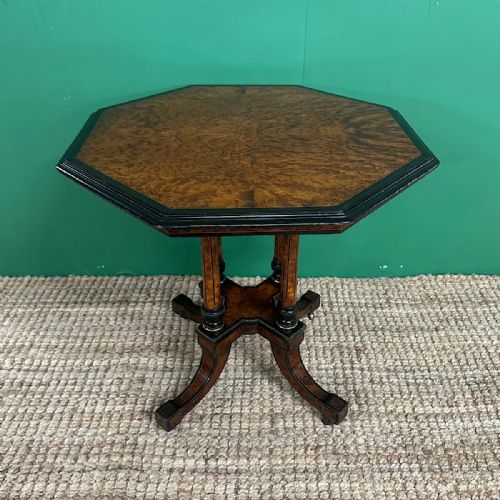

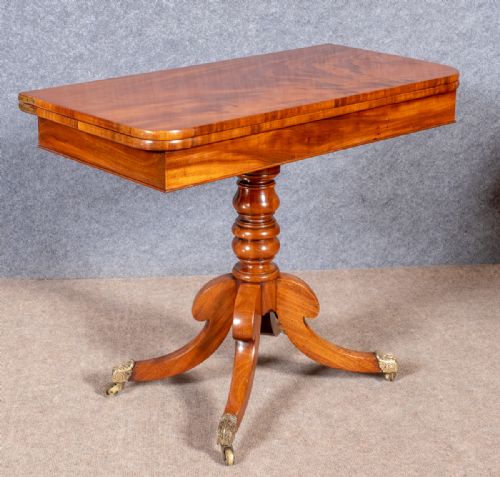

Splayed Leg Card Table
A splayed leg card table brings clever fold-over surfaces and distinctive angled supports into a room, offering both practical utility and period elegance.
Splayed Leg Card Table
A splayed leg card table is a folding furniture form designed for social gaming and tea, appearing across the Regency, Georgian, and Victorian periods.
Most examples found here date from the Regency era, constructed as card tables, games tables, and tea tables in mahogany and rosewood.
These tables combine hinged tops with pedestal bases and splayed legs, moving easily from a compact wall console to a centre-stage playing surface.
How they were made
Cabinetmakers utilised rich timber veneers including mahogany and rosewood, often enhanced with satinwood, ebony, and brass inlay.
Structural stability relied on pedestal supports branching into splayed legs, frequently terminating in brass feet or castors for mobility.
Current listings span the Regency, Georgian, and Victorian periods, utilising materials such as rosewood, mahogany, satinwood, and brass inlay.
What varies in quality
Quality rests in the crispness of the timber inlay and the selection of figured veneers like amboyna and rosewood across the fold-over top.
The sophistication of the pedestal base and the proportional balance of the splayed legs separate standard utility pieces from finer cabinet work.
The Splayed Leg Card Table Glossary
- Card table
- A folding table designed specifically for evening pastimes and card games, usually featuring a lined interior surface. These pieces double as console tables when closed against a wall.
- Splayed leg
- A support that angles outward from the central pedestal or base for stability and visual grace. This configuration is characteristic of Regency and Georgian design.
- Fold-over top
- A hinged surface that opens to double the table area for gaming or dining. The mechanism often conceals a shallow compartment for storing cards and counters.
- Inlay
- A technique where contrasting woods like ebony and satinwood or metals such as brass are inserted into the primary timber surface. This decoration defines the borders and central motifs of finer tables.
Splayed Leg Card Table: Frequently Asked Questions
How were these tables used?
These pieces served multiple functions in the home, acting as decorative console tables against a wall when closed. When opened, the fold-over top provided a stable surface for card playing or supper.
The clever design allowed households to maximise space in entertaining rooms without sacrificing surface area during social gatherings.
How do I identify a Regency period table?
Regency tables often feature dark tropical timbers like rosewood and mahogany, frequently embellished with brass inlay or ebony stringing. The pedestals stand on splayed legs that frequently end in brass castors.
Cabinetmakers of this era favoured clean architectural lines paired with striking veneer selections and contrasting border details.
Where should I place one at home?
Position a card table against a hallway or living room wall in its closed position to display the figured mahogany or rosewood top. Opening the leaf occasionally creates an inviting focal point for guests.
Keep them away from direct heat sources to protect the delicate veneers and brass inlays from movement.