
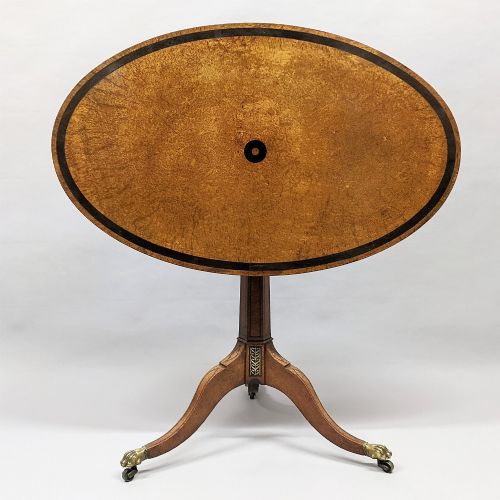


Georgian Ebony Inlaid Table
These georgian ebony inlaid table pieces bring together rich mahogany, satinwood, and striking dark stringing for a refined interior.
Georgian Ebony Inlaid Table
A georgian ebony inlaid table brings together classic timber forms and dark contrasting stringing from the Regency and Georgian eras. You will encounter various practical surface types including games tables, writing desks, tilt-top breakfast tables, and side tables.
The material palette spans foundational mahogany and satinwood highlighted with precise dark ebony lines. Pieces often combine these elements with brass mounts, glass components, or leather inserts depending on the specific form.
Originating across Georgian, Regency, and George IV periods, these items reflect the shifting neoclassical tastes of the late eighteenth and early nineteenth centuries. Certain examples also show Dutch neoclassical influences in their overall proportions and decorative detailing.
Construction and materials
Cabinetmakers utilised solid mahogany and figured satinwood as primary carcases, frequently applying amboyna or burr yew veneers for decorative surface movement. Contrast was achieved through precise ebony stringing and inlay set directly into the primary timber.
Hardware additions included cast brass ring handles and specialised fittings that complemented the dark linear inlay. Surface treatments incorporated fitted leather writing panels and glass elements where the object's function required a specialised top.
Some side tables display an eccentric design showing that even polite Regency cabinetmakers liked to break the rules.
Assessing quality
Quality rests upon the precision of the timber selection and the crispness of the ebony inlay work. Superior examples demonstrate seamless integration of contrasting woods along borders, edges, and curved surfaces without gaps or misalignment.
Proportion and structural integrity distinguish finer specimens from standard utility pieces. Well-executed pieces maintain balanced proportions across complex forms such as games tables, cylinder desks, and tilt-top breakfast tables.
L. Vick of Stroud·George Oakley·Marsh & Tatham
The Georgian Ebony Inlaid Table Glossary
- Ebony
- A dense, dark-coloured heartwood used for fine stringing and contrasting inlay on lighter cabinet timbers.
- Strung
- Decorated with thin inlaid lines of a contrasting wood, such as ebony set into mahogany.
- Tilt-top
- A table mechanism allowing the surface to pivot vertically when not in use to save space.
- Console table
- A wall-mounted or freestanding side table designed to stand against a flat surface.
Georgian Ebony Inlaid Table: Frequently Asked Questions
What is a georgian ebony inlaid table used for?
These tables served various domestic functions ranging from writing and gaming to serving as side or breakfast surfaces in formal rooms. Their varied forms reflect the specific social rituals of the Georgian and Regency periods.
Today, they adapt readily to contemporary interiors as functional desks, console tables, or occasional surfaces that anchor a room with period character.
How do I care for my table surface?
Maintain the polished timber and delicate ebony inlay by keeping the piece away from direct sunlight and sudden temperature fluctuations. Regular dusting with a soft, dry cloth preserves the finish.
Avoid placing moisture directly onto the wood or leather inserts to protect both the primary timber and the fine inlay work over time.
How do I distinguish Regency from Georgian pieces?
Regency pieces often display bolder neoclassical influences, heavier brass mounts, and sharper contrasts between dark ebony and lighter woods like satinwood or mahogany. Georgian items tend to feature more restrained lines and subtle stringing.
Examining the structural joints, handle styles, and secondary timbers helps clarify the specific period of manufacture within the broader era.
Can I use a games table for daily work?
Many games tables feature fold-over tops that open to provide an expanded surface suitable for writing or casual display. Care should be taken with the hinges and folding mechanisms during regular use.
Protecting the interior playing surface with a blotter or pad ensures the timber and inlay remain undamaged during everyday tasks.