
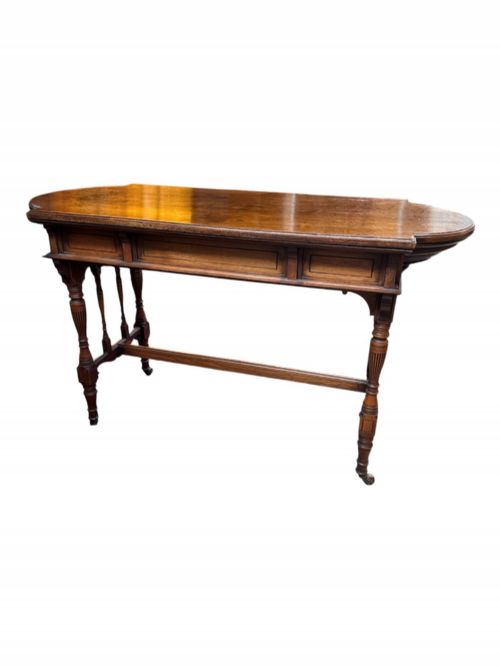
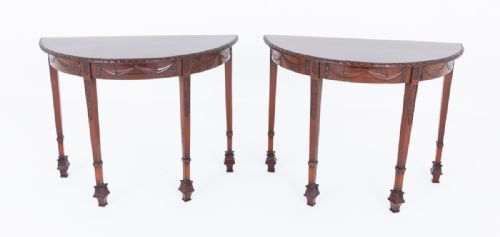
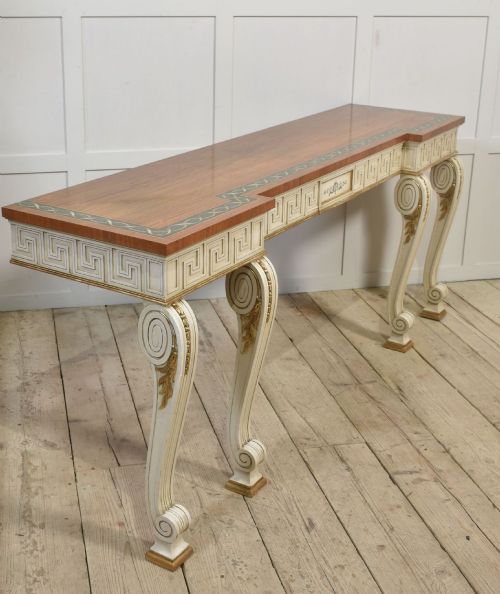
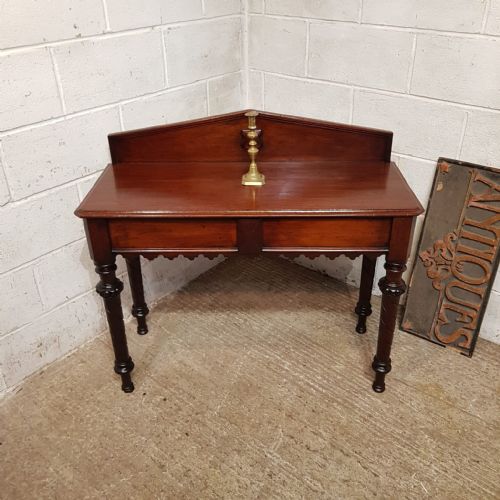
Carved Mahogany Hallway Table
A carved mahogany hallway table brings rich timber grain and classic proportion to an entrance, serving as a striking focal point for the home.
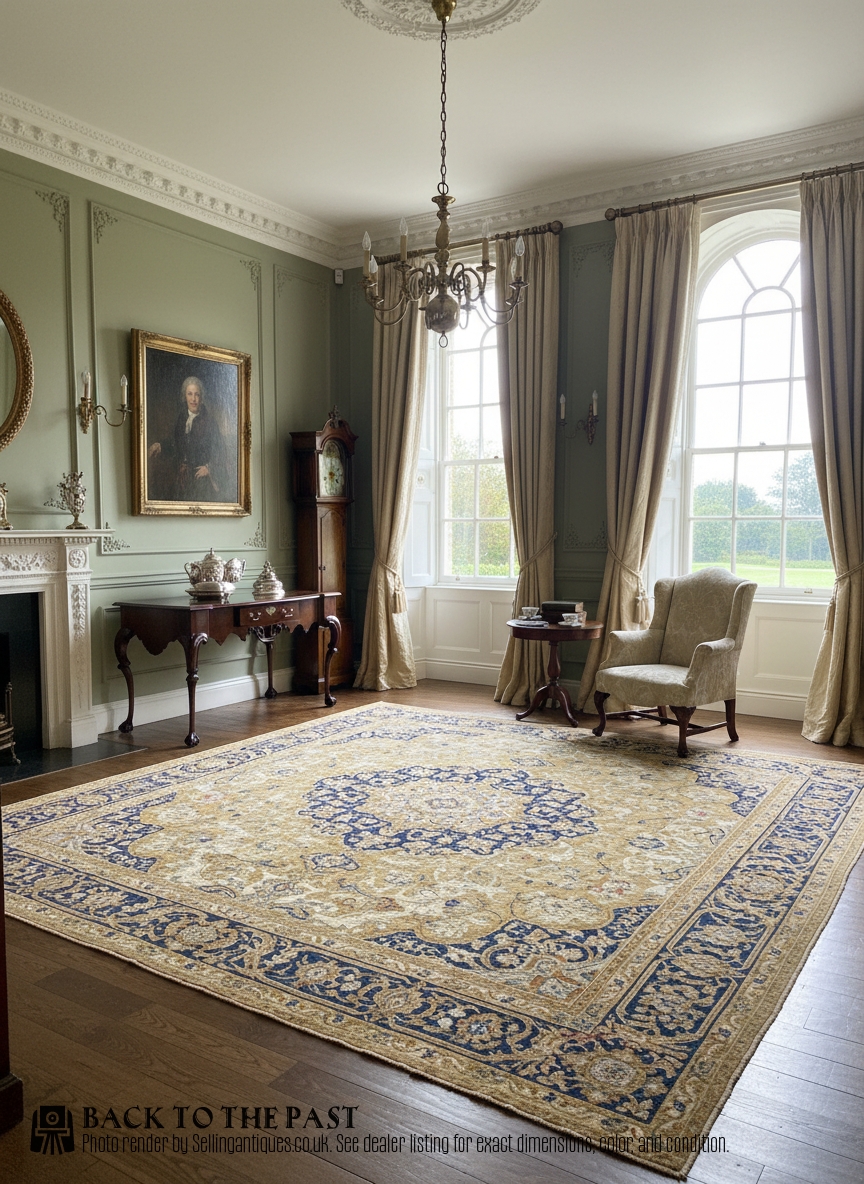
Carved Mahogany Hallway Table
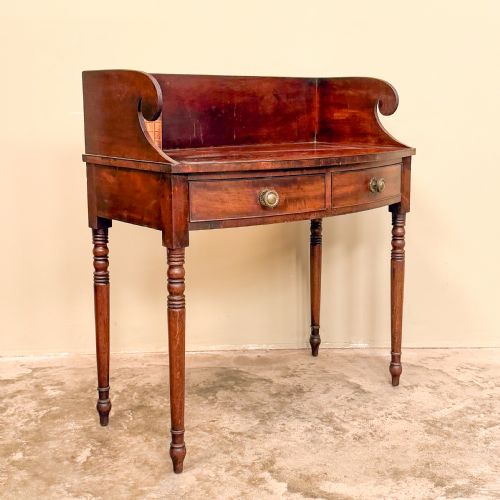
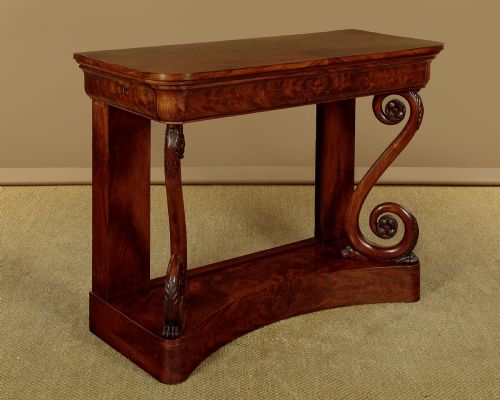
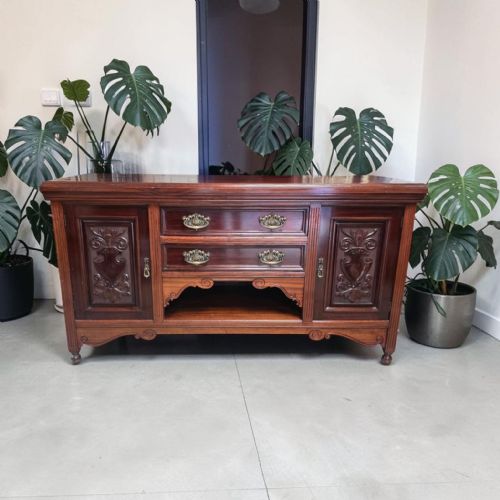
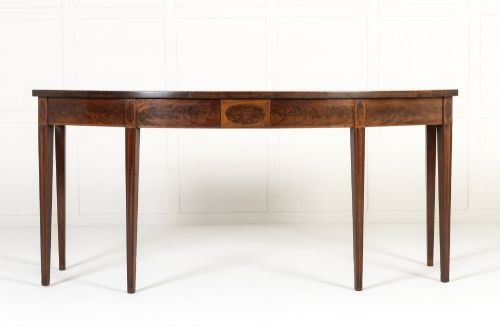
A carved mahogany hallway table primarily manifests as a console table, serving table, or side table designed for narrow spaces. These pieces emerge from the nineteenth century, including Victorian, Regency, and William IV eras, alongside later revival styles.
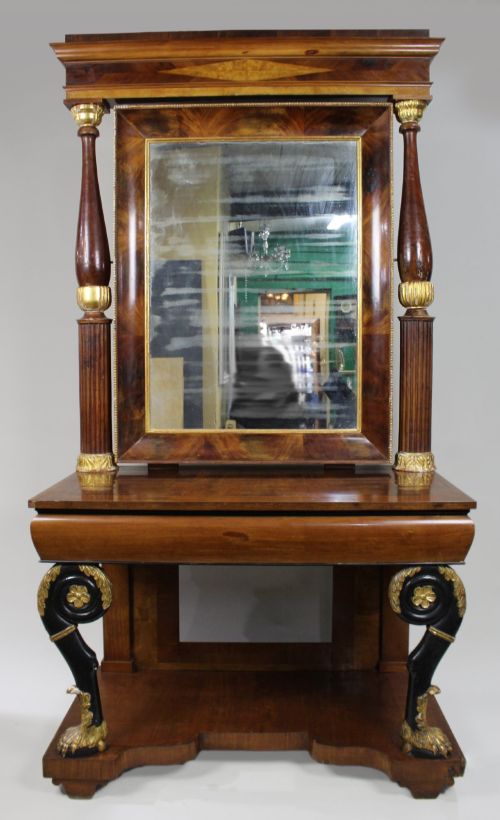
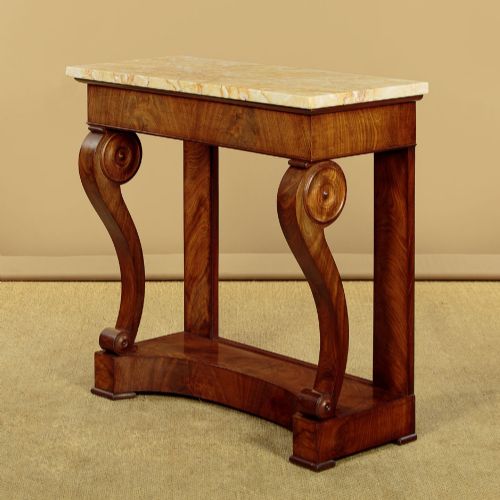
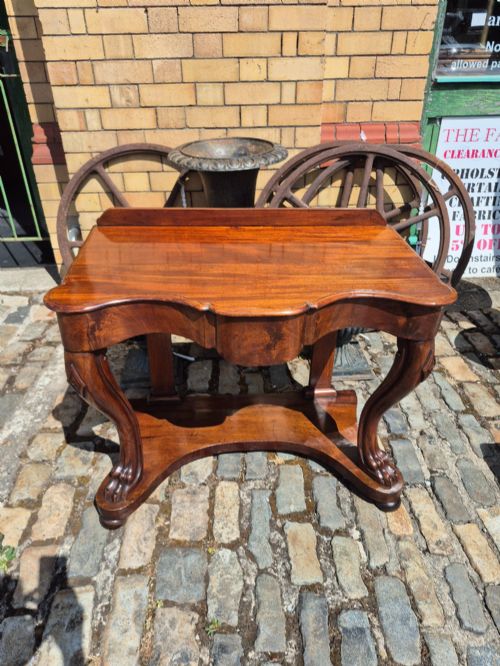
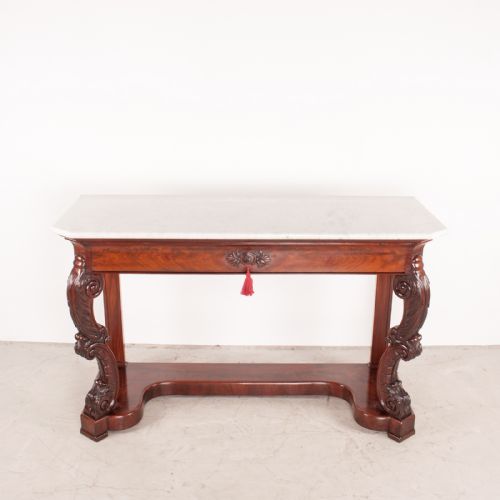
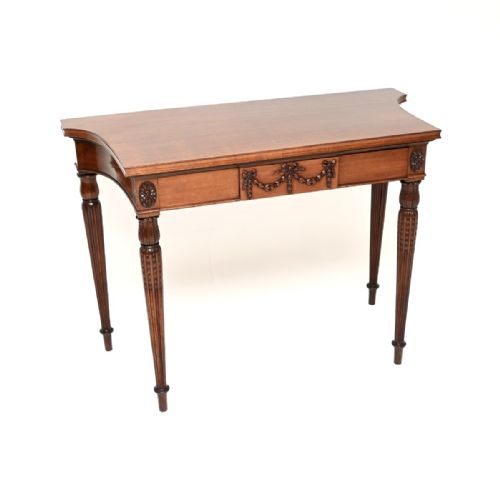
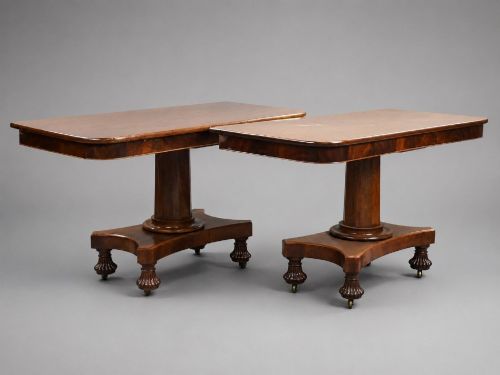
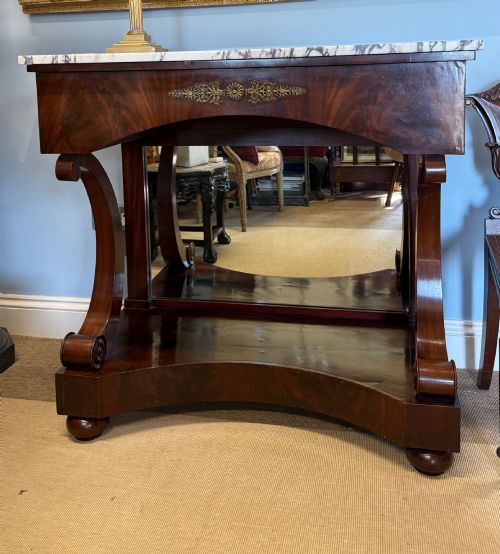
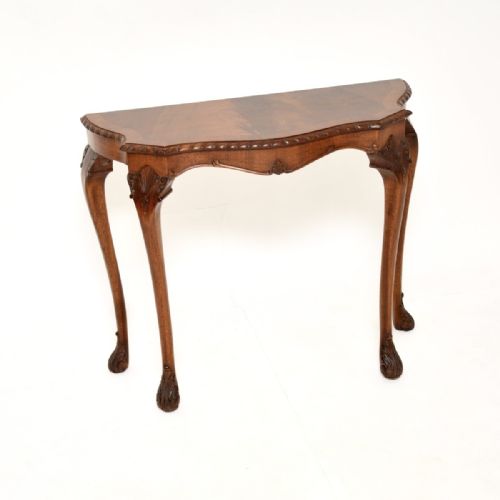
Makers shaped these items with varied tops, incorporating solid timber, flame mahogany veneer, and marble surfaces paired with mirror backs. Forms frequently follow classical lines, ranging from serpentine fronts to straight pedestal designs suited to narrow passage placements.
Origin points span English, Irish, and French workshops, utilising architectural influences from Neoclassical to Chippendale Revival motifs. Such tables fulfill functional entrance requirements while displaying traditional cabinetmaking skills.
Materials and Construction
Cabinetmakers constructed these tables using solid mahogany and flame mahogany veneers applied over secondary woods to create deep figure and tone. Workshops incorporated parcel gilt highlights, brass mounts, and ormolu details to accentuate carved architectural elements.
Heavy marble slabs frequently top console tables from the mid-nineteenth century onward, demanding sturdy substructures to support the stone weight. Carving is executed directly into the timber frame, displaying acanthus leaves, reeded legs, and scrolled supports.
Marble-topped hallway tables doubled as impromptu resting places for calling cards left by Victorian guests before entering the parlour.
Execution and Detail
The refinement of the hand carving separates standard production items from superior examples, visible in the depth and crispness of foliage or scrollwork. Timber selection dictates overall visual impact, with choice flame veneer or dense solid mahogany yielding richer surfaces.
Structural integrity depends on the precision of joinery and the quality of secondary timbers used within the frame and drawer linings. Integrated elements such as original marble tops, mirror backs, and parcel gilding enhance the completeness of the piece.
M. D. Miller and Sons·Hicks of Dublin
The Carved Mahogany Hallway Table Glossary
- Console table
- A wall-mounted or freestanding table supported by front legs and secured to a wall, designed specifically for narrow rooms like hallways.
- Flame mahogany veneer
- A thin slice of timber cut from the fork of the mahogany tree, prized for its swirling, flame-like grain pattern.
- Parcel gilt
- A decorative technique where specific carved details or mouldings are partially covered in gold leaf while the surrounding wood remains visible.
- Serpentine
- A furniture front or top shaped with a convex centre flanked by concave curves, creating a gentle undulating line.
Carved Mahogany Hallway Table: Frequently Asked Questions
Where should I place a hallway table?
These tables fit naturally against entrance walls where floor space is limited, providing a practical surface for post, keys, and decorative lamps.
Their narrow profile ensures they do not obstruct movement while establishing a formal character immediately upon entering a home.
How do I care for a mahogany surface?
Regular dusting with a soft, dry cloth preserves the polished finish without building up residues that dull the timber grain.
Avoid placing untreated wooden items or damp objects directly on the surface to protect both solid mahogany and veneer from moisture marks.
What is the difference between a console and a side table?
A console table traditionally stands against a wall and sometimes relies on wall brackets for additional stability, whereas a freestanding side table is finished on all sides.
Console tables in hallways often feature decorative fronts and mirrors designed to project outward from a single wall plane.
How do I identify a Victorian hallway table?
Victorian examples frequently display heavier proportions, rich dark mahogany tones, and robust carved details such as cabriole legs or scrolling brackets.
Many pieces from this period incorporate marble tops or mirror backs that reflect light within smaller entrance spaces.