

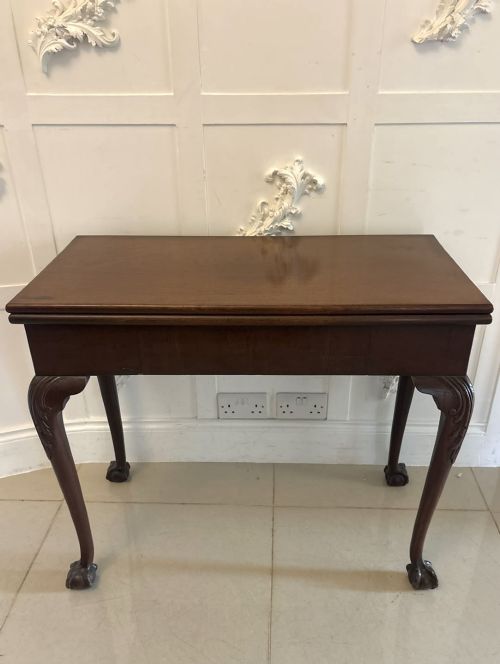
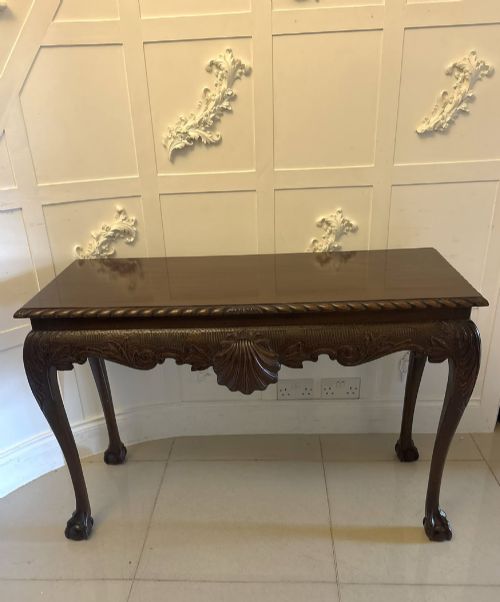
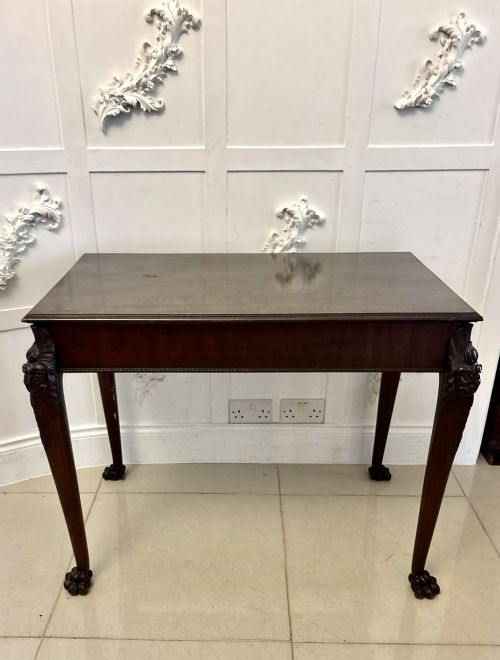
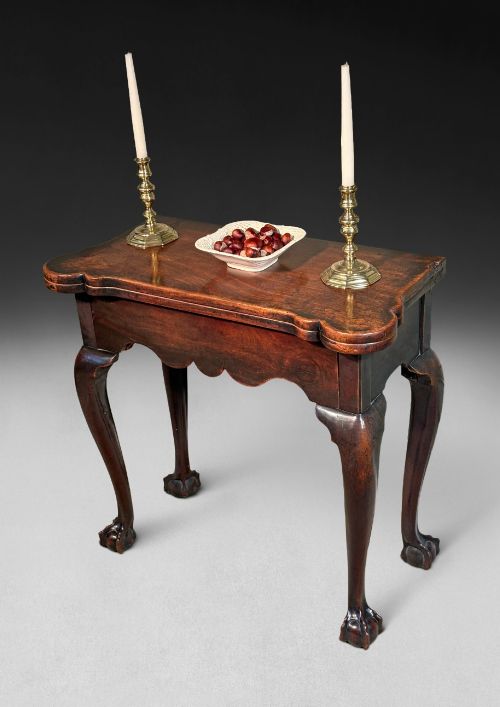
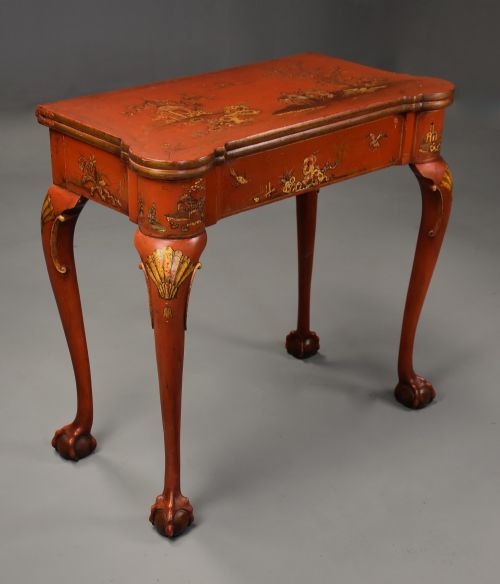
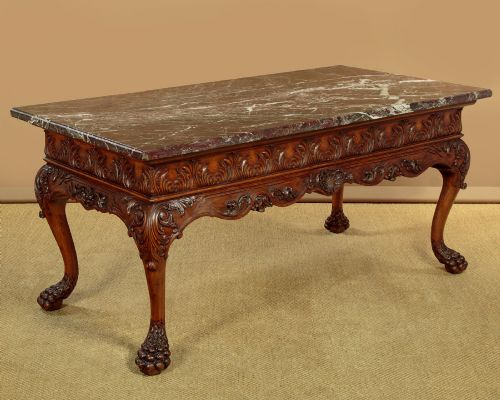
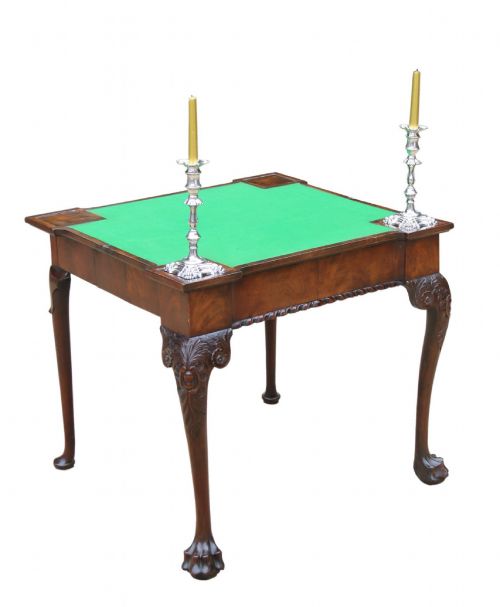

Claw and Ball Console
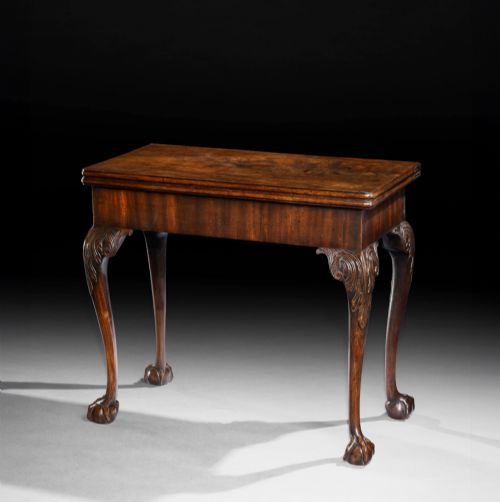
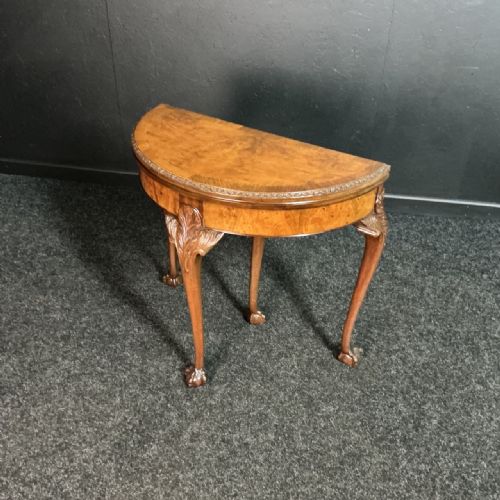
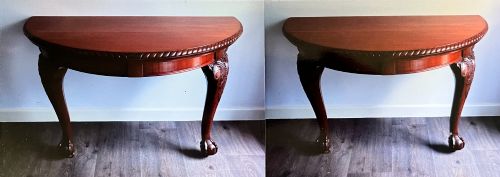
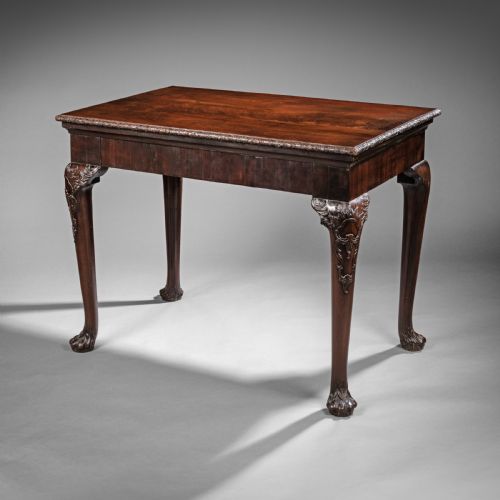
Claw and ball console tables are substantial statement furniture featuring iconic carved feet, combining practical surface space with dramatic eighteenth-century revival presence.
Claw and Ball Console
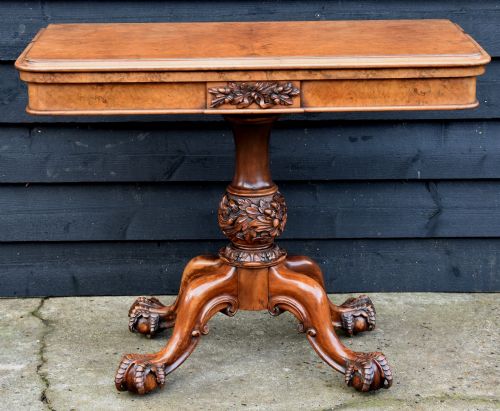
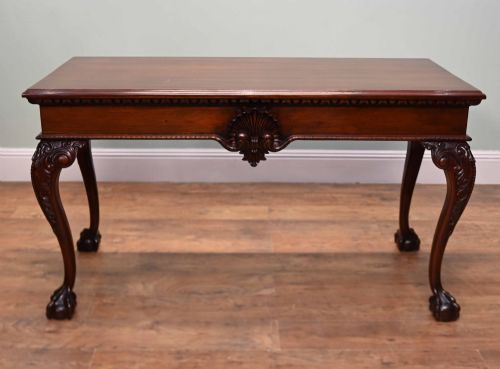
A claw and ball console is fundamentally a surface designed to sit against a wall or function centrally, encompassing various forms like side tables, serving tables, and lowboys. When exploring claw and ball console options, a buyer encounters pieces stretching from genuine eighteenth-century origins through nineteenth-century revivals into early twentieth-century interpretations.
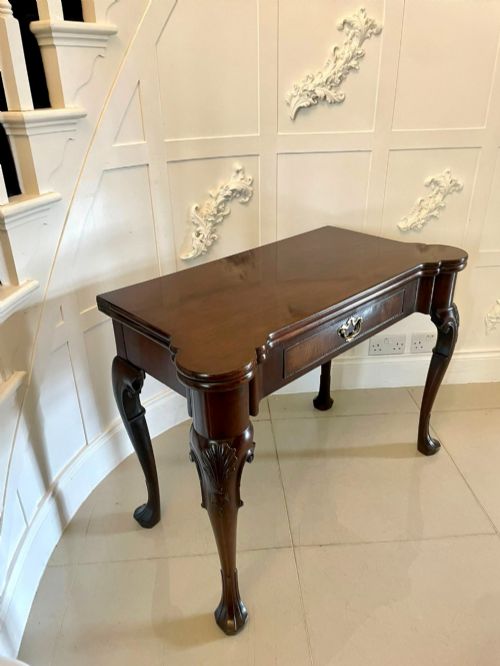
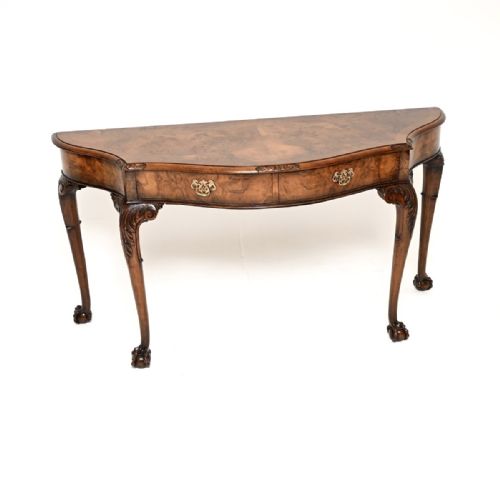
The selections span distinct functional formats, notably card tables, games tables, and tea tables alongside traditional console and hall tables. Mahogany and walnut dominate the offerings, occasionally enhanced by burr walnut figures or marble tops.
Revival pieces from the Edwardian era and the 1920s appear frequently alongside genuine Georgian examples, demonstrating the enduring popularity of George II and Chippendale styles. These tables often incorporate fold-over tops or concertina actions suited for dining and card playing.
Materials and construction methods
Cabinet makers relied heavily upon dense timbers, primarily utilising solid mahogany and figured walnut, sometimes enriched with burr walnut veneers. Structural elements occasionally incorporate oak, while specialised surfaces feature marble insertions or baize linings for gaming.
Carving represents the defining technique, executed directly into the solid wood of the legs to form the characteristic claw and ball feet. Joinery techniques such as concertina actions and fold-over mechanisms allowed tables to expand securely for dual-purpose entertaining.
Claw and Ball Console Retail Price Guide 2026
Typical asking prices for claw and ball console among the pieces listed under this phrase on Sellingantiques today, from the lower quarter to the upper quarter. They describe what is for sale here now, not the wider market.
Some tables hide their card-playing secrets behind clever concertina frames that stretch out like accordions.
Distinctions in quality and execution
The crispness of the hand-carving on the feet and knees separates standard production from exceptional examples, as skilled artisans achieved anatomical depth and proportion in the talons and sphere. Timber selection similarly dictates worth, with highly figured burr walnut veneers or dense, rich mahogany displaying superior visual depth.
Structural integrity during mechanical operations, such as the smooth deployment of a concertina action or fold-over leaf, marks the distinction between competent cabinet work and master craftsmanship.
Giles Grendey·Gillows Buffet·Maple and Co·Elkington and Co
The Claw and Ball Console Glossary
- Console table
- A table designed to be fixed against a wall, often supported by front legs with the rear secured to the architecture.
- Concertina action
- An expanding frame mechanism used on card tables that pulls outward like an accordion to support a fold-over top.
- Lowboy
- A small oak or walnut table with drawers, functioning historically as a dressing table or side table.
- Chippendale revival
- A stylistic movement occurring mainly in the late nineteenth and early twentieth centuries that reinterpreted mid-eighteenth-century designs.
- Baize
- A coarse woolen material used historically to line the playing surfaces of card and games tables.
Claw and Ball Console: Frequently Asked Questions
What is a claw and ball console table?
A claw and ball console table is a decorative surface featuring distinct carved feet depicting a bird's talon or animal paw grasping a sphere. These tables serve as functional furniture and decorative statements in hallways and principal rooms.
They appear across multiple historical periods, including original eighteenth-century creations and later revival pieces from the Victorian and Edwardian eras. The category encompasses standard console formats alongside versatile card and tea tables.
How were antique games tables used?
Antique games tables functioned primarily as social hubs for evening entertainment, accommodating pastimes such as cards and board games. The hinged top folded open to reveal a baize-lined playing surface.
When not in use for gaming, the tables stood closed against a wall as conventional console or side furniture. Many incorporated concealed wells beneath the folding top to store playing pieces and decks.
How do I identify a Georgian revival piece?
Georgian revival pieces are typically manufactured during the late nineteenth or early twentieth centuries, mimicking the proportions and decorative motifs of the eighteenth century. Makers utilised period timbers like mahogany and walnut to recreate classic George II and Chippendale styles.
Clues to their later date include secondary woods used in internal framing, machine-sawn components, and specific hardware styles associated with Edwardian workshop practices. The overall finish and patination often feel more uniform than genuine eighteenth-century examples.
Where should I place a console table?
Console tables suit entrance hallways, living rooms, and dining areas where surface space is required without occupying excessive floor depth. Their traditional placement is flat against a wall, frequently positioned beneath a mirror or painting.
Dual-action or fold-over versions offer flexibility, allowing the table to expand outward into the room when hosting guests or serving food. Care should be taken to keep wooden surfaces away from direct heat sources and strong sunlight.