



Brown Wood Demi Lune
Brown wood demi lune tables offer elegant half-circle profiles that fit tight spaces while providing generous surface area.
Brown Wood Demi Lune
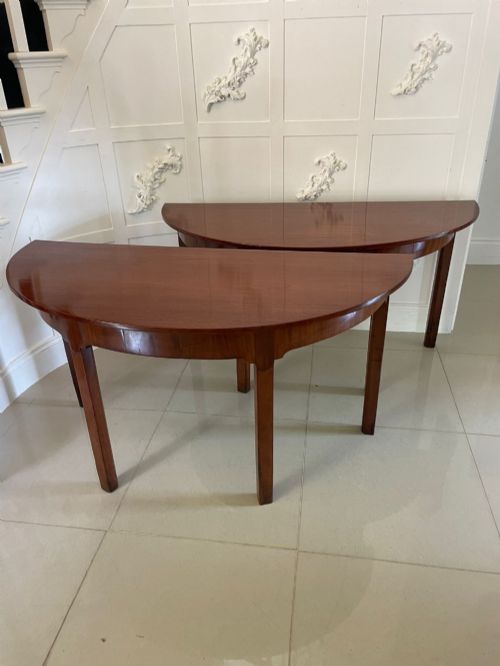
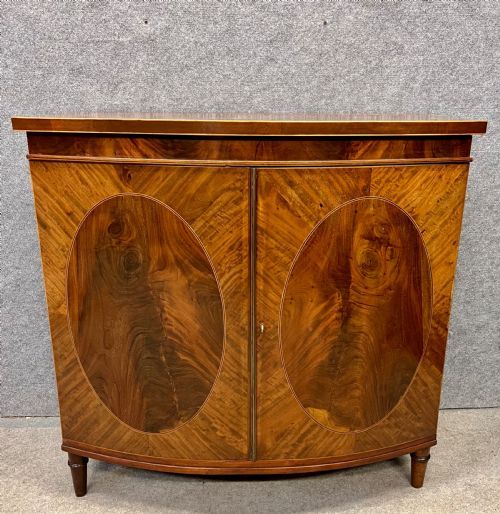
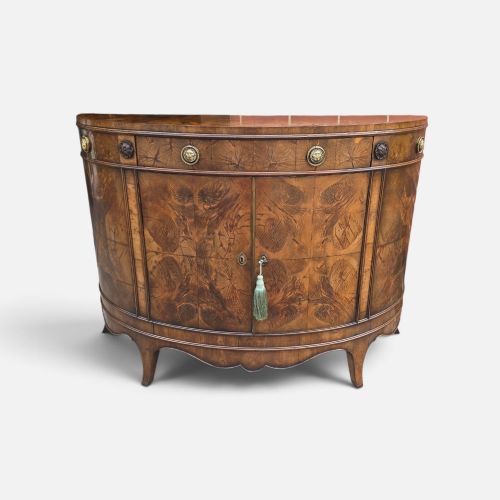
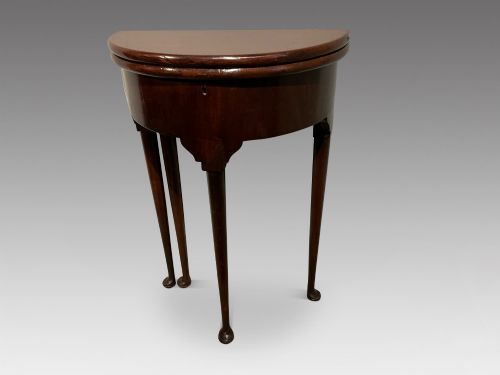
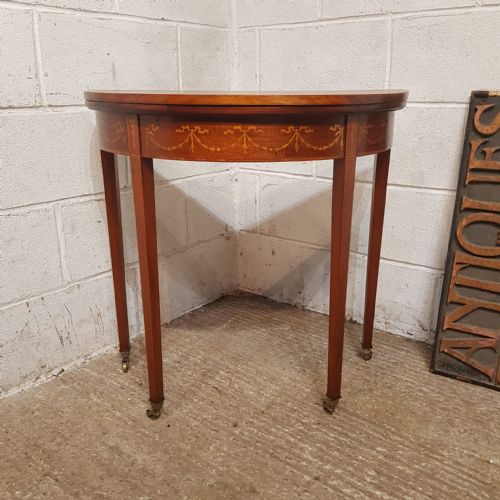
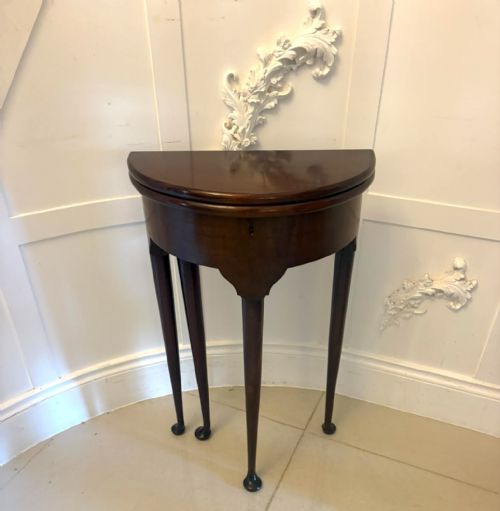
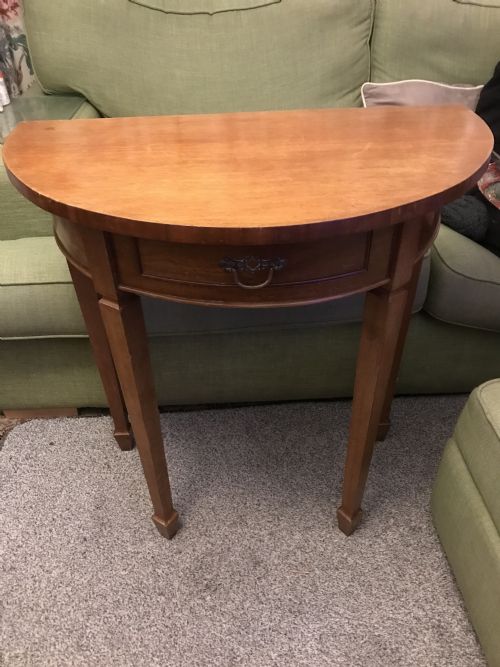
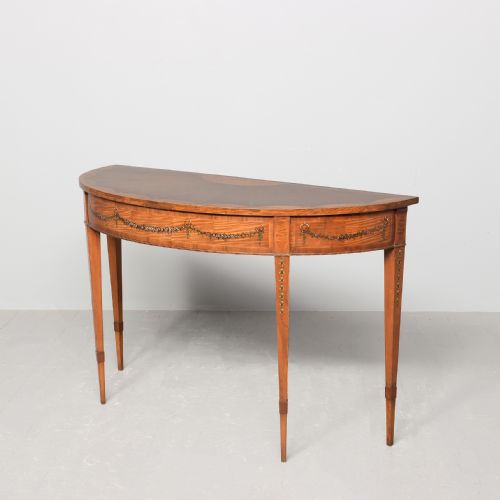
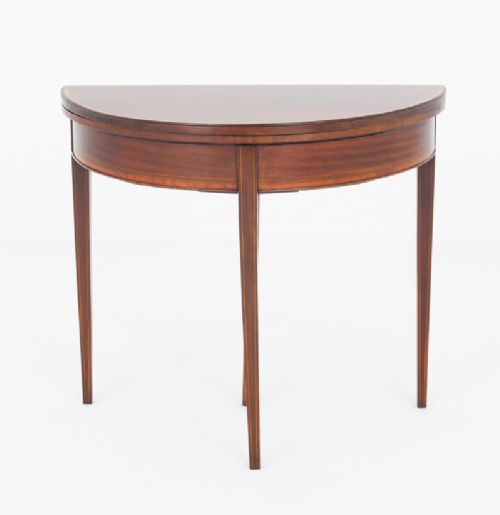
A brown wood demi lune takes the shape of a half-circle, designed to stand flush against a wall in halls, drawing rooms and dining parlours. The listings show these pieces appearing predominantly in console tables, card tables, side cabinets, commodes and tea tables.
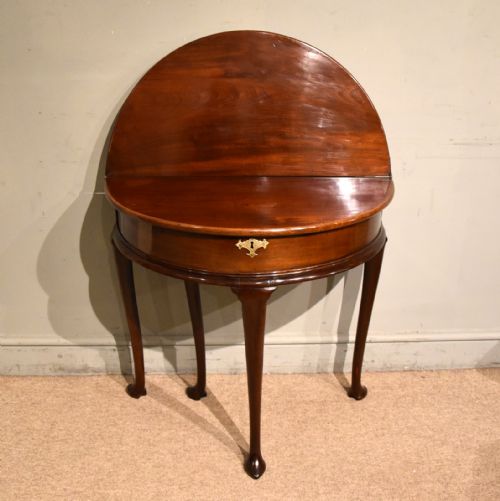
The selection spans from the eighteenth century through the Georgian, Victorian and Edwardian eras up to the nineteen-thirties, with George III examples forming a significant part of the material. Buyers will encounter both fixed console tops and hinged fold-over tops intended for games or tea.
Origins stretch across English workshops as well as continental makers, incorporating revival styles such as Sheraton, Louis XV and Georgian Revival alongside bentwood variations.
Materials and construction
Makers built these pieces primarily using solid timbers and veneers of mahogany, walnut, satinwood, kingwood, burr elm and burr yew wood. Secondary timbers and structural elements often relied on sturdy native woods.
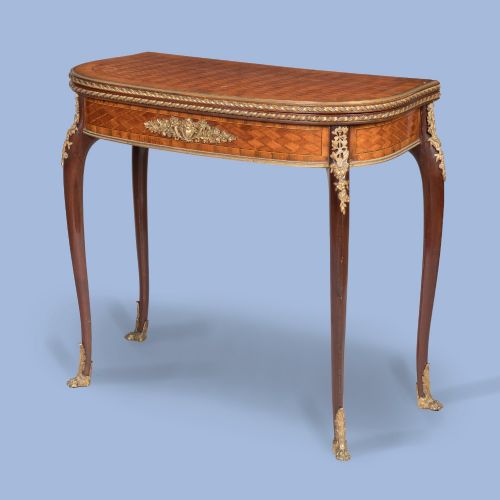
Surface decoration frequently involved intricate inlay and parquetry work utilising contrasting elements like boxwood, alongside ormolu mounts, brass feet and painted neo-classical motifs.
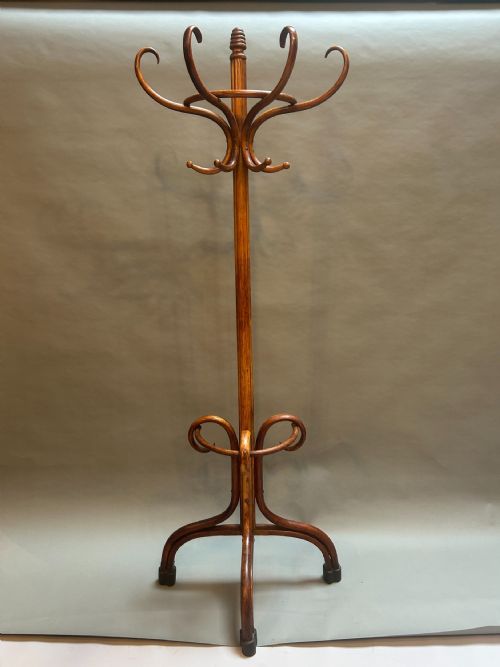
A bentwood hatstand joins the line-up, proving that the half-moon shape escapes the table category entirely.
Craftsmanship and distinction
Quality rests heavily on the selection of timber figures, such as highly figured mahogany or burr grains, matched symmetrically across the curved top. Finer examples display meticulous attention to detail in the precision of inlaid woodwork and parquetry patterns.
Structural integrity of the pivoting mechanisms on fold-over tables and the crispness of carved or applied ornamentation distinguish higher-tier pieces from simpler utilitarian items.
François Linke
The Brown Wood Demi Lune Glossary
- Demi-lune
- French for half-moon, describing any furniture piece with a semicircular top and a flat back designed to stand against a wall.
- Console table
- A table supported by wall brackets or console legs, traditionally intended for display rather than heavy use.
- Parquetry
- Geometric wood mosaic work used for decorative flooring or furniture surfaces, creating patterns through contrasting timber tiles.
- Commode
- A decorative low cabinet or chest of drawers, often standing on slender legs, developed in France during the seventeenth century.
- Satinwood
- A durable, lustrous yellowish timber native to India and Sri Lanka, frequently utilised for contrasting veneers and stringing.
Brown Wood Demi Lune: Frequently Asked Questions
Where should I place a demi lune table?
These pieces suit narrow entrance halls, tight landings or flat against a living room wall where a full round table blocks foot traffic. Their straight edge meets the wall cleanly while the curved front softens room angles.
Because many versions feature fold-over tops, they also function well as occasional serving surfaces that expand when guests arrive.
How do I use a fold over card table?
The hinged top swings open on pivot hinges to reveal a baize-lined or polished wood surface previously hidden against the wall. This design allowed eighteenth and nineteenth-century households to convert a console into a gaming area swiftly.
Ensure the folding leaf rests securely upon its swing leg or supporting gate-leg frame before placing heavy objects on the expanded surface.
How do I tell a Georgian piece from a Victorian one?
Georgian examples often exhibit restrained classical proportions, delicate string inlay and fine mahogany grain without heavy ornamentation. Victorian iterations tend to be heavier in build, sometimes incorporating richer walnut veneers, bolder turned legs or more elaborate carved mouldings.
Examining the underside, drawer construction and secondary woods helps confirm the manufacturing era beyond surface style alone.
What is the difference between a console and a commode?
A console table is primarily an open frame with legs supporting a flat top, designed purely for display or serving. A commode functions as an enclosed cabinet featuring cupboards or stacked drawers behind the curved facade.
Both share the signature half-moon footprint, but commodes offer concealed storage space while consoles remain entirely open beneath.
How do I care for antique wood finishes?
Maintain polished surfaces by dusting regularly with a dry, soft cloth and applying quality beeswax sparingly to nourish the timber. Avoid placing these tables near direct heat sources or strong sunlight to prevent veneer cracking and fading.
Protect the wood from moisture by using coasters under drinks and placing protective pads beneath decorative objects.