
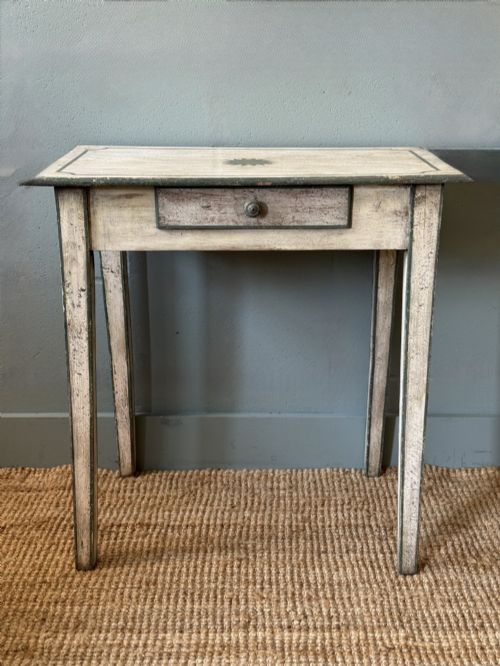
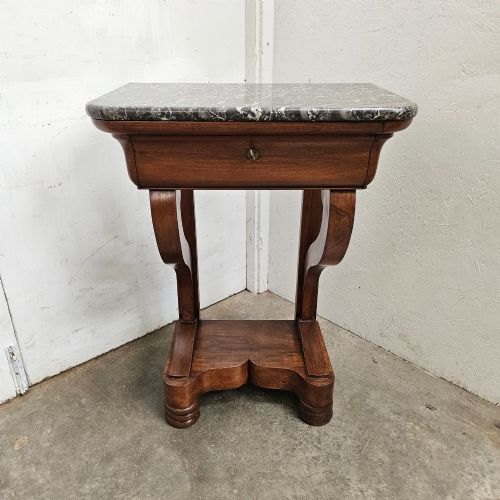
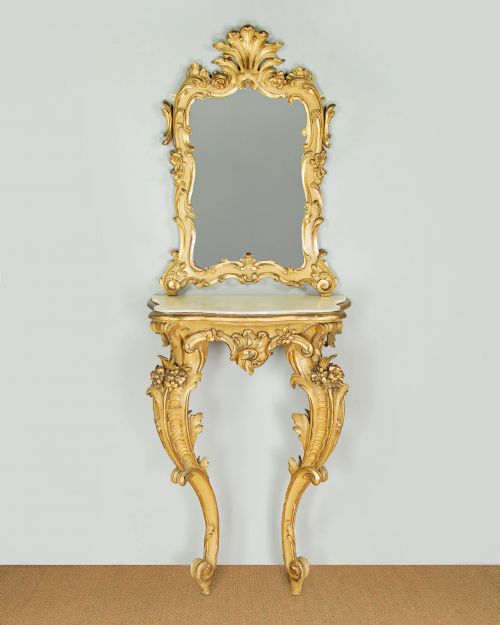


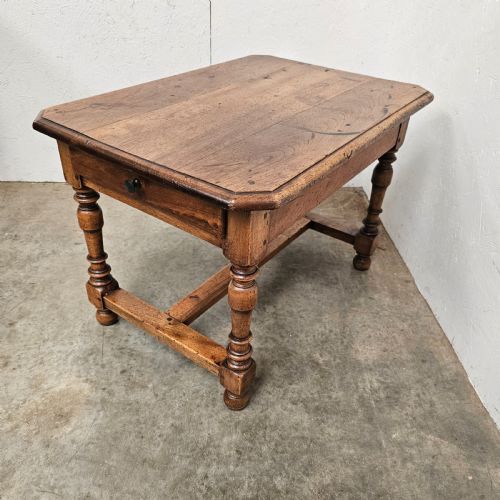


Small French Hall Table
A small French hall table brings immediate architectural presence and useful surface space to a narrow passage or landing.
Small French Hall Table
A small French hall table typically takes the form of a console table, side table, or occasional table designed to fit against a wall in an entrance or corridor.
The selections available here span periods from the eighteenth century through to 1920, incorporating styles such as Louis Philippe, Rococo Revival, Neoclassical, and French Provincial.
Makers and craftsmen constructed these pieces in forms ranging from demi-lune shapes to rectangular consoles, frequently paired with matching pier mirrors.
How they were made
Cabinetmakers utilised a variety of timbers including fruitwood, walnut, mahogany, cherry, alder, and kingwood, often enhanced with intricate marquetry and parquetry.
Many examples incorporate inset marble tops and bronze or brass mounts, while others feature painted finishes, giltwood, or turned legs.
Construction techniques balanced structural stability with decorative grace, supporting heavy stone tops upon slender frames.
The listings here feature pieces spanning the eighteenth century, nineteenth century, and 1920, built from marble, fruitwood, walnut, and mahogany.
What varies in quality
Quality rests upon the crispness of the timber carving, the choice of veneer figures such as burr walnut, and the integrity of the structural joints.
The refinement of cast bronze mounts and the purity of inset marble slabs distinguish finer pieces from simpler provincial works.
The Small French Hall Table Glossary
- Demi-lune
- Half-moon shape. These tables sit flush against a wall, making them ideal for narrow hallways.
- Console table
- A table supported by wall brackets or console legs. They are designed to stand against a wall rather than free in a room.
- Parquetry
- Geometric wood inlay work. Craftsmen arranged contrasting timber veneers in repeating patterns.
- Giltwood
- Wood carved and covered with a thin layer of gold leaf. This finish adds brilliant light reflection to formal reception rooms.
- Pier mirror
- A tall mirror designed to hang between windows, often paired directly above a matching console table.
Small French Hall Table: Frequently Asked Questions
Where should I place a small French hall table?
These tables find their natural home in entrance halls, corridors, and narrow landings where floor space is at a premium. Their shallow profiles allow them to stand against a wall without blocking movement.
They also serve effectively in living rooms or bedrooms as lamp tables or bedside surfaces, adding character to empty corners.
How do I care for a marble top?
Marble requires gentle cleaning with a soft cloth and warm water, avoiding acidic household cleaners that can etch the polished surface. Using coasters and placemats protects the stone from staining.
Applying a specialist stone wax periodically helps maintain the natural lustre of the marble.
What is the difference between a console and a side table?
A console table is traditionally designed to be fixed to a wall or supported by ornamental brackets beneath, often featuring a decorative front facade. They are made strictly for placement against a wall.
A side table is freestanding with four independent legs and can be moved around a room or pulled away from the wall as needed.
How can I identify a provincial piece from a formal one?
Provincial pieces utilise simpler regional timbers like fruitwood, cherry, and alder with restrained turning or carving. They reflect local rural craftsmanship rather than courtly Parisian designs.
Formal pieces often display sophisticated veneers like kingwood, intricate giltwood, or elaborate Rococo and Neoclassical revival motifs.