




Carved Shell Hall Table
A carved shell hall table is a statement piece of antique furniture built to anchor an entranceway, combining sculptural woodwork with practical surface space.
Carved Shell Hall Table
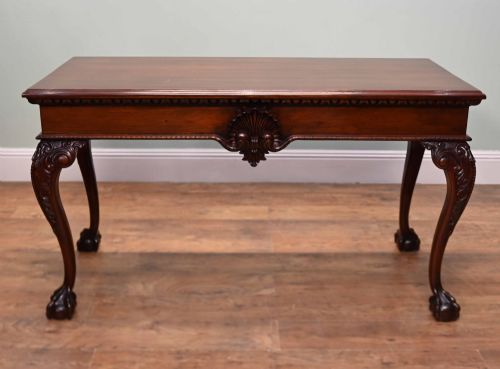
When you search for a carved shell hall table, you encounter a variety of forms including console tables, side tables, lowboys, and centre tables designed for narrow spaces. These pieces emerge predominantly in mahogany, walnut, burr walnut, and rosewood, spanning periods from the eighteenth century through the nineteenth century and into the early twentieth century.
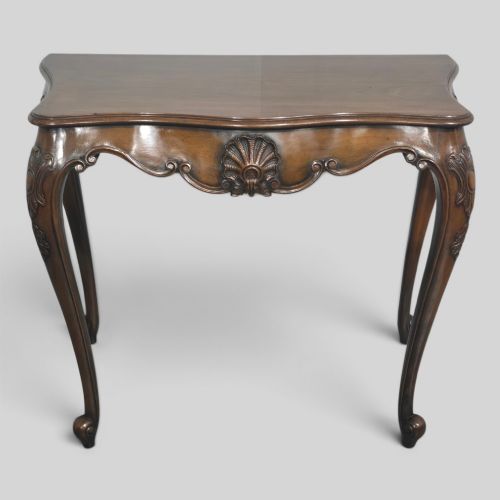
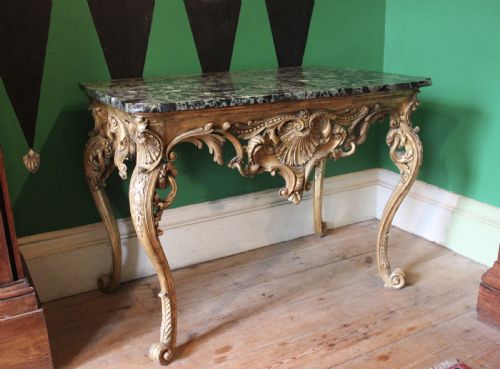
Makers and designers drew upon Georgian, Queen Anne, and Victorian Rococo Revival idioms, often incorporating Irish Chippendale influences. The hallmark motif of the carved shell typically appears on the knees, aprons, or central cartouches of these tables.
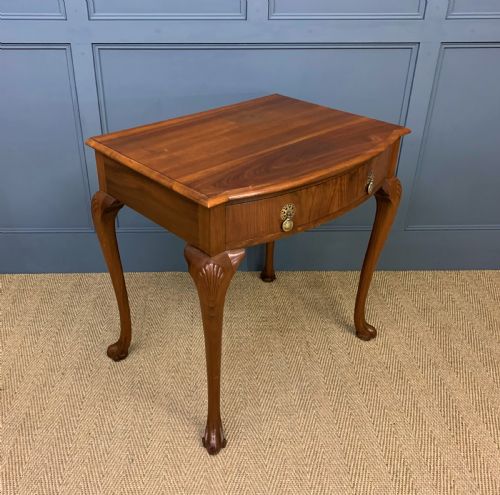
The version most commonly met on this page combines a rich timber top with detailed apron carving, resting on cabriole or straight legs. They function equally well as serving tables, lamp tables, or freestanding console tables in modern and traditional hallways alike.
Distinctions in quality
The refinement of the carving distinguishes superior examples from simpler ones, particularly the depth, undercut, and symmetry of the shell motif. Crisp detailing on the knees and aprons indicates a more skilled hand in the workshop.
The choice and figuring of the timber dictate much of the visual weight, with well-matched burr walnut veneers and dense, patinated mahogany commanding greater presence. Proportion and the integrity of the original timber surface further separate standard production from exceptional pieces.
Object types recorded across the inventory include side tables, console tables, centre tables, and lowboys.
Maple and Co·Hicks of Dublin
The Carved Shell Hall Table Glossary
- Lowboy
- A small oak, walnut, or mahogany table with drawers, resembling the lower section of a highboy. These low tables often feature cabriole legs ending in pad feet.
- Console table
- A table designed to be fixed against a wall, frequently supported by ornamental brackets or console legs. They often feature elaborate carving along the front apron.
- Cabriole leg
- A furniture leg that curves out and then in, commonly imitating the shape of an animal's leg. This form frequently terminates in a pad, claw-and-ball, or scroll foot.
- Giltwood
- Wood that has been prepared and coated with a thin layer of gold leaf. This finish provides a brilliant, reflective surface popular in formal eighteenth-century interiors.
- Serpentine
- A furniture front or edge that curves outward in the centre and inward at the sides. This contour adds visual movement and complexity to console and side tables.
Carved Shell Hall Table: Frequently Asked Questions
Where should I place a hall table?
These tables suit narrow entranceways, hallways, or living room perimeters where surface space is needed without blocking thoroughfares. Their shallow depth allows them to sit flush against walls beneath mirrors or artwork.
Because many examples are finished on all sides or designed as freestanding centre tables, they also function effectively behind sofas or in open landings.
How do I care for antique timber surfaces?
Maintain timber by dusting with a soft, dry cloth and applying natural beeswax periodically to nourish the grain. Avoid placing pieces in direct sunlight or near heat sources to prevent the wood from drying out.
Protect the surface from moisture and heat by using coasters or mats beneath lamps and decorative objects.
How do I distinguish eighteenth-century pieces?
Examine the construction joints, timber density, and hand-cut elements such as dovetails in the drawers. Eighteenth-century furniture often displays patination and tool marks consistent with manual production.
Stylistic markers like George II proportions and Irish Chippendale carving also help assign pieces to this earlier period.
Can I use a lowboy as a hall table?
Lowboys provide an ideal alternative to standard console tables due to their compact proportions and useful drawer storage. Their finished backs and cabriole legs make them visually appealing from any angle in an entrance.
Originally designed as dressing or serving tables, their height and scale adapt readily to modern hallway requirements.