



Chippendale Entry Table
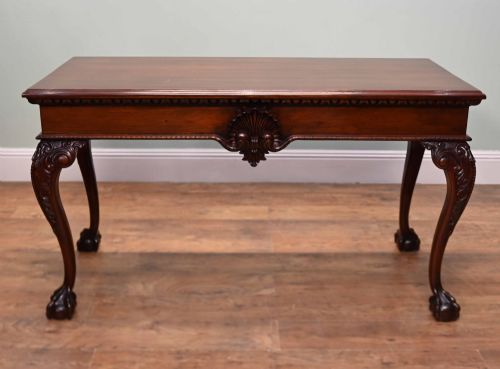
These chippendale entry table pieces bring substantial mahogany presence and classic carved detail to hallways and living spaces.
Chippendale Entry Table
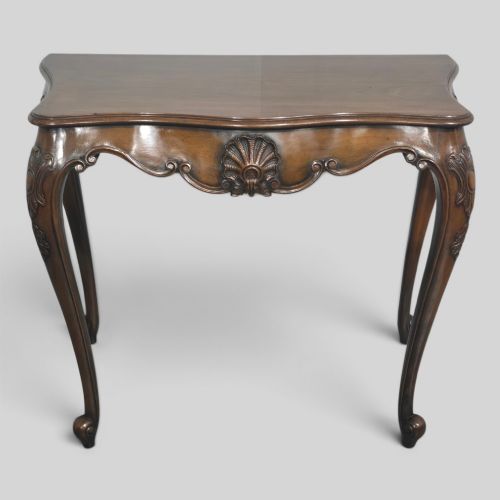
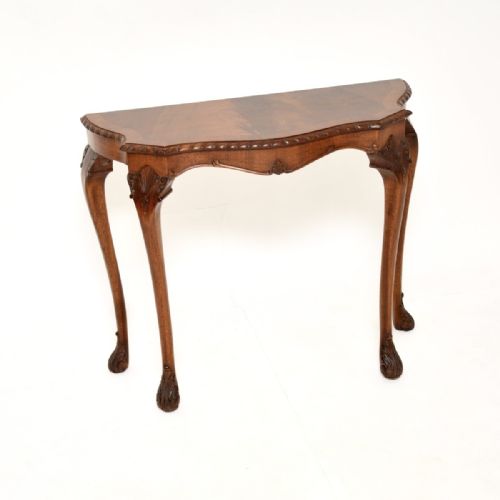
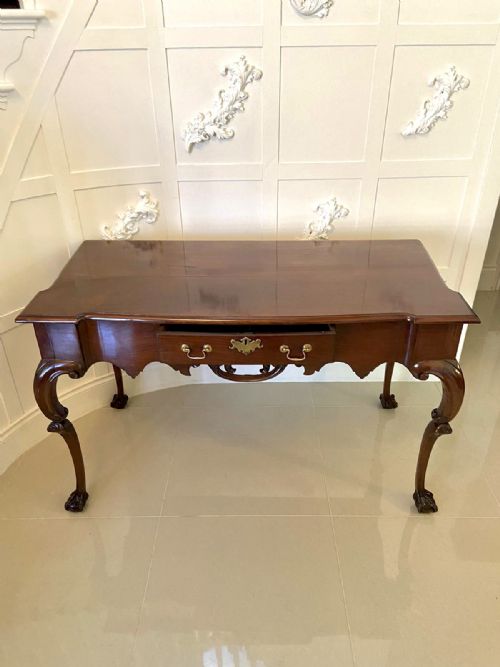
A chippendale entry table serves as a functional and decorative surface in a hallway, often taking the form of a console, hall table, or side table. These pieces provide a strong focal point upon entering a room while offering a practical surface for everyday items.
The selection ranges from mid eighteenth century Georgian originals to later revival iterations from the Victorian era and the early twentieth century. Buyers most frequently encounter mahogany examples alongside occasional painted or gilded variants.
Origins span Irish, American, and British workshops, reflecting the wide geographical spread of the style across centuries. Forms include console tables, serving tables, and sofa consoles designed to stand flush against a wall.
Materials and Construction
Mahogany forms the primary material basis across the majority of these listings, chosen for its density, rich grain, and stability. Artisans utilised solid timber alongside figured veneers to achieve depth and visual movement across the surfaces.
Carved ornament defines the construction, appearing on friezes, legs, and apron rails. Secondary materials include gold leaf, brass hardware, leather inserts, and applied paint finishes on specific revival pieces.
Listings span periods from the mid eighteenth century through the Victorian era up to 1930, built primarily in mahogany with occasional painted finishes.
Judging Quality
Quality rests primarily on the crispness and depth of the carved detailing across the timber. Sharp, well-defined execution by the carver separates superior examples from softer, more mechanised production.
The choice of timber grain also dictates value, with highly figured mahogany offering greater visual richness than plain stock. Original period manufacture versus later revival work sets a distinct tier in age and desirability.
The Chippendale Entry Table Glossary
- Chippendale
- A style of eighteenth century furniture based on the designs of Thomas Chippendale, characterised by carved mahogany, cabriole legs, and rococo or gothic influences.
- Console Table
- A table designed to be fixed against a wall or supported by front legs, historically used in grand halls and drawing rooms.
- Georgian
- Pertaining to the reigns of the first four British monarchs named George, spanning the eighteenth century and noted for refined proportions and classical ornament.
- Figured Mahogany
- Timber cut from specific parts of the mahogany tree that display rippled, mottled, or flame grain patterns.
- Revival
- A nineteenth or twentieth century style that recreates the aesthetic of an earlier historical period, such as the Victorian Chippendale Revival.
Chippendale Entry Table: Frequently Asked Questions
What is a chippendale entry table used for?
These tables function as surface furniture in entrance halls, corridors, and reception rooms. They provide a place to set keys, post, and decorative objects while framing a wall space.
Historically, they served similar domestic purposes in grand houses, often paired with matching mirrors above them. Their slim profile ensures they do not obstruct traffic flow in narrow areas.
How do I identify an eighteenth century piece?
Eighteenth century examples show period construction methods, timber ageing, and hand-carved details specific to Georgian craftsmanship. The joinery and underside timber provide clear clues to age.
Revival pieces from the Victorian era or the twentieth century often feature heavier proportions or machine-assisted carving techniques that distinguish them from period originals.
Are all these tables made of mahogany?
Mahogany is the dominant timber found across these listings, valued for its durability and rich red-brown hue. Selected pieces incorporate other woods beneath paint or gilt.
Alternative finishes include gold leaf and applied paint, particularly on twentieth century revival models designed to mimic earlier continental or English painted furniture.
How do I place a console table in a hallway?
Console tables stand flat against a wall, frequently anchored for stability if they are free-standing. Their shallow depth makes them ideal for narrow corridors and entryways.
Interior layouts often feature a mirror, painting, or pair of lamps placed directly above the table to create a balanced focal point upon entering the home.