





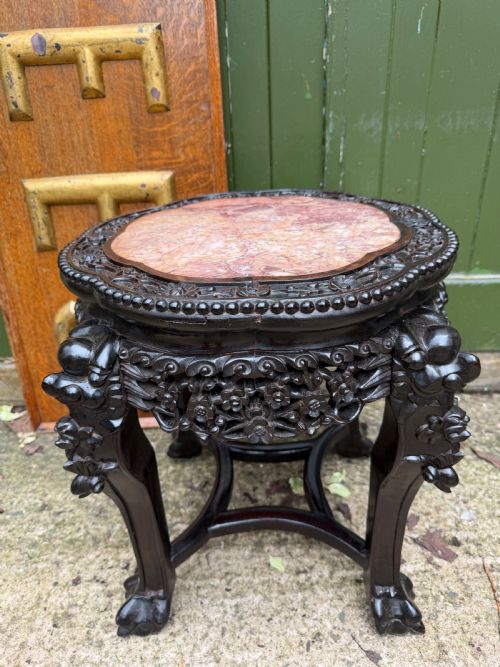


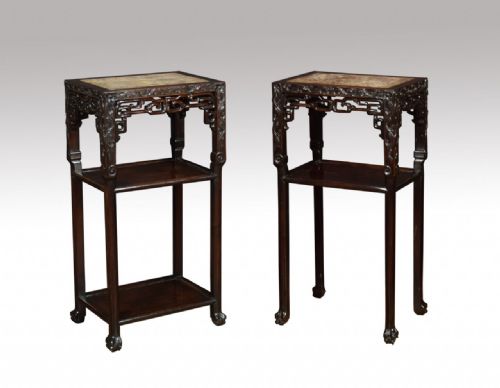


Carved Hongmu Plant Stand
These carved hongmu plant stand examples are heavy hardwood furnishings designed to elevate planters and urns, prized for their dense timber and intricate Qing carving.
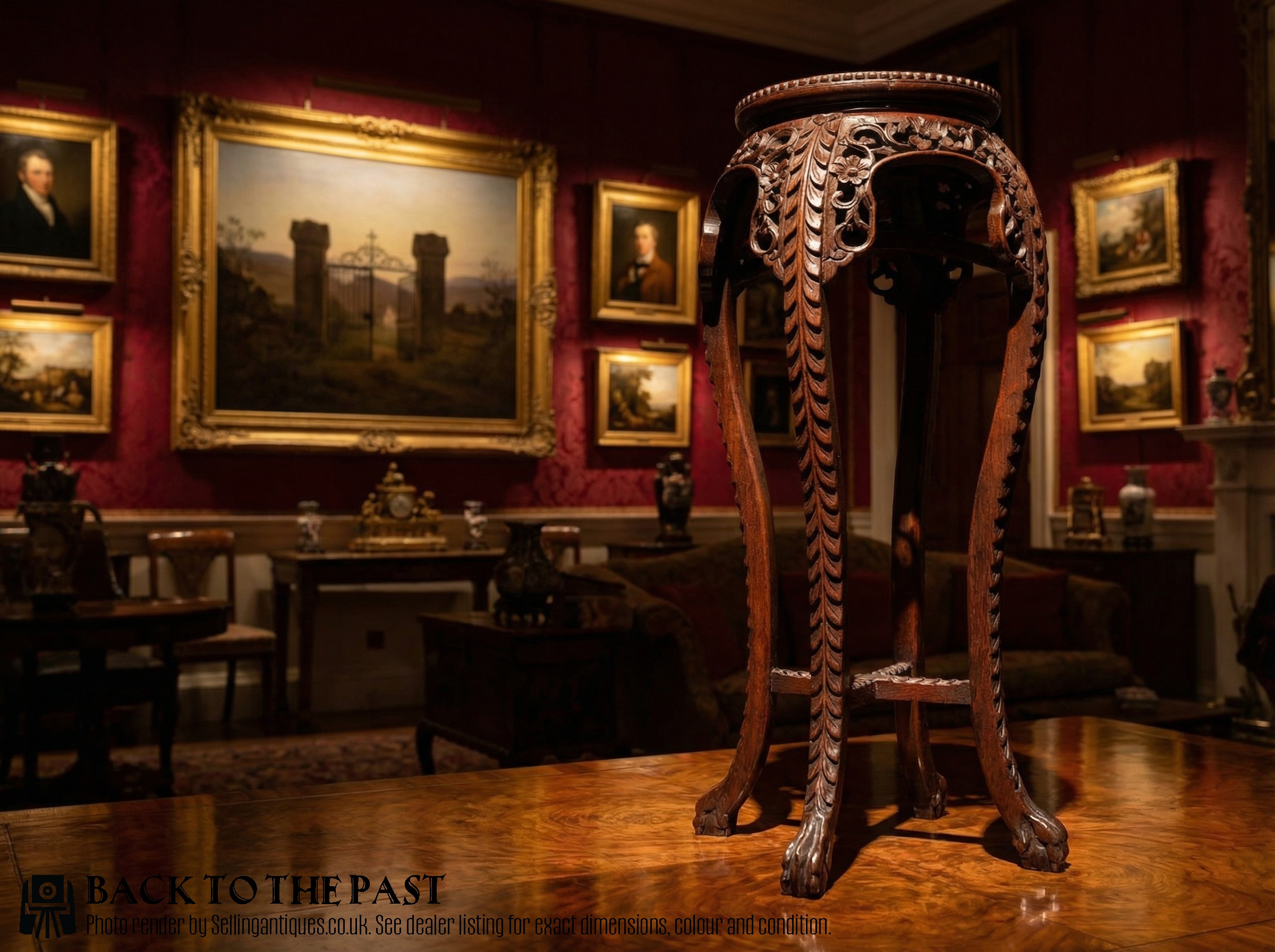
Carved Hongmu Plant Stand
A carved hongmu plant stand is a sturdy piece of furniture designed to hold jardinieres, urns, or vases within a traditional interior. These items emerge from the nineteenth century and the Qing Dynasty, spanning forms such as low tables, tall pedestals, and barrel-shaped stands.
Most pieces align with Chinese export and Qing Dynasty styles, functioning equally well as side tables, bedside tables, or dedicated plant stands. Buyers encounter single items as well as matched pairs dating from the eighteen-eighties through to nineteen-thirty.
Distinctions in quality
Quality rests upon the crispness of the wood carving and the depth of the relief work across the skirt and legs. Superior examples display sharply defined motifs without awkward proportions, whereas lesser pieces show softer, shallower handwork.
The selection of the inset marble top dictates grade, with richly variegated rouge stone commanding greater appreciation than plain or dull slabs. Timber selection also matters, as dense hongmu with rich grain patterns distinguishes finer pieces from ordinary hardwood alternatives.
Carved Hongmu Plant Stand Retail Price Guide 2026
Typical asking prices for carved hongmu plant stand among the pieces listed under this phrase on Sellingantiques today, from the lower quarter to the upper quarter. They describe what is for sale here now, not the wider market.
Listings span the nineteenth century, the Victorian era, and nineteen-thirty, uniting hard timber, marble, and mother-of-pearl.
The Carved Hongmu Plant Stand Glossary
- Hongmu
- A traditional Chinese term denoting dense, heavy hardwood varieties often translated as red wood. These timbers form the primary structure of these stands.
- Jardiniere
- An ornamental pot or stand designed to hold a plant or flower arrangement. These vessels sit atop low and tall tables.
- Rouge marble
- A deep reddish marble variety featuring varied natural veining. Artisans inset these stone slabs into the tops of hardwood tables.
- Qing Dynasty
- The final imperial dynasty of China ruling from sixteen-fourteen-fourteen to nineteen-twelve. Many pieces on this page reflect the aesthetic of this era.
- Pedestal stand
- A tall, elevated piece of furniture designed to display an urn or sculpture. These upright supports raise plants to eye level.
Carved Hongmu Plant Stand: Frequently Asked Questions
What is a carved hongmu plant stand used for?
These furnishings serve to elevate heavy ceramic planters, urns, and flower pots above floor level to protect interior surfaces.
Beyond holding plants, buyers utilise them as occasional side tables, bedside tables, or display surfaces for decorative objects.
How do I identify a Qing Dynasty piece?
Authentic pieces from this period display traditional Chinese joinery methods and dense hongmu or rosewood construction without modern adhesives.
Look for characteristic carving styles, such as floral motifs and naturalistic forms associated with nineteenth-century workshops.
Are marble tops original to these stands?
Many nineteenth-century stands feature inset marble or rouge stone tops fitted directly into the wooden frame during initial manufacture.
These smooth stone surfaces provide a durable, heat-resistant platform suited for displaying wet pots and heavy urns.
How should I clean a hardwood plant stand?
Dust the carved wooden surfaces regularly with a soft, dry cloth to prevent dirt accumulation within the deep recesses of the relief work.
Avoid chemical polishes and excess moisture, treating the dense timber with occasional application of appropriate natural wax.