
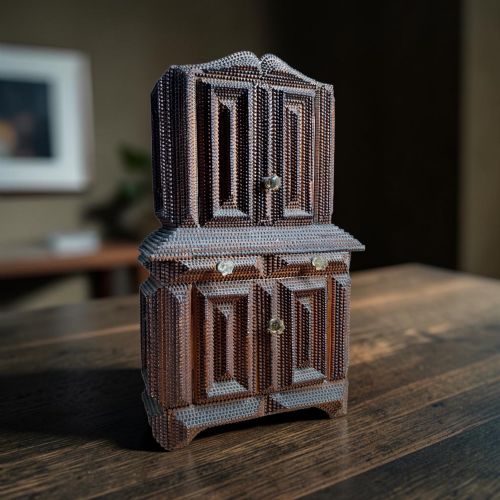
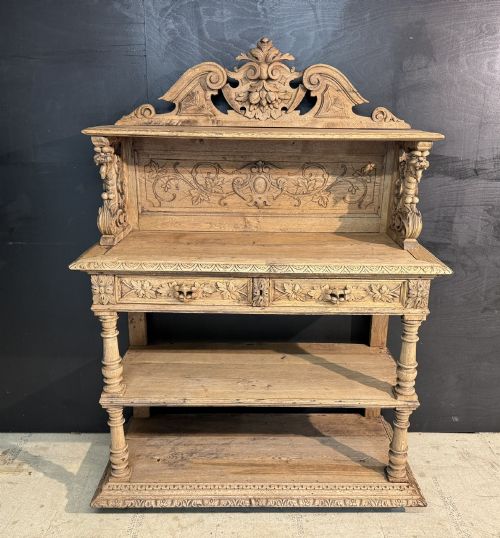
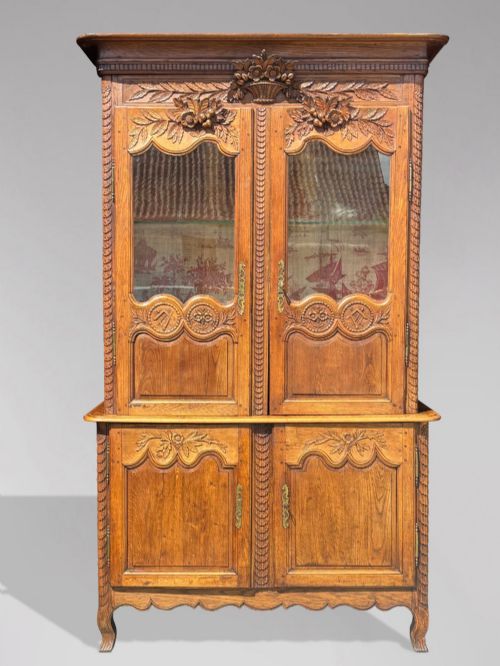
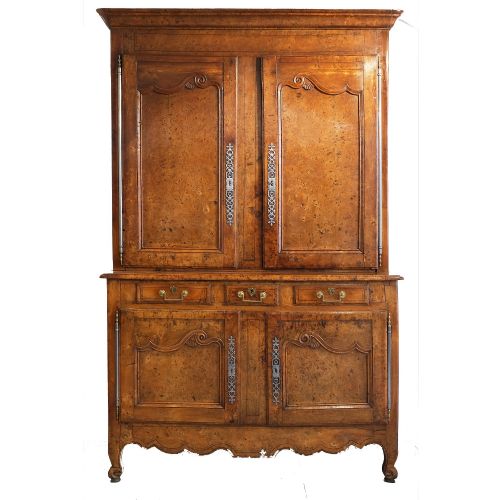


Carved French Buffet
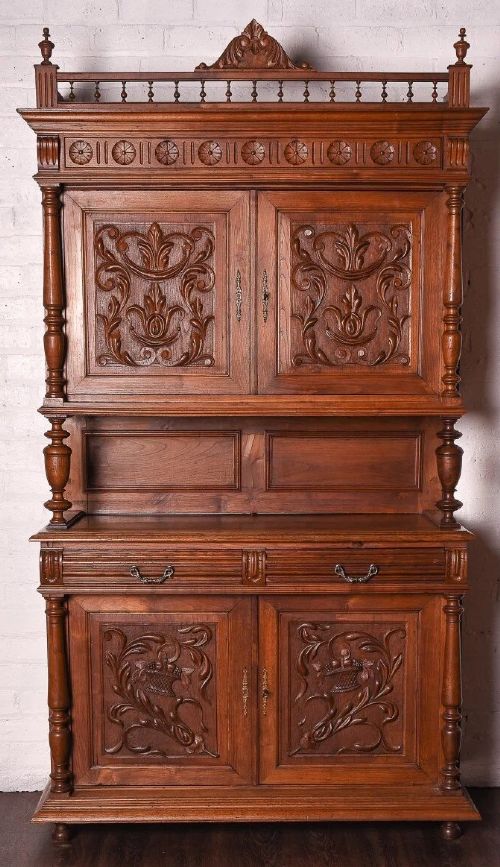
A carved french buffet brings solid timber storage and traditional regional carving directly into a dining space.
Carved French Buffet
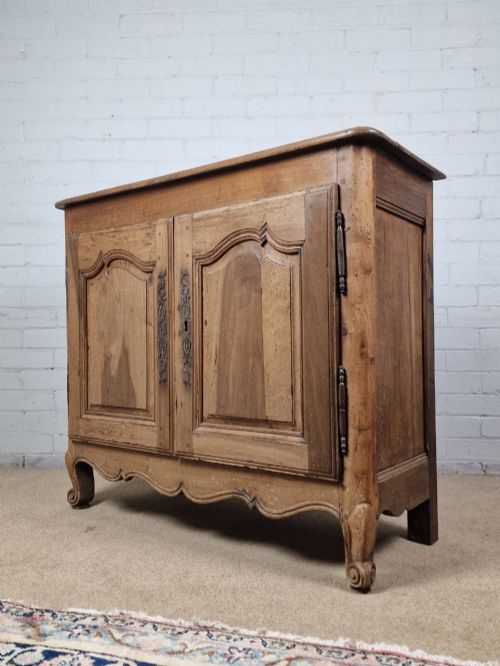
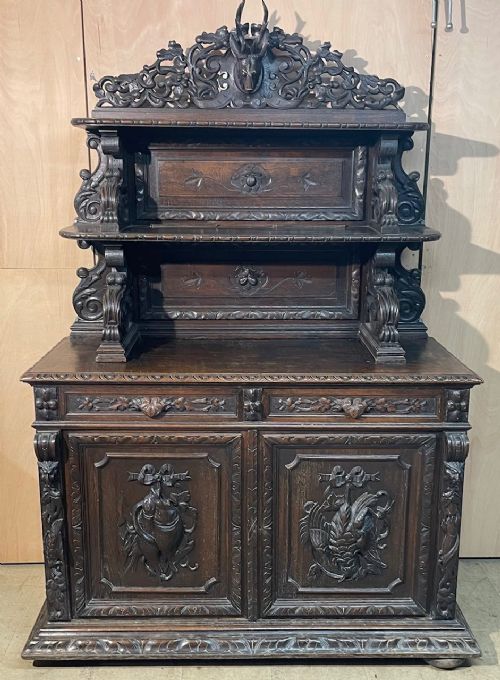
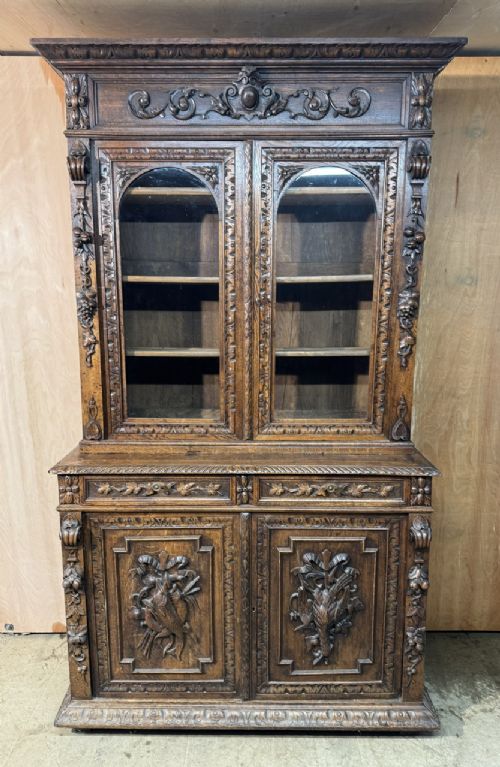
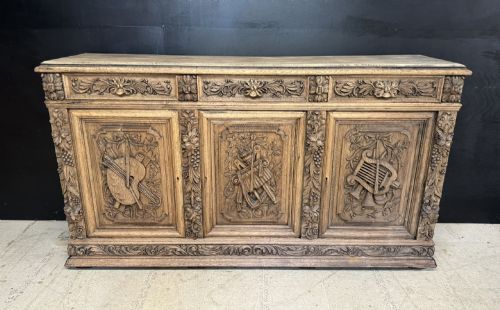
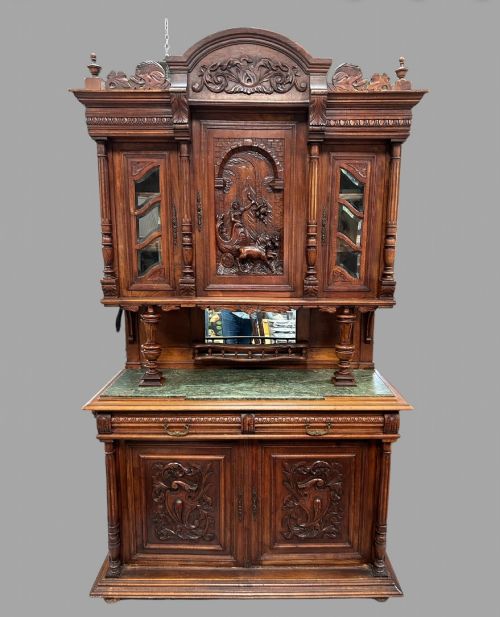
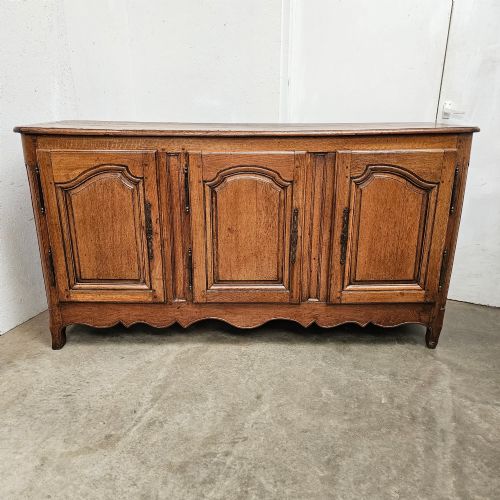
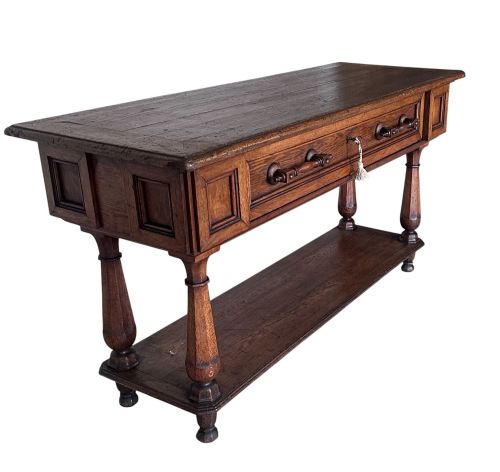
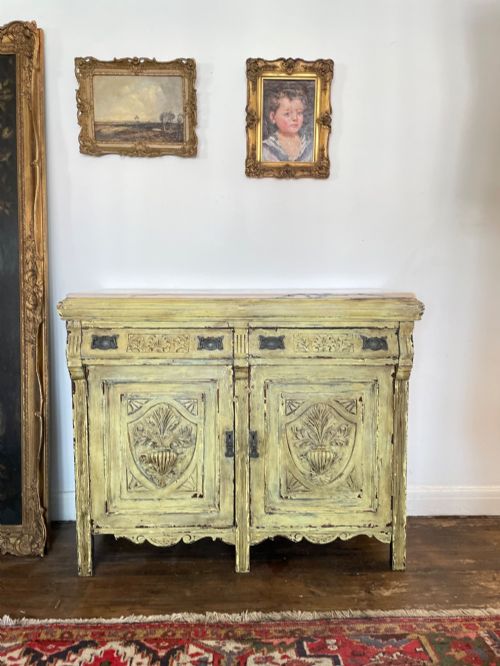
A carved french buffet is a substantial storage piece originating from provincial and urban households across France, designed for holding dining provisions and tableware. When exploring this selection, a buyer encounters forms ranging from low single-tier server cabinets to towering two-body cupboards known as deux corps.
The materials span native timbers like oak, walnut, ash, and elm, often paired with marble tops or brass hardware. Pieces appear across multiple periods, with 18th-century Louis XV examples and 19th-century revival styles dominating the available selection.
How they were made
Cabinetmakers constructed these pieces using traditional joinery in solid hardwoods like oak and walnut, alongside regional alternatives such as elm and cherrywood. Surfaces received detailed hand-carved ornamentation reflecting local styles, from rustic folk art to elaborate Renaissance Revival motifs.
Structural elements frequently incorporated iron hardware, wrought iron mounts, and occasional glass panels, while select items featured fitted marble slabs on the upper surfaces.
Several game cupboards retain subtle carved hare and pheasant motifs designed to encourage a healthy appetite at dinner.
What varies in quality
Quality rests in the crispness of the hand-carved detail and the selection of timber figures, where dense oak and figured walnut command higher regard. The integrity of the original construction, including the depth of the mouldings and the retention of period brass hardware, separates standard workshop output from exceptional examples.
Charles Dudouyt
The Carved French Buffet Glossary
- Buffet deux corps
- A tall two-part cupboard featuring a smaller upper cabinet set upon a deeper base. This form provided extensive storage for linens and provisions in larger provincial homes.
- Enfilade
- A long low sideboard fitted with multiple doors in a continuous line. These pieces typically served dining rooms for food presentation and service.
- Marquetry
- The art of applying decorative veneer pieces to a timber structure to create geometric or pictorial designs. Parquetry is a geometric variant frequently seen on tabletops.
- Serpentine
- A curved shape curving outward at the centre and inward at the sides, often found on cabinet fronts and marble tops. This contour required advanced woodworking skill.
- Breton
- A regional style originating from northwest France featuring heavy carving and distinctive local motifs. These pieces often depict traditional figures or maritime scenes.
Carved French Buffet: Frequently Asked Questions
What is a buffets de corps?
A buffet de corps is a large two-tier storage cabinet divided horizontally into an upper and lower section. These pieces provided secure storage for household provisions and dining ware.
They often feature elaborate carving reflecting the regional style of their origin, such as hunting motifs or provincial floral patterns.
How do I style a french buffet?
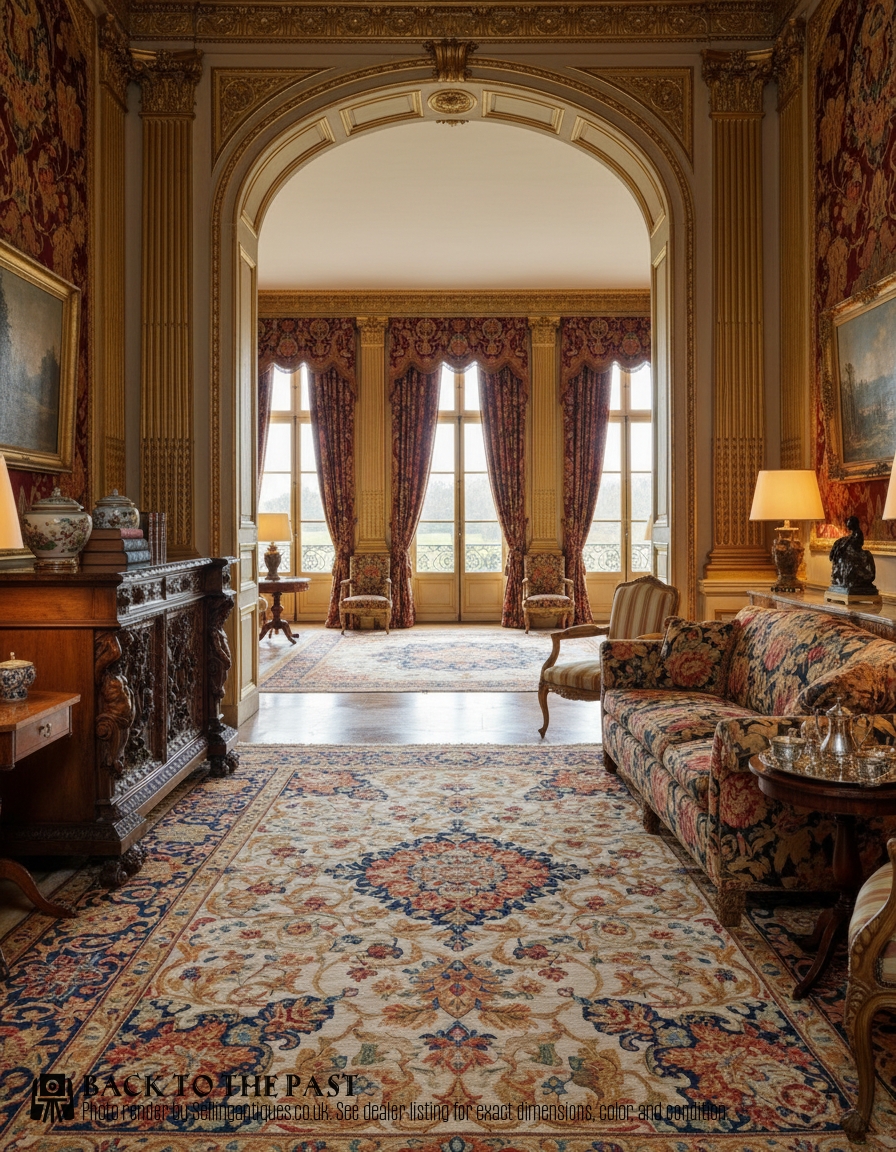
A french buffet works well as a focal point in a dining room or hallway, providing a stable surface for lamps, ceramics, or serving dishes. The deep interior shelving accommodates dinnerware and linens.
Pairing the timber grain and carved details with simpler surrounding furniture allows the craftsmanship of the piece to stand out.
Are marble top buffets original?
Many provincial and urban serving cabinets were fitted with marble slabs to provide a durable, heat-resistant surface for food preparation. These stone tops are frequently contemporary with the wooden base.
Marble variants range from plain white stone to veined pink marble, depending on the period and region of manufacture.
How do I date an oak buffet?
Dating relies on examining the construction joints, timber selection, and the style of the carving. 18th-century examples often display hand-cut peg joinery and softer patination on native oak or elm.
Revival pieces from the 19th century tend to feature heavier, deeper relief carving influenced by Renaissance or Gothic design motifs.