
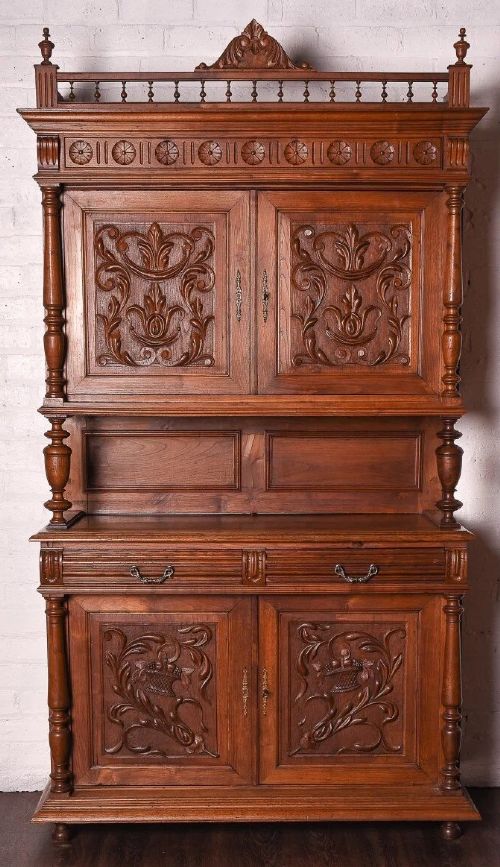



French Renaissance Sideboard
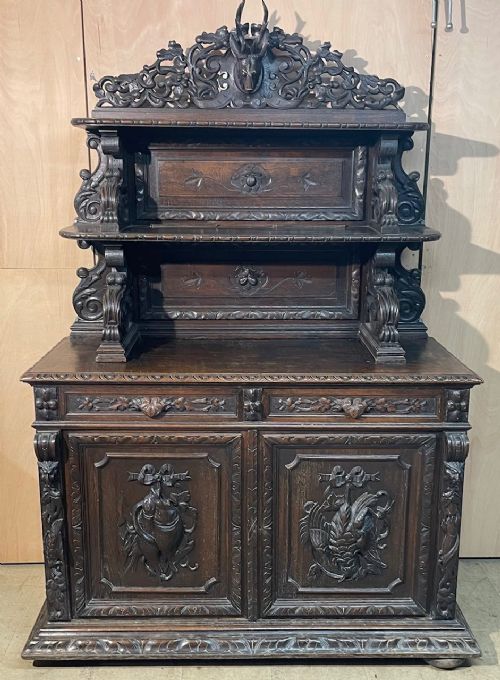
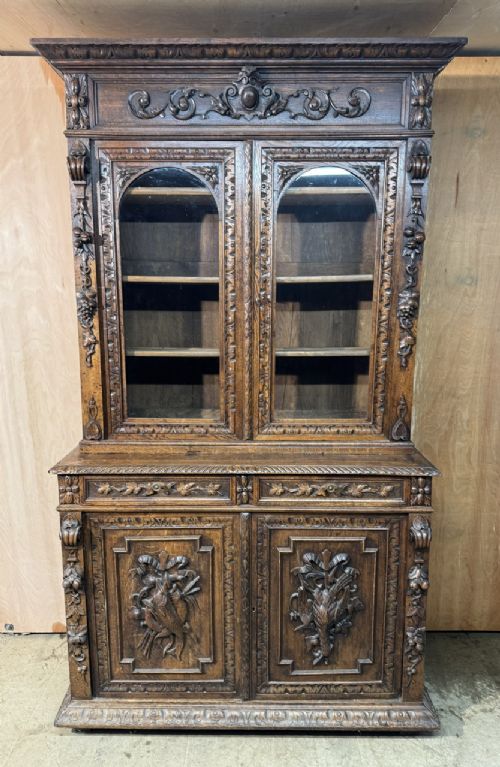
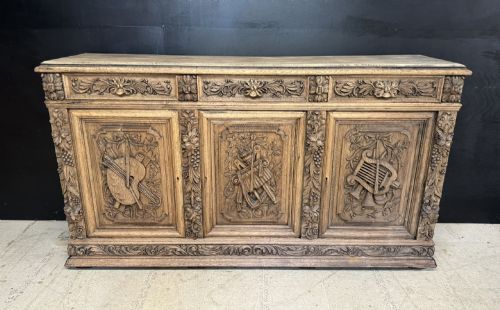
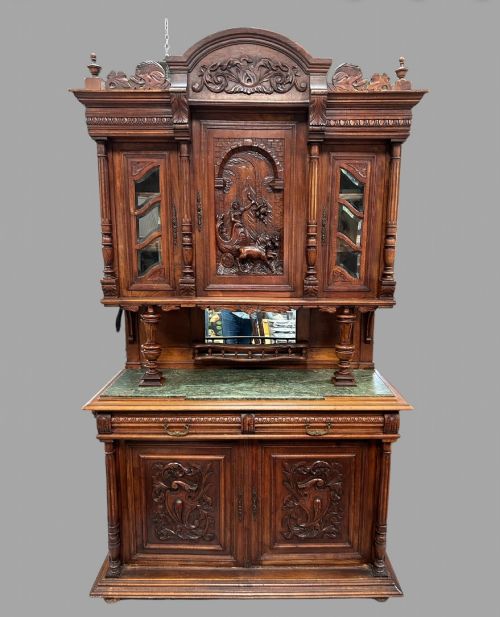
These heavy walnut and oak pieces bring architectural presence and deep historical carving into a room.
How they were made
Makers shaped these pieces from solid hardwoods like oak and walnut, employing traditional joinery alongside deep hand-carving. Surfaces often incorporate applied mouldings, turned columns and panelled construction to achieve architectural depth.
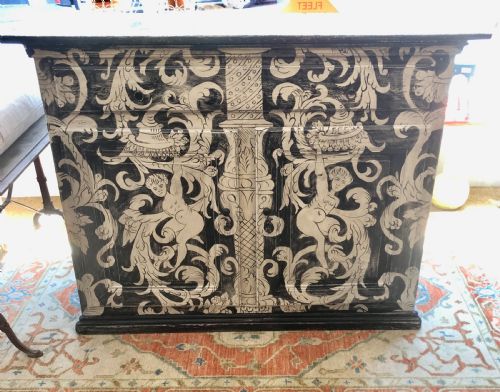
Some variations introduce contrasting materials, pairing dark woods with marble tops, brass mounts, iron hardware or glass panels. Certain pieces also feature painted decoration, including hand-painted details on wood surfaces.
What varies in quality
The distinction between ordinary and exceptional examples lies primarily in the depth, crispness and ambition of the carving. Superior pieces display fluid, deeply undercut figures, fruit, game and strapwork rather than shallow or mechanical decoration.
Construction standards also set pieces apart, distinguishing heavy structural timber and well-fitted panel doors from lighter, simpler builds. The choice of materials, such as figured walnut or thick inset marble, similarly marks the upper tier.
Listings feature 19th-century pieces spanning the Victorian era, executed primarily in walnut and oak with occasional marble, brass, and glass.
Melissa White
The French Renaissance Sideboard Glossary
- Renaissance Revival
- A 19th-century architectural and decorative style that reinterprets 16th-century forms, classical motifs and heavy relief carving. This aesthetic defines the majority of the large sideboards and buffets found here.
- Buffet de Corps
- A large, two-tier dining room cupboard or sideboard featuring enclosed lower cabinets and upper display sections. These monumental pieces provide extensive storage capacity in formal rooms.
- Louis XIII Revival
- A decorative style referencing the early 17th-century French court, characterised by heavy turnings, bold mouldings and structured panel work. It appears frequently in walnut cabinets and sideboards.
- Pot Cupboard
- A small bedside or auxiliary cabinet, though the term occasionally describes compact lower storage compartments within larger modular buffet configurations.
French Renaissance Sideboard: Frequently Asked Questions
What is a french renaissance sideboard?
A heavy wooden storage piece from the 19th century built in revival styles, featuring deep hand-carving and architectural proportions.
These large buffets and cabinets were traditionally used in dining rooms for storing and serving food while displaying wealth through intricate woodwork.
How do I date these pieces?
Most pieces date from the 19th century, often associated with the Victorian era, utilising revival design vocabulary from the 16th and 17th centuries.
Examining the construction methods, secondary timbers, and the specific revival sub-style, such as Louis XIII revival, helps narrow down the period of manufacture.
Where should I place a sideboard?
These large cabinets require significant wall space and sturdy flooring due to their substantial solid oak and walnut construction.
They function best in spacious dining rooms, grand hallways, or large living areas where their heavy proportions and detailed carvings can anchor the room.
What materials are used?
The primary materials recorded are solid oak and walnut, frequently combined with marble tops, brass hardware, and glass panels.
Some examples also incorporate iron details, painted finishes, and diverse wood types to accent the carved panels and mouldings.