
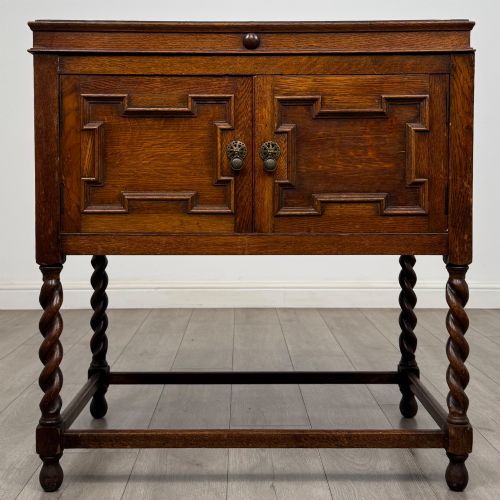
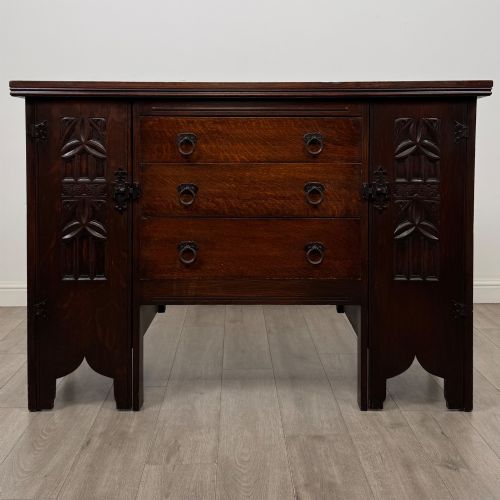
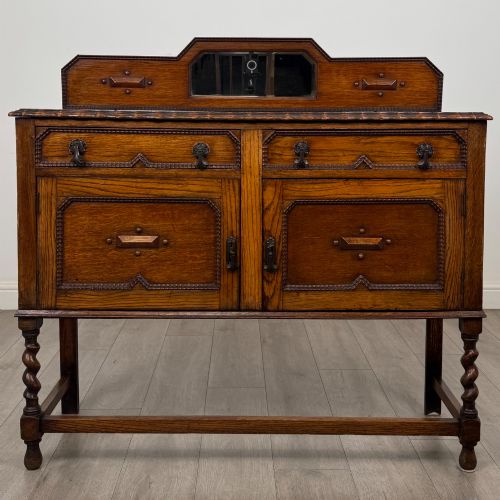
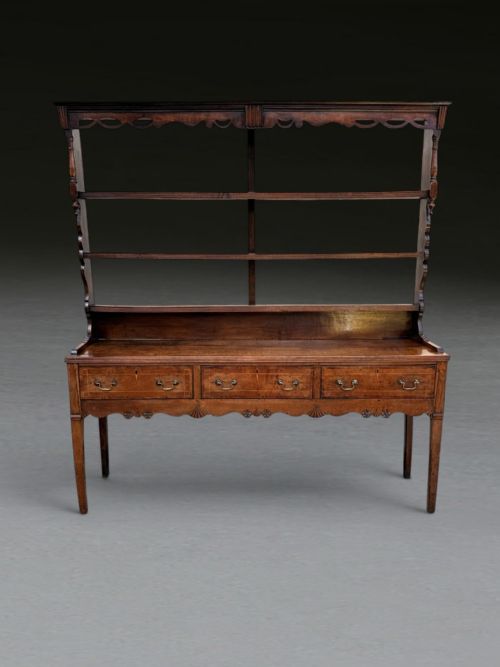
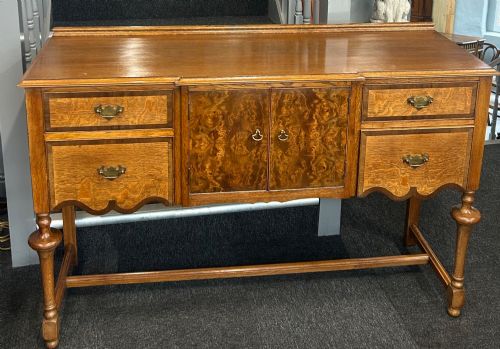
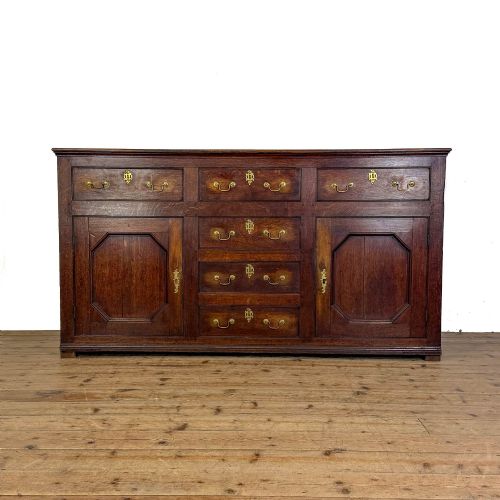

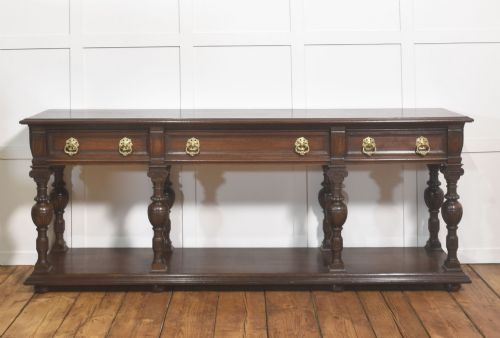
Carved Oak Buffet Table
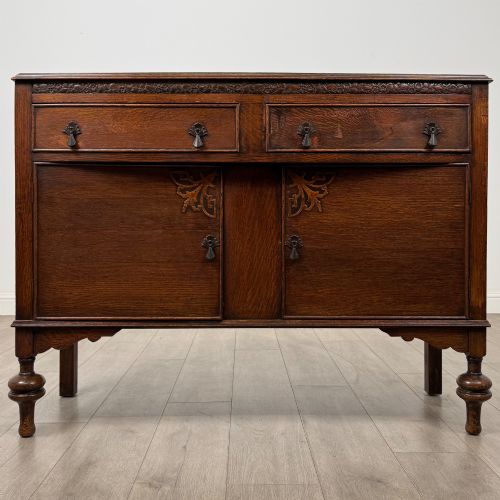
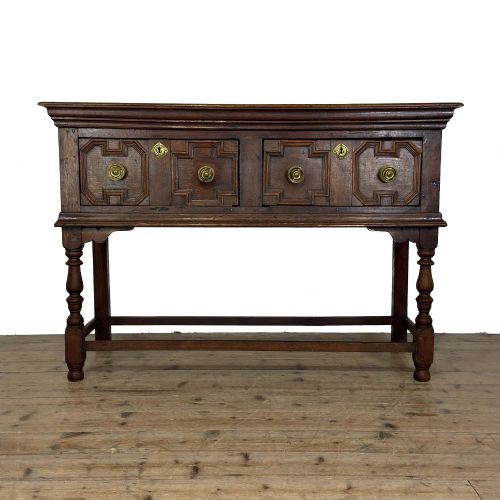
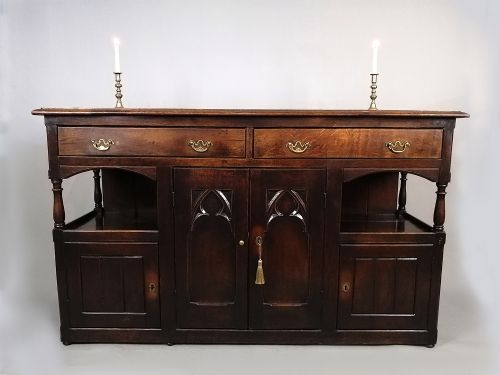
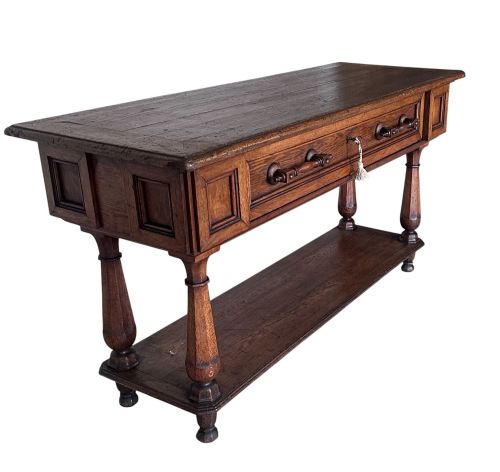
These carved oak buffet table examples deliver substantial timber presence and period character, bringing robust utility and historic style to any dining room.
What these pieces are
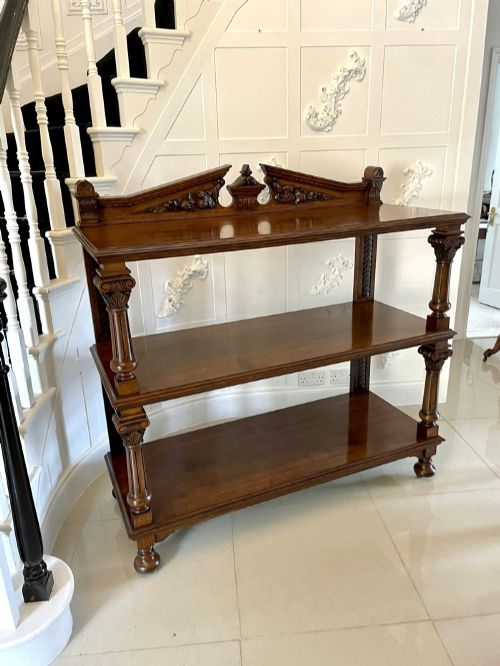
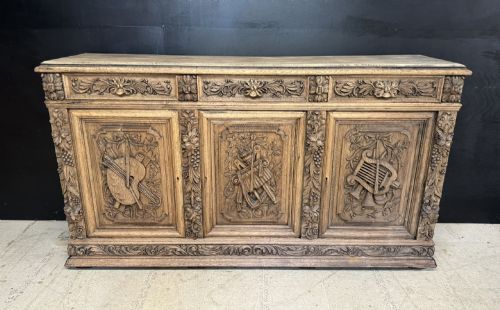
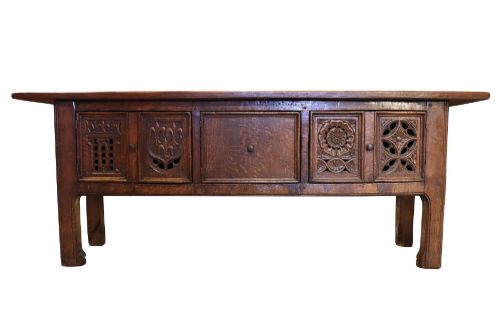
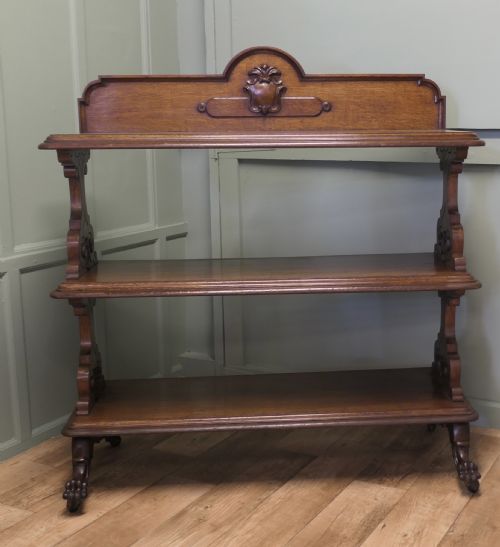
A carved oak buffet table search brings up heavy timber serving furniture, sideboards, and tiered server units designed for display and dining utility. Buyers frequently encounter nineteenth-century productions alongside Edwardian and later twentieth-century iterations.
The regional and stylistic variations span Victorian Gothic Revival, Jacobean Revival, and French Renaissance Revival forms. Pieces range from large serving tables and two-tier side tables to rise and fall dumb waiters and dresser bases.
Makers utilised solid oak to construct functional furniture that served both domestic dining rooms and grand halls. Surviving examples demonstrate the enduring appeal of heavy carved woodwork across multiple decades of the nineteenth and twentieth centuries.
How they were made
Construction relies upon solid oak timbers joined and carved by hand, often featuring prominent grain patterns and rich patination. Structural hardware includes brass components where hinges, handles, or mechanical rise and fall mechanisms are fitted.
Carving techniques display deep relief work, incorporating motifs such as the Green Man alongside strapwork and barley twist turnings. Joinery methods reflect the prevailing period traditions, securing heavy tiers and upright supports for sustained domestic use.
Retail Price Guide 2026
Typical UK retail prices for carved oak buffet table, calculated from the Sellingantiques database of over a million retail prices indexed since 2003. This retail price guide relies exclusively on Sellingantiques data; no external sources or auction records are used, so the figures do not describe the wider market.
Revival styles span Jacobean, Gothic, and French Renaissance aesthetics applied to sideboards, servers, and dumb waiters.
What varies in quality
Quality differentiates through the depth and crispness of the timber carving, where deeply articulated foliage and figural work command greater visual presence. The selection of figured oak boards and the harmonious integration of turned supports elevate certain pieces above simpler utility builds.
Proportion and structural ambition also set examples apart, ranging from straightforward two-tier tables to complex multi-tiered dumb waiters with functioning mechanical height adjustment. The integrity of the original joints and the warmth of the polished oak surface determine the overall success of the piece.
The Carved Oak Buffet Table Glossary
- Buffet table
- A heavy serving piece designed for dining rooms, often featuring multiple tiers or cupboards for holding dishes and silverware.
- Green Man
- A sculptural architectural motif depicting a human face disgorged from foliage, frequently found on Gothic Revival woodwork.
- Jacobean Revival
- A nineteenth-century stylistic movement emulating seventeenth-century English furniture through geometric moulding, paneling, and heavy turnings.
- Barley twist
- A decorative woodworking technique producing a spiral rope-like column, popular on legs and structural supports during the Victorian period.
- Dumb waiter
- A tiered serving table or trolley designed to hold food and drink without requiring servant attendance during meals.
Frequently Asked Questions
Where were buffet tables used?
These serving pieces traditionally stood in dining rooms or grand halls to hold food, plate, and glassware during meals.
They provided accessible surface space close to the dining table for serving guests efficiently.
How do I care for oak furniture?
Maintain the timber by keeping it away from direct heat sources and sudden humidity changes that cause wood to split.
Apply natural beeswax occasionally to nourish the grain and preserve the rich historic finish.
What is a dumb waiter?
A dumb waiter is a tiered side table or serving stand designed to hold dishes within reach of the dining table.
Some examples include mechanical rise and fall systems to adjust the height of the tiers.