
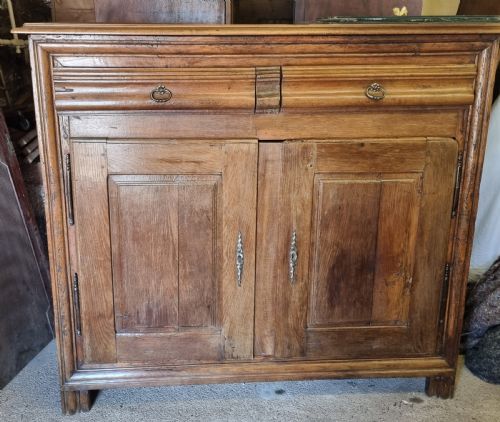


French Oak Credenza
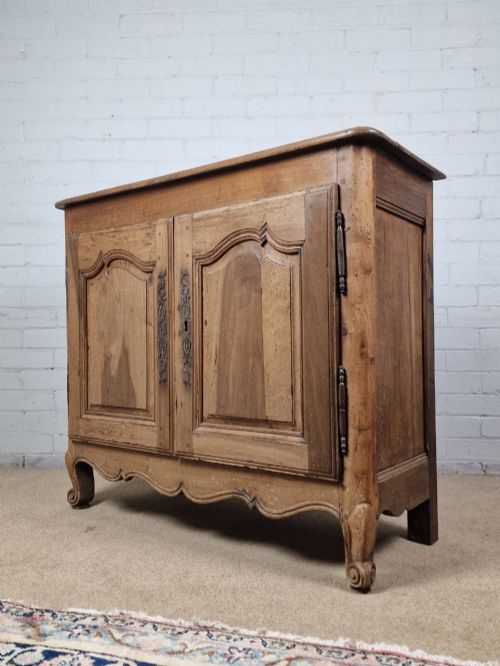
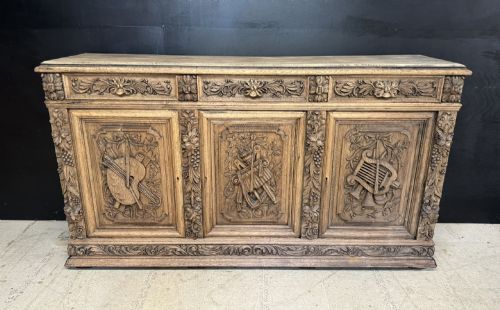
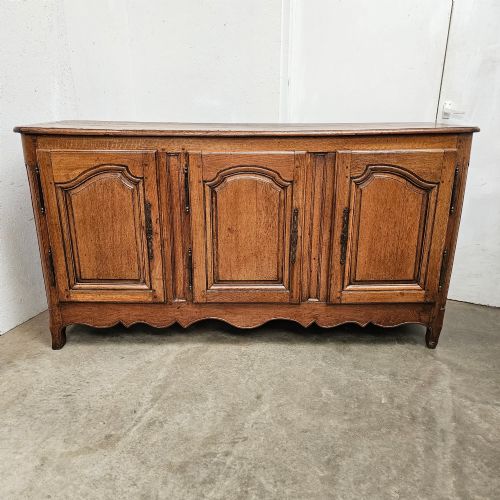
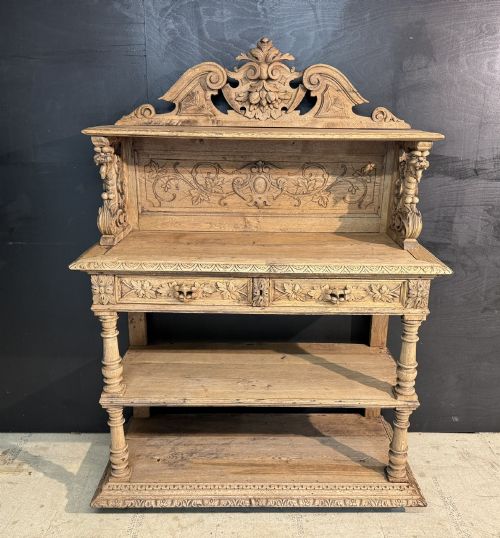
These French oak credenza pieces bring serious presence to a room, offering substantial storage built with traditional craftsmanship.
What these pieces are
A french oak credenza search brings up robust storage furniture drawn primarily from nineteenth and twentieth century periods. The selection on this page includes sideboards, cupboards, dresser bases, and house maid cupboards reflecting diverse regional traditions.
Most examples lean towards French Provincial and French Renaissance Revival styles, alongside specific mid twentieth century forms. Buyers frequently encounter substantial wooden bodies designed originally for practical household storage.
Makers and workshops across France utilised local timber resources to build these functional cupboards and sideboards. The resulting inventory ranges from early nineteenth century provincial pieces to later Art Deco iterations.
How they were made
Construction relies heavily on solid oak, frequently paired with fruitwood for contrasting details or secondary elements. Makers integrated metal components such as brass, steel, and wrought iron for hinges, handles, and structural reinforcement.
Traditional joinery techniques keep these heavy wooden structures stable across generations of use. Carved ornamentation appears on several examples, demonstrating detailed hand woodworking rather than mass production.
Retail Price Guide 2026
Typical UK retail prices for french oak credenza, calculated from the Sellingantiques database of over a million retail prices indexed since 2003. This retail price guide relies exclusively on Sellingantiques data; no external sources or auction records are used, so the figures do not describe the wider market.
House maid cupboards originally hid brooms and linens, now quietly holding modern electronics.
What varies in quality
Quality differences stem from the depth of hand carving and the selection of timber grain. Pieces with intricate sculptural details and well chosen fruitwood accents stand apart from simpler utilitarian builds.
The integrity of original hardware, including brass and wrought iron fixtures, influences the overall character of each item. Construction methods that prioritize solid timber throughout elevate certain sideboards and cupboards above standard production models.
Charles Dudouyt
The French Oak Credenza Glossary
- Credenza
- A sideboard or cabinet used traditionally for storing and serving food. Modern usage often applies the term to low, long storage furniture.
- Dresser Base
- A low wooden storage unit featuring drawers and sometimes cupboards beneath a flat top surface. These sturdy bases originated in working kitchens before moving into general living spaces.
- Fruitwood
- Dense timber harvested from fruit bearing trees such as cherry or pear. Makers used it alongside oak for decorative contrast and turning work.
- Gothic Revival
- An architectural and decorative style drawing inspiration from medieval design. Pieces in this tradition often feature pointed arches and heavy carved tracery.
- French Provincial
- Furniture styles created in the provinces outside Paris during the eighteenth and nineteenth centuries. These designs adapt urban fashions to local rustic materials and practical needs.
Frequently Asked Questions
What is a french oak credenza?
A french oak credenza is a heavy wooden storage cabinet originating from France, built primarily from solid oak.
These pieces function as sideboards or cupboards, offering deep shelving and enclosed storage for dining or living areas.
How do I date a french oak credenza?
Dating involves examining the construction methods, hardware materials, and stylistic details present in the woodwork.
Listings range from nineteenth century provincial examples to mid twentieth century Art Deco designs by makers like Charles Dudouyt.
Where were these pieces made?
These items originated in various regions of France, reflecting local woodworking traditions and available timber resources.
Provincial workshops and city studios both contributed to the styles seen today, including Gothic Revival and French Provincial forms.
What materials are used in these items?
Solid oak forms the primary structure of these sideboards and cupboards, occasionally supplemented by fruitwood for decorative elements.
Metal components like brass, steel, and wrought iron appear on hinges, locks, and handles.