
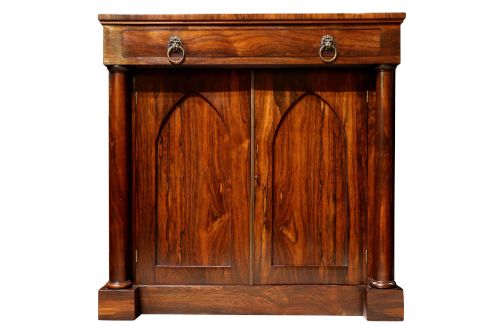
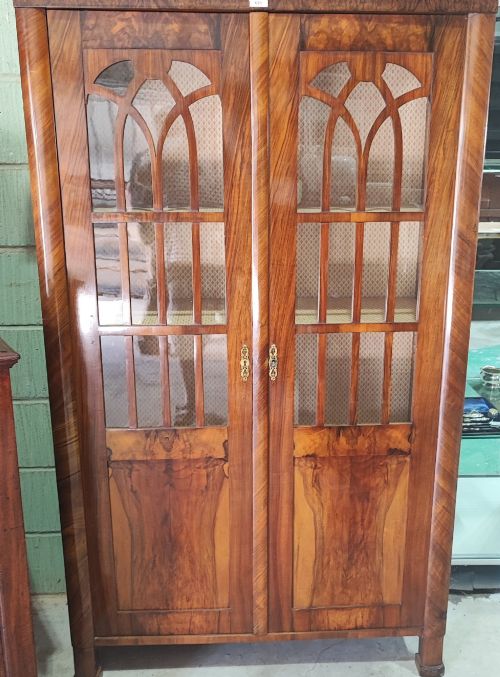
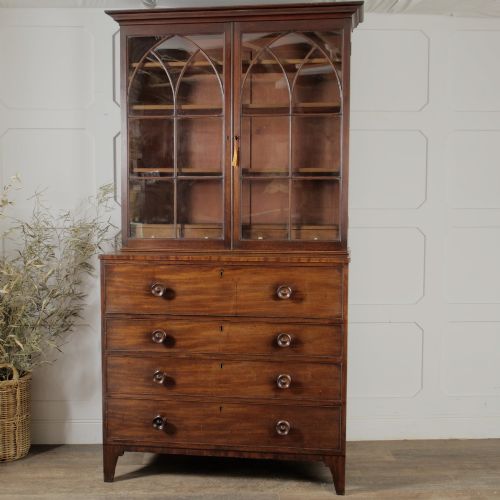
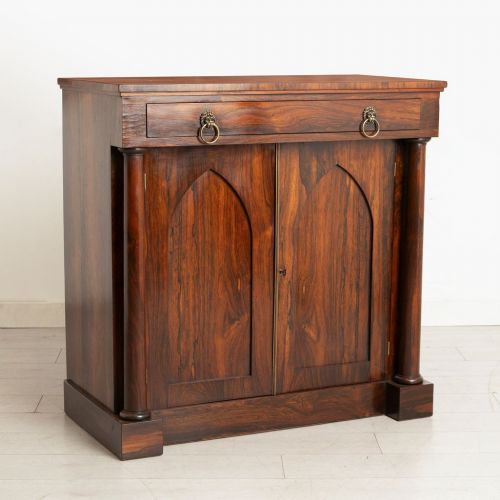
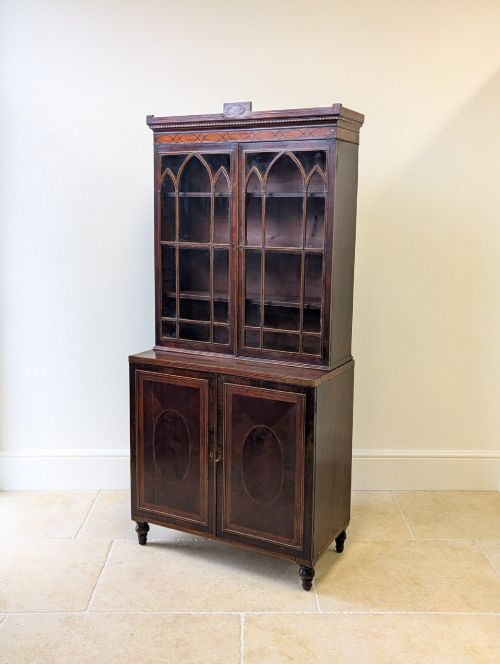
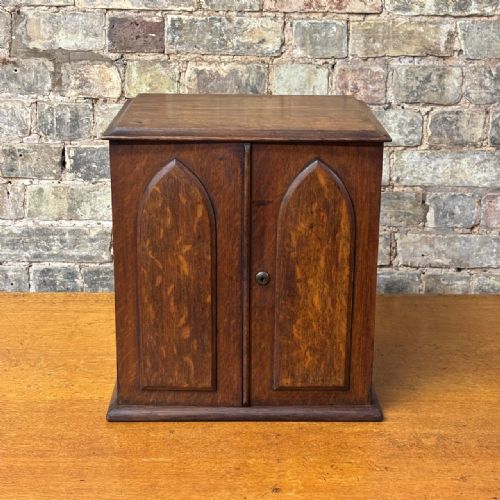


Gothic Arched Door Cabinet
A gothic arched door cabinet brings architectural presence into a room, offering practical storage disguised by pointed lancet framing.
Gothic Arched Door Cabinet
A gothic arched door cabinet combines functional shelving or cupboard space with the distinctive pointed framing characteristic of medieval architecture, appearing across various forms including bookcases, chiffoniers, and display cabinets. Buyers seeking this aesthetic will encounter pieces spanning from the Georgian and Regency eras through the Victorian period and into the early twentieth century.
Rosewood, mahogany, and oak dominate the offerings, occasionally embellished with burr walnut, brass, and ormolu details. The architectural pointed arch provides the visual anchor for every piece, whether executed in rich figured timbers or simpler painted surfaces.
How they were made
Cabinetmakers constructed these pieces using solid and veneered hardwoods like mahogany, rosewood, oak, and walnut, often selecting figured timbers for primary display surfaces. Panels and doors required precise joinery to maintain structural stability across the pointed arches without warping.
Glazing bars in glazed cabinets were shaped by hand to follow the curves of the gothic arches, holding individual panes of glass securely within the frame. Brass and ormolu hardware, from hinges to escutcheons, completed the construction.
The listings span the Georgian, Regency, and Victorian eras, alongside Edwardian and 1920s revivals, constructed predominantly in mahogany, rosewood, and oak.
What varies in quality
Quality rests upon the selection of timber and the precision of the architectural joinery, particularly where curves meet angles in the arched panels. Finer examples display carefully matched wood grains and crisp, unblunted mouldings that define the gothic profile.
The integration of secondary materials, such as finely cast brass mounts or intricate Tunbridgeware inlay, separates standard utilitarian cupboards from more ambitious cabinetmaking. Proportion and the crispness of the arched tracery ultimately determine the standing of each piece.
The Gothic Arched Door Cabinet Glossary
- Gothic Revival
- An architectural and decorative style drawing inspiration from medieval design, characterised by pointed arches and structural verticality. This aesthetic heavily influenced nineteenth-century cabinetmaking.
- Chiffonier
- A low sideboard or cabinet featuring doors enclosing shelves, sometimes surmounted by a small shelf or mirror. They became popular during the Regency period for storing books or china.
- Breakfront
- A large cabinet design where the central section projects forward from the flanking wings. This configuration adds depth and visual interest to bookcases and display cabinets.
- Tunbridgeware
- A type of decorative woodwork involving minute mosaic patterns assembled from different coloured woods. It frequently appears as inlaid banding on nineteenth-century furniture.
- Ormolu
- Gilt bronze mounted onto furniture as decorative handles, feet, or escutcheons. The technique imparts a rich metallic accent to dark woods like rosewood and mahogany.
Gothic Arched Door Cabinet: Frequently Asked Questions
Where should I place a gothic arched door cabinet?
These cabinets suit living rooms, studies, or hallways where their architectural lines can act as a focal point. They pair well with both traditional and contemporary interiors.
Ensure the room has sufficient ceiling height to complement the vertical emphasis of the arched doors without overcrowding the space.
How do I care for rosewood and mahogany cabinets?
Maintain the timber by keeping cabinets away from direct sunlight and sudden temperature shifts that might dry out the wood. Regular dusting with a soft, dry cloth preserves the polished surface.
Apply a traditional wax polish sparingly when the wood appears dry, buffing gently to maintain a deep natural lustre.
How can I tell a Regency cabinet from a Victorian one?
Regency pieces, dating from the early nineteenth century, frequently utilise rich rosewood with restrained brass inlay and clean classical proportions influenced by archaeological discoveries. They often feel lighter in scale.
Victorian cabinets from later in the century tend to be heavier in construction, utilising deep oak or mahogany with more assertive Gothic Revival ornamentation and architectural mouldings.