


Bleached Oak Sideboard
A bleached oak sideboard offers a lighter, stripped finish to traditional timber storage, bringing warmth and grain texture to modern dining rooms.
Bleached Oak Sideboard
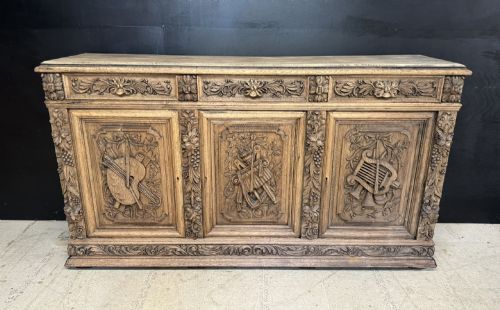
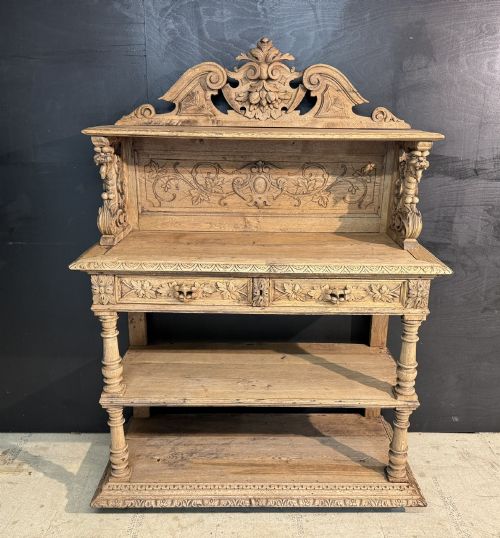
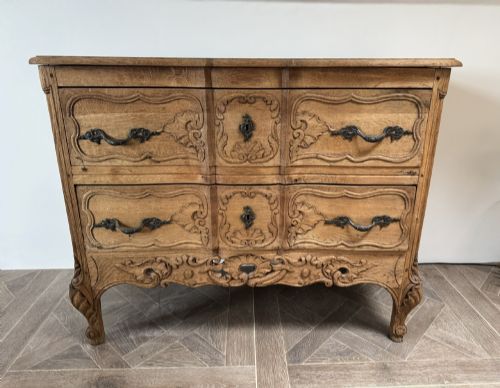
A bleached oak sideboard is a practical dining room or kitchen storage piece, seen here in forms ranging from dresser bases to pedestal sideboards and serving tables. These items emerge across multiple periods including the eighteenth century, nineteenth century, and early twentieth century.
French and English origins dominate the selection, often taking the shape of buffets, commodes, and servers with carved detail. Buyers frequently encounter provincial farmhouse styles alongside more formal revival designs.
The defining characteristic of these pieces is the altered timber surface, which softens the heavy grain of traditional dark oak into a neutral, pale tone.
How they were made
Construction relies primarily on solid oak timbers, joined with traditional methods to form sturdy frames for sideboards, servers, and dressers. Iron and brass hardware such as handles and hinges provide functional accents.
Surface treatments involve stripping or chemical processing to achieve the characteristic bleached oak appearance, leaving the natural grain exposed and lightened.
Decorative elements frequently include hand carving applied directly to the timber doors and drawer fronts, reflecting regional styles from French provincial to English country.
Bleached Oak Sideboard Retail Price Guide 2026
Typical asking prices for bleached oak sideboard among the pieces listed under this phrase on Sellingantiques today, from the lower quarter to the upper quarter. They describe what is for sale here now, not the wider market.
Object types include console tables, commodes, dressers, and serving tables alongside traditional sideboards.
What varies in quality
Quality rests heavily on the depth and execution of the timber carving, where crisp, hand-carved details distinguish superior pieces from simpler utilitarian storage. The integrity of the original oak structure and the balance of the proportions also determine the overall standing of an item.
The treatment of the wood surface dictates visual success, with skilled bleaching preserving the character of the grain rather than masking it behind a flat finish. Hardware quality, from heavy brass pulls to sturdy iron hinges, further separates standard regional cupboards from finer decorative servers.
The Bleached Oak Sideboard Glossary
- Bleached oak
- Oak timber that has been chemically or physically lightened to reduce its natural dark hue while retaining the visible grain pattern. This treatment creates a pale, neutral surface popular in contemporary interiors.
- Dresser base
- The lower section of a traditional dresser, featuring cupboards and drawers without the upper plate rack. These pieces function independently as sideboards or serving surfaces.
- Commode
- A low cabinet or chest of drawers originating in France, often utilised as a sideboard in modern dining spaces. They typically feature panelled doors or multiple stacked drawers.
- Buffet de corps
- A large, two-section French cupboard used for storing and serving food. These substantial storage pieces represent the more formal end of regional cabinet making.
Bleached Oak Sideboard: Frequently Asked Questions
What is a bleached oak sideboard?
A bleached oak sideboard is a storage cabinet with a lightened timber finish, designed for dining rooms and hallways.
These pieces combine traditional joinery with a pale surface treatment that suits contemporary interior schemes.
Where were these sideboards made?
The pieces originate primarily from France and England, reflecting distinct regional cabinet-making traditions.
French provincial examples often feature rich carvings, while English versions tend towards simpler vernacular forms.
How do I use a sideboard at home?
Sideboards provide practical surface space and enclosed storage for tableware, linens, and dining accessories.
Their substantial tops also serve well for displaying lamps, ceramics, or serving food during gatherings.
What periods do these sideboards come from?
The selection spans from the eighteenth century through the nineteenth century and into the early twentieth century.
Earlier pieces show handcrafted vernacular traits, while later items incorporate revival styles like Gothic and Arts and Crafts.