
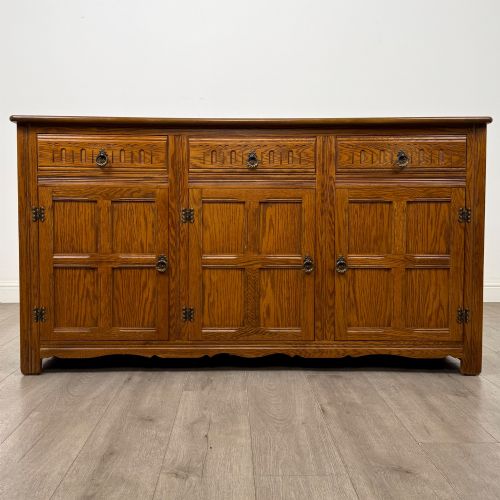
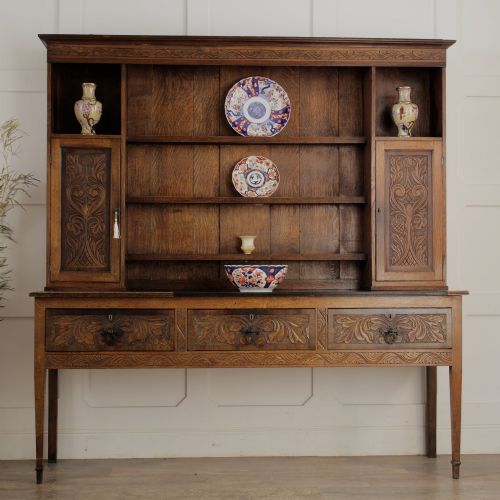
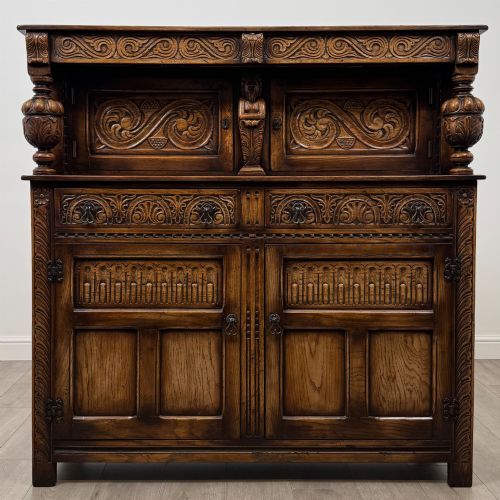
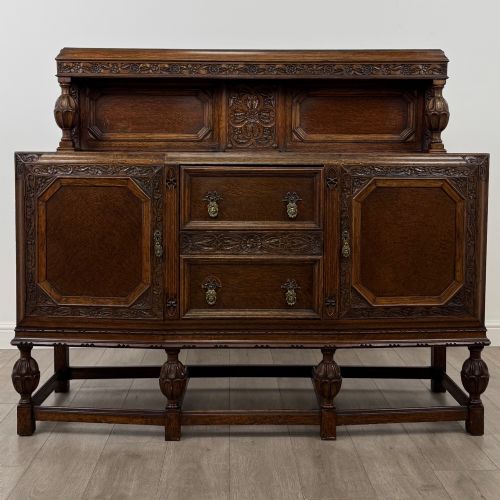
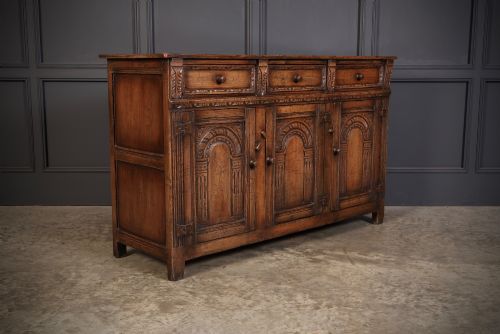
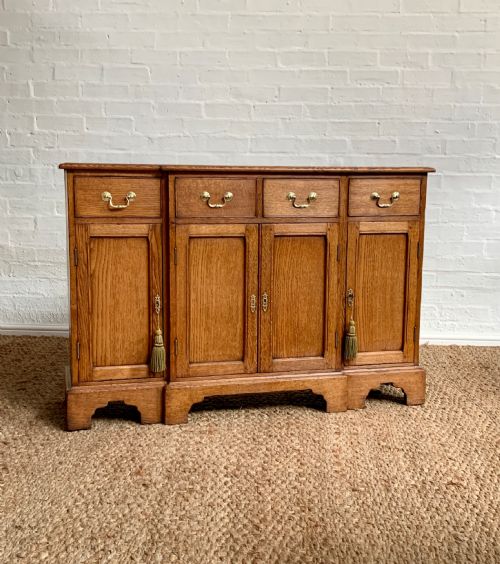
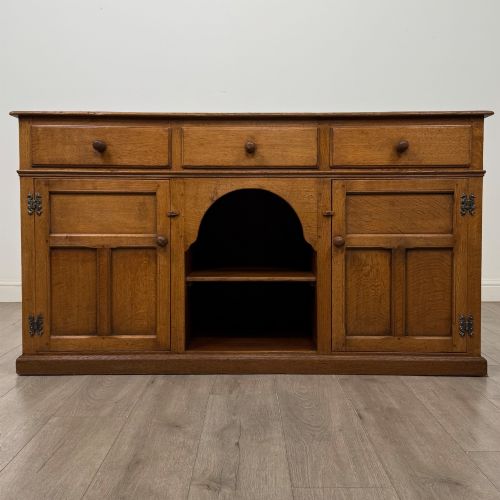
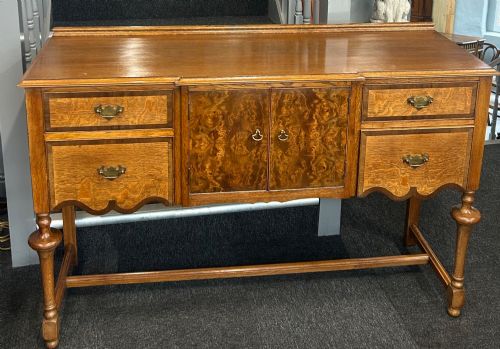



Traditional Oak Server Cabinet
These traditional oak server cabinet pieces combine utilitarian storage with centuries of sturdy craftsmanship, making them essential anchors for any dining room.
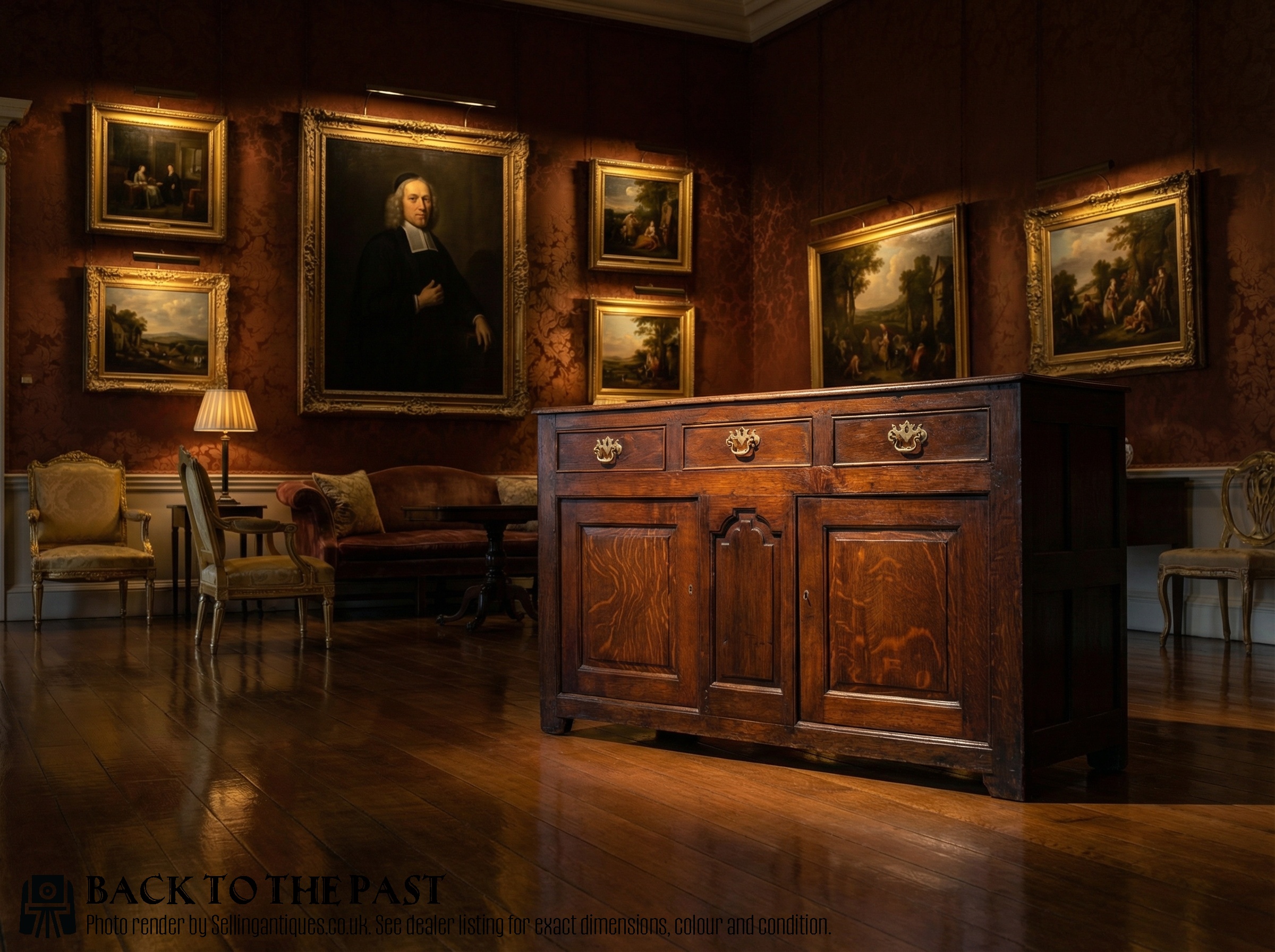
Traditional Oak Server Cabinet
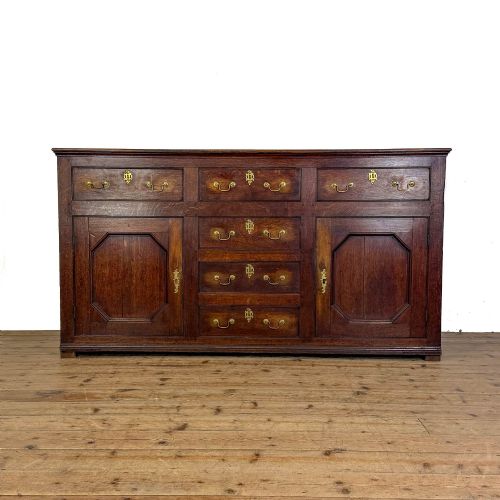
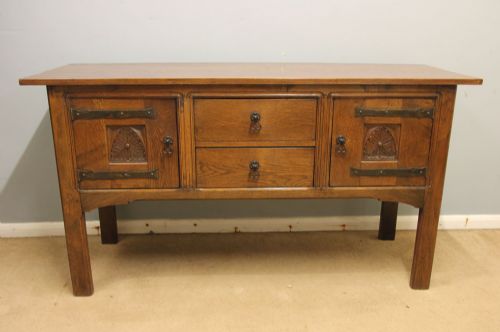
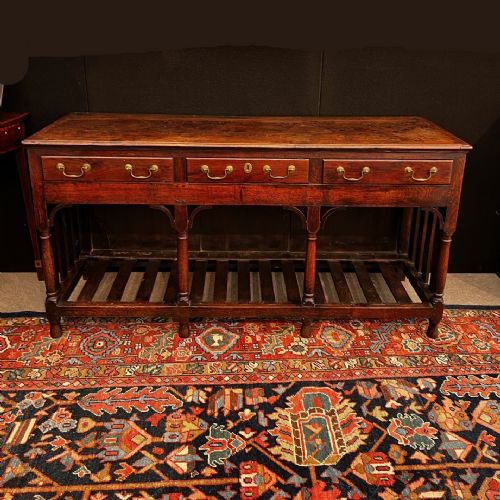
When searching for a traditional oak server cabinet, buyers encounter substantial dining room storage forms including sideboards, dresser bases, court cupboards, and side cabinets. These pieces span from the 18th century and Georgian periods through the Victorian, Edwardian, and 19th-century revivals, utilising rich golden, bleached, and pollard oak timber.
The most common forms on this page include Edwardian sideboards, Georgian dresser bases, and 17th-century style court cupboards. Such items provide deep drawers, panelled cupboards, and serving surfaces designed to anchor a room while offering practical everyday storage.
Originating largely from English country traditions, these servers range from small, compact proportions to grand breakfront formats. Their structural variety reflects changing domestic needs across centuries of British woodworking.
What varies in quality
Quality separates pieces through the selection of timber and the depth of hand carving. Superior examples display dense, well-figured oak with crisp architectural mouldings rather than shallow, mechanical milling.
The integrity of construction dictates the upper tier of the range, visible in tight joints, heavy panelled doors that hang true, and original hardware. Lesser examples may show hurried assembly, replacement timbers, or flat, uninspired surface decoration.
Traditional Oak Server Cabinet Retail Price Guide 2026
Typical asking prices for traditional oak server cabinet among the pieces listed under this phrase on Sellingantiques today, from the lower quarter to the upper quarter. They describe what is for sale here now, not the wider market.
Materials appearing across these items include solid oak, brass, iron, glass, metal, burr walnut, inlay timber, and elm.
The Traditional Oak Server Cabinet Glossary
- Court cupboard
- A heavy, enclosed wooden cabinet used for storing food and displaying plate, often featuring recessed upper tiers supported by carved pillars.
- Dresser base
- A low wooden sideboard fitted with drawers and cupboards beneath a solid flat top, traditionally used for food preparation and serving.
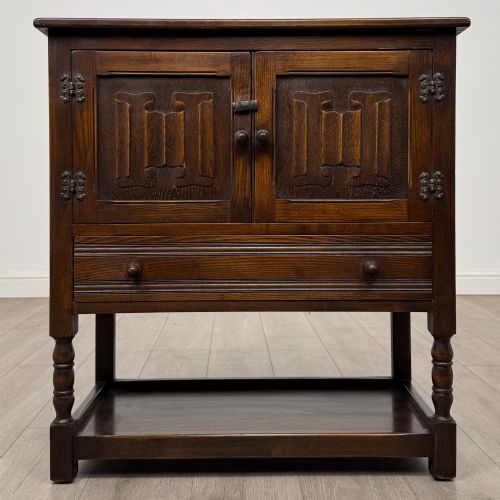
- Linenfold
- A style of wood carving that mimics the appearance of folded fabric, commonly found on Tudor and Jacobean revival panels.
- Breakfront
- A piece of furniture whose central section projects forward from the flanking outer sections, creating architectural depth.
- Pollard oak
- Timber taken from trees that were cut back close to the trunk to encourage dense, highly figured branching patterns.
Traditional Oak Server Cabinet: Frequently Asked Questions
How do I clean a traditional oak server?
Dust regularly with a soft, dry cloth to prevent the accumulation of grit in carved crevices.
Apply a traditional beeswax polish occasionally to nourish the timber and maintain a natural sheen without building up heavy chemical layers.
Can I use a server cabinet in a hallway?
These cabinets fit well in hallways if the depth allows for unobstructed passage. Lower dresser bases and sideboards provide useful surface space for keys and post while offering concealed storage for shoes and household items.
Measure your hallway clearance carefully, as older pieces often feature protruding mouldings or heavy panelled doors that require additional swing space.
How do I date an oak sideboard?
Examine the construction methods, drawer linings, and hardware styles to determine the approximate period. Hand-cut dovetails, pegged joints, and timber shrinkage patterns often point to earlier 18th-century origins, whereas machine-sawn elements suggest later revival eras.
Compare the overall design proportions and decorative motifs, such as linenfold carving or geometric mouldings, against established regional furniture traditions.