
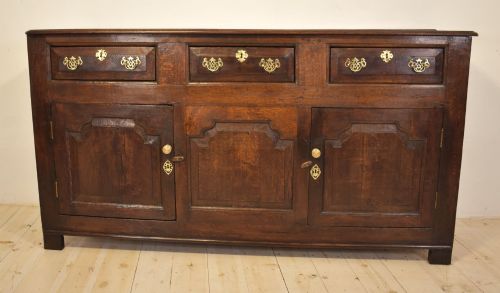
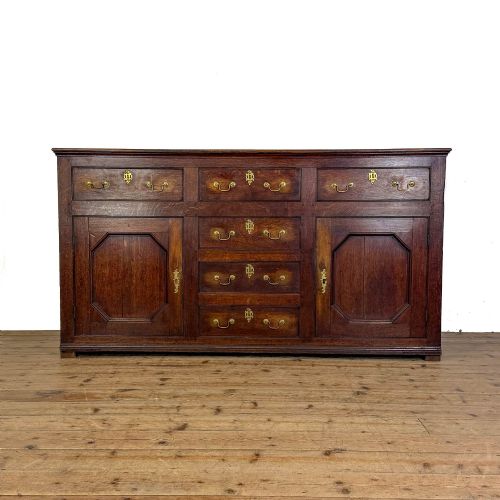
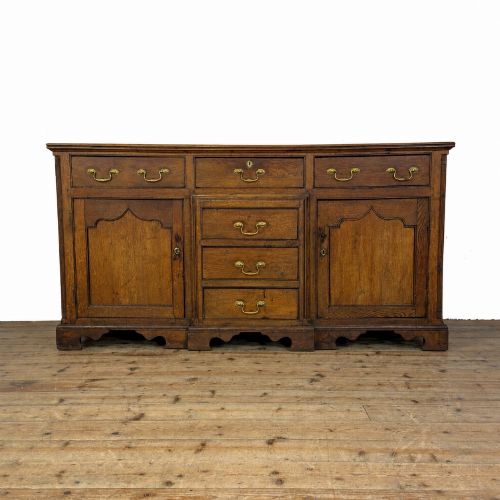


Fielded Panel Oak Sideboard
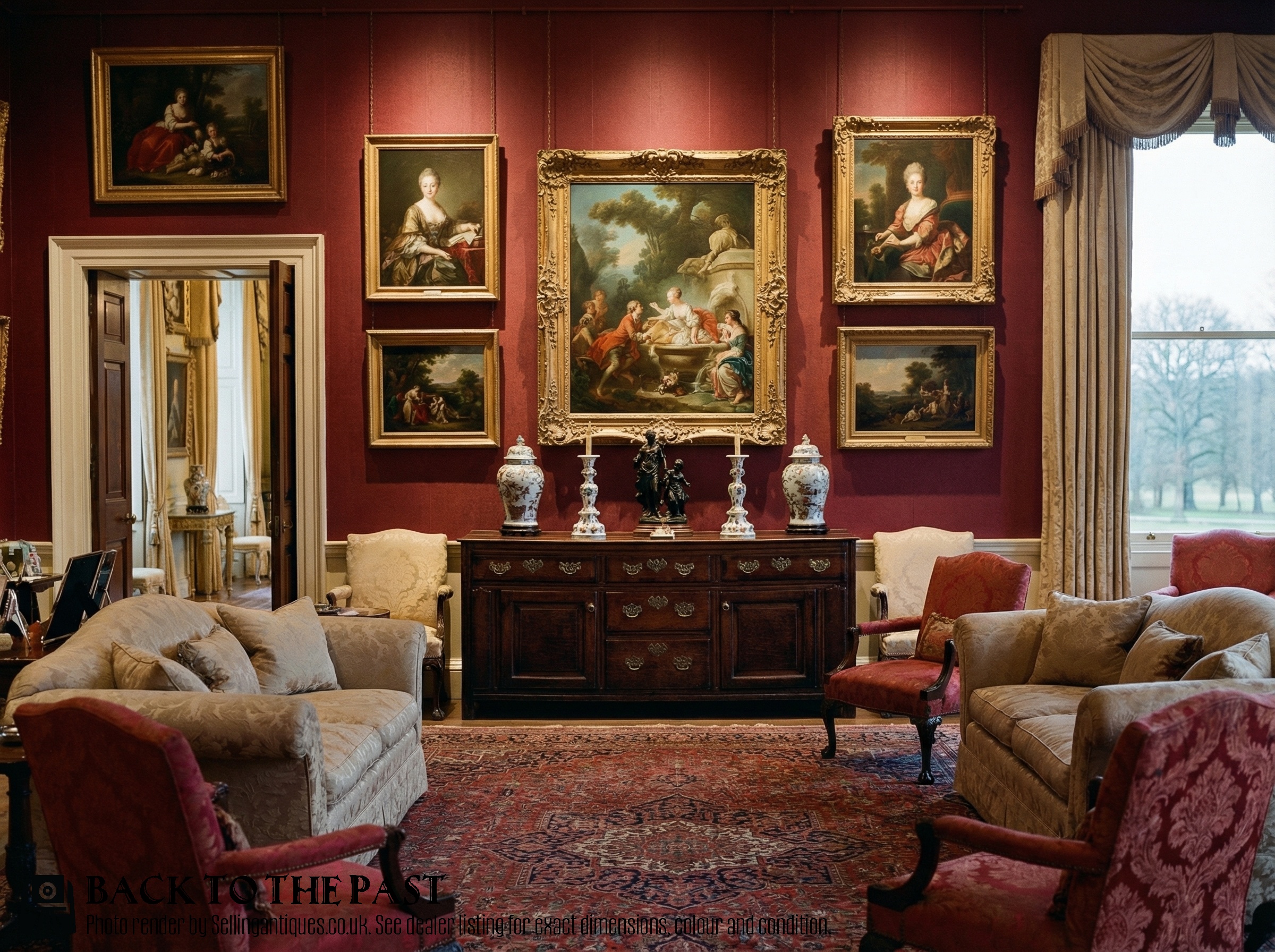
A fielded panel oak sideboard offers robust storage built from honest timber, bringing centuries of utility and heavy grain to a modern interior.
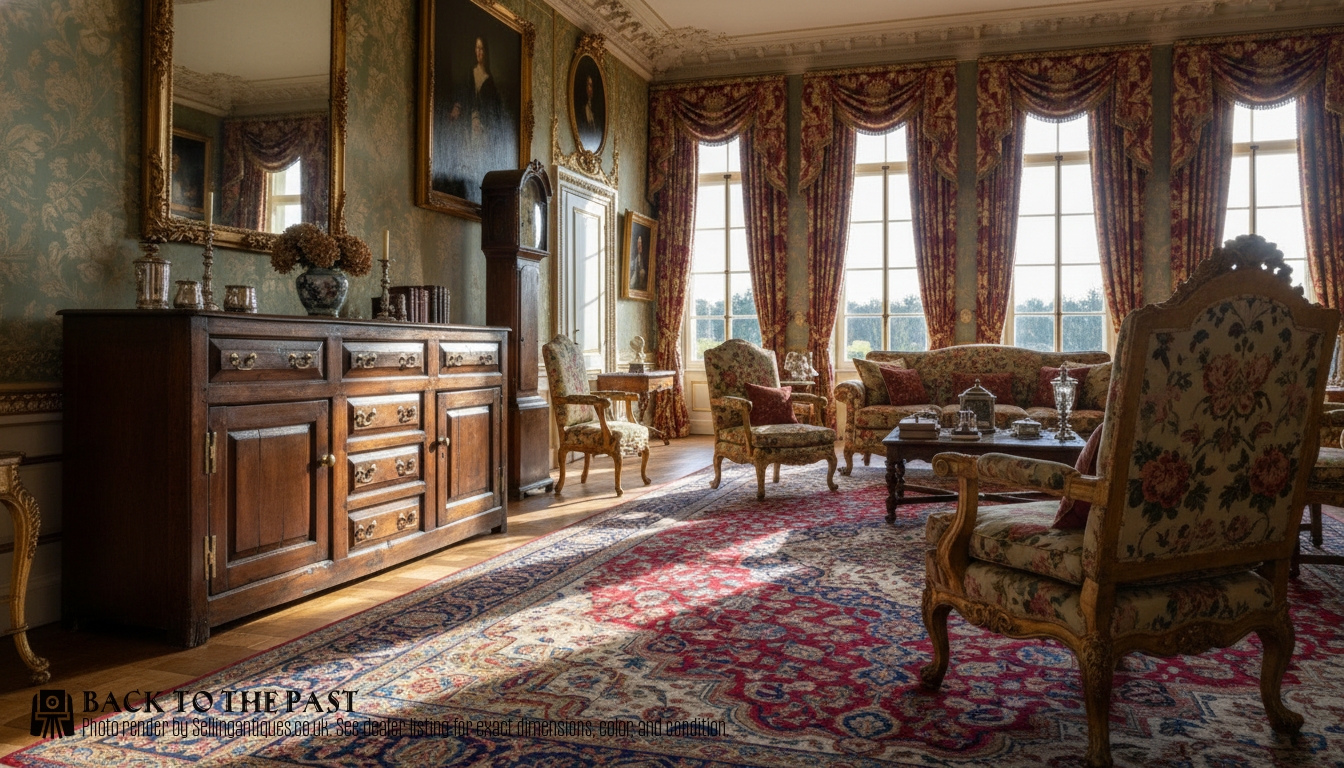
What a fielded panel oak sideboard is
When searching for a fielded panel oak sideboard, a buyer finds sturdy dresser bases and dresser forms originating from the eighteenth and early nineteenth centuries. These heavy wooden pieces combine functional storage with the deep patina of Georgian craftsmanship.
The versions most commonly met on this page belong to the eighteenth century and the Georgian period, often catalogued simply as oak dresser bases. They display straightforward lines and solid timber construction designed for domestic practicality.
How they were made
Makers built these pieces using solid oak, selecting timber for strength and prominent grain patterns. Brass fittings appeared on doors and drawers as functional hardware that complemented the warm brown tones of the wood.
Joinery methods relied on traditional panel construction, where panels were bevelled at the edges to sit securely within frames. This technique allowed the timber to expand and contract naturally with changes in humidity.
Retail Price Guide 2026
Typical UK retail prices for fielded panel oak sideboard, calculated from the Sellingantiques database of over a million retail prices indexed since 2003. This retail price guide relies exclusively on Sellingantiques data; no external sources or auction records are used, so the figures do not describe the wider market.
Current listings span the eighteenth century, the Georgian era, and the early nineteenth century, constructed entirely in oak with brass hardware.
What varies in quality
Quality rests in the depth of the timber's surface colour and the crispness of the panel work. Pieces retaining their original brass hardware and untouched structural timbers command closer attention from discerning collectors.
Earlier eighteenth-century examples display greater age through the handling marks of hand tools and timber seasoning. The distinction between a standard dresser base and a superior piece lies entirely in the integrity of the original wood and its unblemished construction.
The Fielded Panel Oak Sideboard Glossary
- Fielded panel
- A wooden panel with its edges bevelled or thinned down to fit into a grooved frame. This traditional method reduces weight while adding depth and visual shadow to the furniture front.
- Dresser base
- A low wooden sideboard featuring drawers and cupboards beneath a flat top surface. Originally used in kitchens for food preparation and storage.
- Georgian
- The period spanning the reigns of the first four British monarchs named George, lasting from seventeen fourteen to eighteen thirty. Furniture from this era is characterised by proportion, classical restraint and quality timber.
- Oak
- A hard, heavy and durable timber native to Britain, prized for its strength and distinct grain. It forms the structural foundation of traditional country furniture.
Frequently Asked Questions
What is a dresser base?
A dresser base is a low wooden sideboard fitted with drawers and occasionally cupboards underneath a long top surface.
Historically, these pieces stood in kitchens or dining rooms to hold serving dishes and utensils while providing a sturdy surface for food preparation.
How do I date an oak sideboard?
Dating relies on examining the construction methods, tool marks, and hardware types used throughout the piece. Eighteenth-century examples show hand-planed surfaces and traditional joinery.
Wood colour and the natural wear accumulated over centuries also help distinguish earlier Georgian items from later nineteenth-century pieces.
Are these sideboards made of solid oak?
Yes, traditional pieces from this selection use solid oak for both the structural frame and the visible panels. Timber selection was vital for everyday domestic utility.
Constructed without modern laminates, the heavy wood responds to interior humidity and develops a deep patina over generations of use.
How do I care for antique oak furniture?
Maintain antique oak by keeping it away from direct heat sources and sudden temperature fluctuations that dry out the timber. Applying a traditional wax occasionally helps nourish the surface.
Avoid harsh chemical cleaning agents to preserve the natural colour and historic finish built up over centuries.