
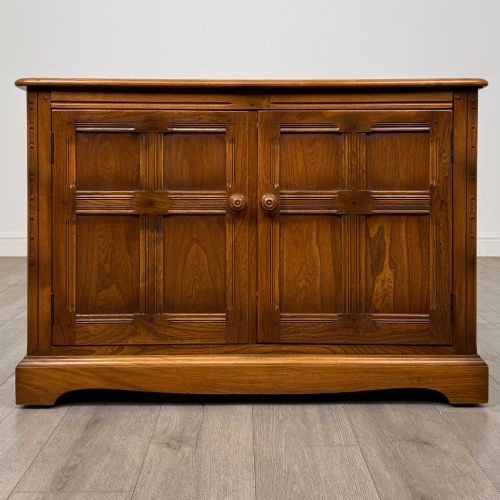
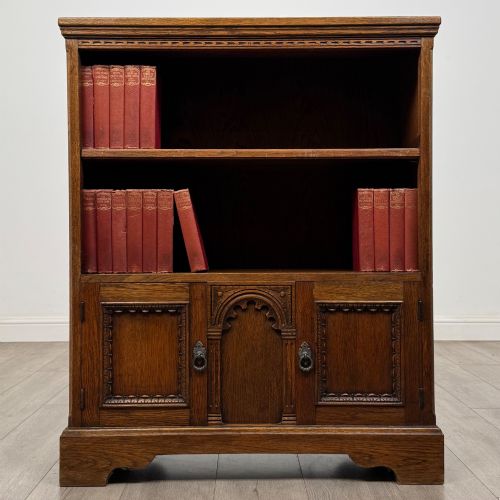
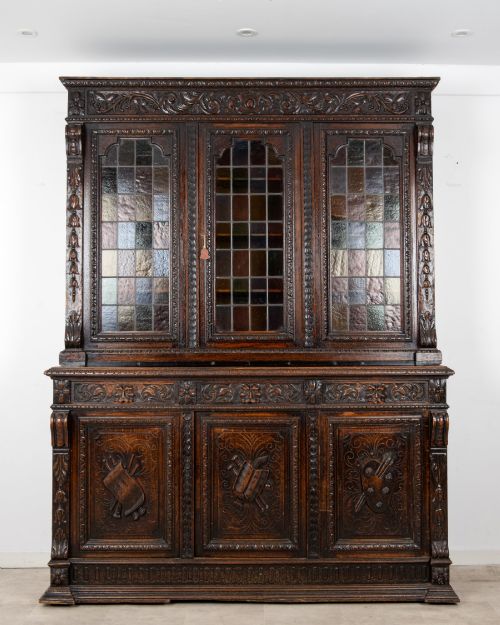
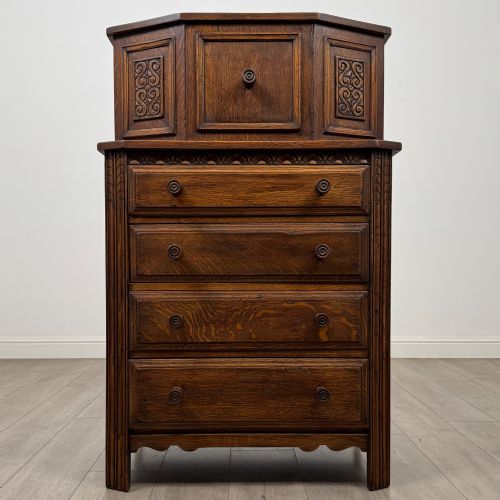
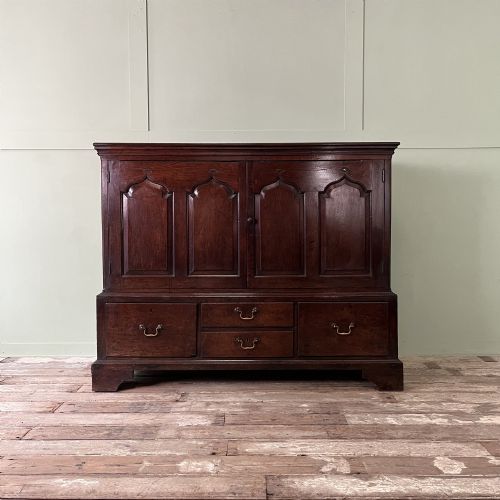
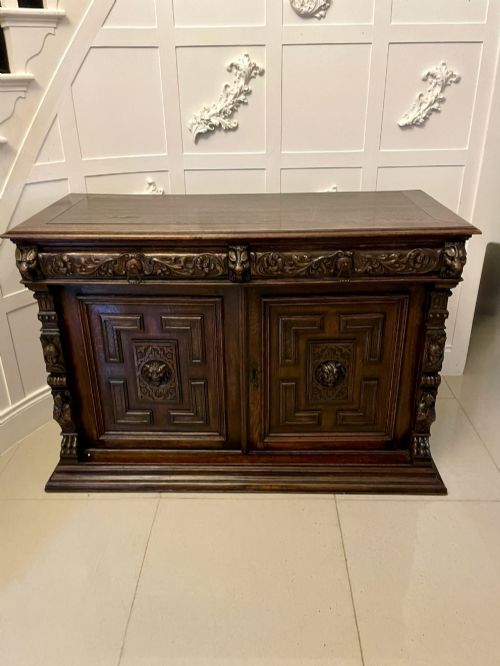
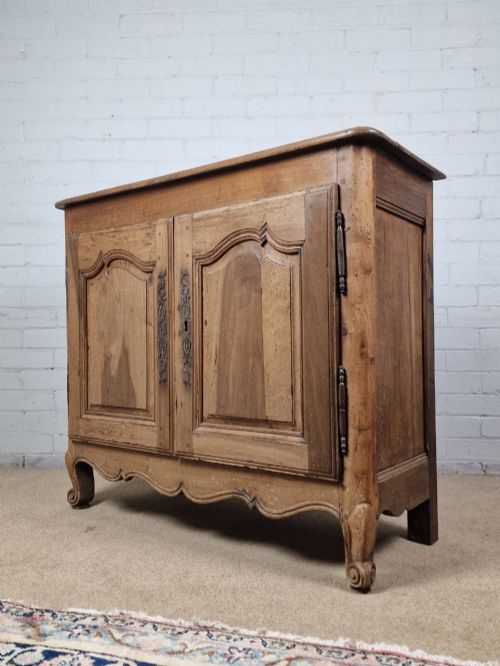
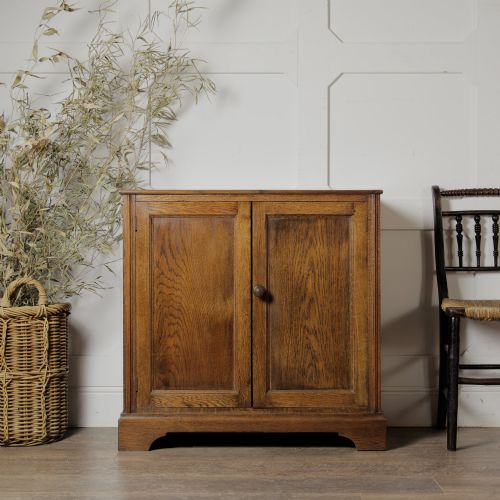
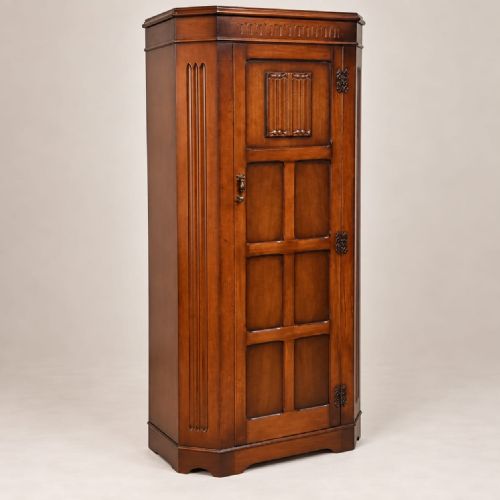

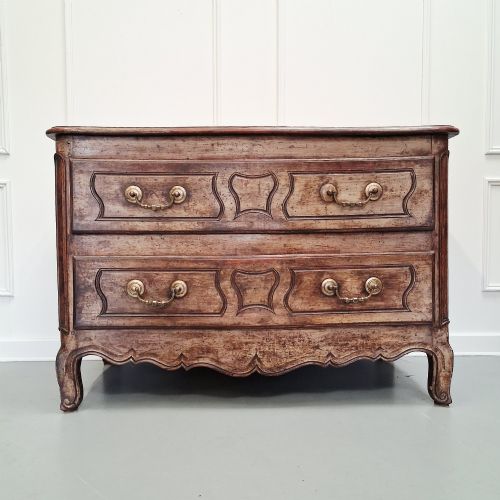
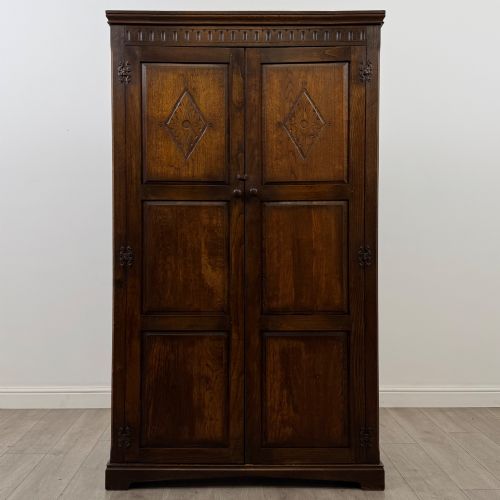
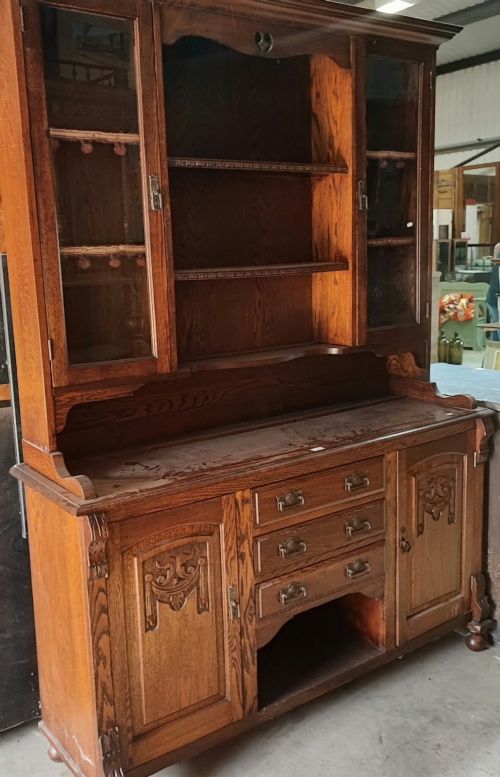
Panelled Oak Cabinet
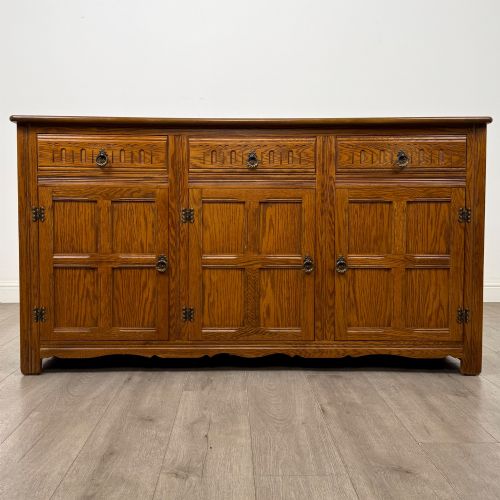
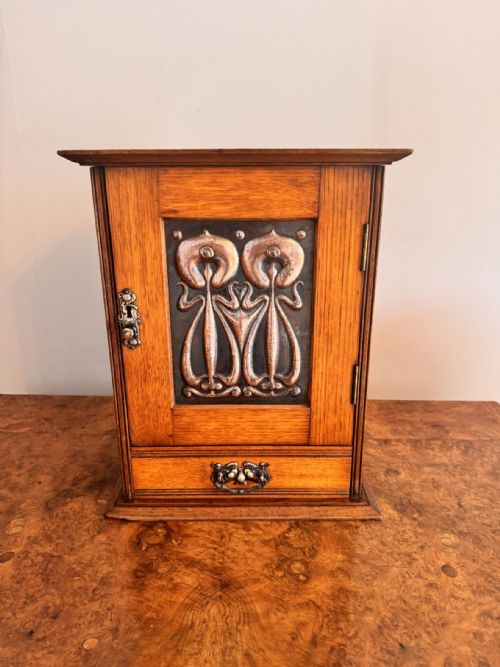
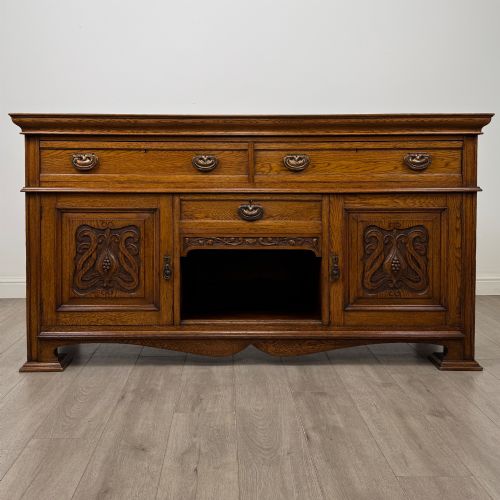
A panelled oak cabinet is a timber storage piece built with framed doors or sides, sought after for its honest grain and enduring utility.
Panelled Oak Cabinet
A panelled oak cabinet draws upon centuries of vernacular and formal woodworking traditions, appearing in forms ranging from wall-hanging spice cupboards to substantial court cupboards and corner units. When you search for a panelled oak cabinet, you encounter works spanning from the seventeenth century through the Georgian and Victorian eras into Edwardian and later twentieth-century interpretations.
The versions most commonly met on this page include Edwardian utility pieces in golden oak alongside Georgian and nineteenth-century sideboards, bookcases, and floor-standing storage units. These items reflect stylistic revivals, notably Jacobean and Gothic influences, alongside simpler English country and French provincial designs.
Makers and workshops constructed these cabinets for domestic utility, utilising sturdy timbers to house provisions, textiles, and household goods. The surviving examples demonstrate how construction methods shifted from heavy boarded framing to lighter panel-and-frame assemblies over successive centuries.
How They Were Made
Cabinet makers relied primarily on solid oak, selected for its density and pronounced medullary rays, often augmented by secondary timbers and decorative veneers such as rosewood or ebony on specific continental pieces. Workshops fastened panels within grooved frames to allow for seasonal wood movement without splitting the timber.
Hardware played an integral structural and ornamental role, utilising brass, iron, wrought iron, and copper for hinges, handles, and escutcheons. Joinery techniques combined pegged mortise and tenon joints with hand-planed panels, occasionally enhanced by carving, linenfold detailing, or geometric mouldings.
Listings feature oak cabinets spanning the 17th, 18th, 19th, and 20th centuries, alongside Edwardian and Georgian periods.
What Varies in Quality
Quality rests in the selection of the oak timber, the crispness of the hand-carved or panelled details, and the integrity of the original joinery. Superior examples maintain uncompromised framing timbers and balanced proportions that reflect the aesthetic standards of their period.
The degree of original hardware, the subtlety of surface finishes such as limed or polished surfaces, and the preservation of internal fitted shelves or drawers distinguish finer iterations from standard utilitarian production.
The Panelled Oak Cabinet Glossary
- Panel
- A flat piece of timber fitted within a surrounding frame to prevent warping as the wood expands and contracts. This construction method defines the structure of doors and sides on these cabinets.
- Court cupboard
- A traditional heavy storage unit featuring an enclosed upper or lower section, often supported by turned balusters. These pieces date predominantly from the seventeenth and eighteenth centuries.
- Linenfold
- A style of carved wooden panelling that resembles folded fabric, frequently seen on Tudor and revival pieces. Craftsmen carved this motif to create rich surface texture on doors.
- Tiger oak
- Oak timber displaying prominent, wavy medullary rays that produce a striped figure resembling tiger skin. This grain pattern occurs naturally when quartersawn lumber reveals the growth rings.
- Escutcheon
- A protective plate surrounding a keyhole, typically cast in brass or iron. These fittings often provide stylistic clues to the manufacturing period of the cabinet.
Panelled Oak Cabinet: Frequently Asked Questions
What is a panelled oak cabinet?
A panelled oak cabinet is a storage piece constructed with frame-and-panel techniques using oak timber. These items range from small wall cupboards to large sideboards.
They serve various domestic storage needs while displaying period woodworking methods and regional design styles.
How do I date an oak cabinet?
Dating relies on examining the construction marks, hardware types, joinery style, and overall proportions of the piece. Hand-cut peg joints and geometric panelling often point to earlier centuries.
Later Edwardian and twentieth-century interpretations utilise softer golden oak finishes and standardised internal fittings while referencing historical revival styles.
How should I care for golden oak?
Golden oak surfaces benefit from consistent humidity levels and protection from direct sunlight to prevent timber drying or fading. Natural beeswax applied sparingly helps maintain the polish.
Avoid placing these cabinets near direct heat sources which can cause the timber panels to split or warp over time.
Where were these cabinets used?
These cabinets served utilitarian functions across domestic spaces including halls, dining rooms, kitchens, and bedchambers. They held provisions, table linens, books, and valuables.
Smaller wall-hanging and corner variants optimized space in domestic interiors during the Georgian and Victorian periods.